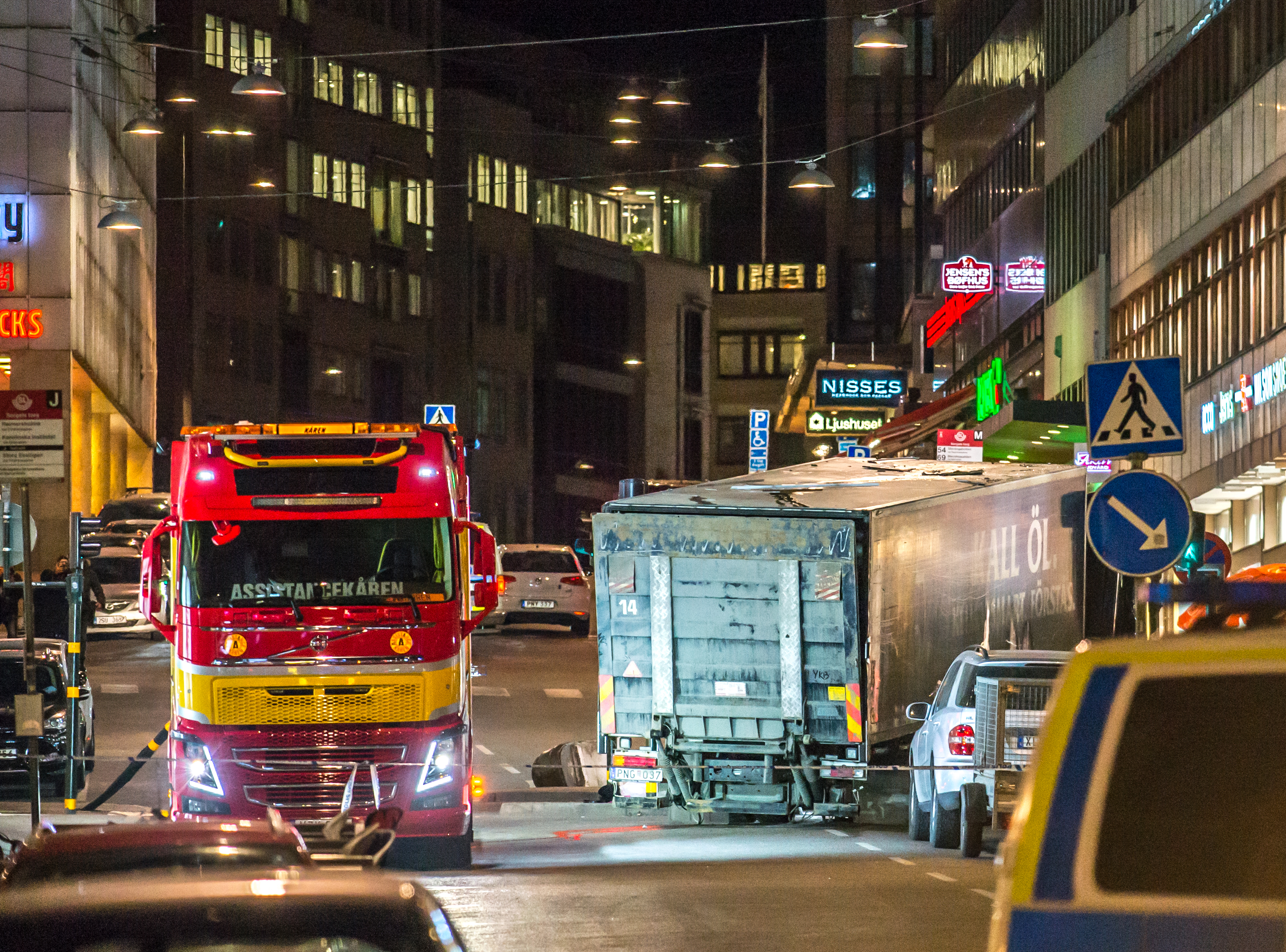
2017 Stockholm Truck Attack
The red Spendrups brewery truck stood unattended on Adolf Fredriks kyrkogata, its driver making a routine delivery on a Friday afternoon in April 2017. Within moments, that delivery would become the starting point of one of the deadliest terrorist attacks in Swedish history. The hijacked vehicle would race 500 meters down Drottninggatan, Stockholm's beloved pedestrian shopping street, before slamming into the corner of the Ahlen's department store. Five people died that afternoon, and fourteen more were seriously injured. But in the days that followed, Stockholm's response would demonstrate something the attacker never anticipated: a city united in grief, resilience, and defiance.
Five Hundred Meters of Terror
At 14:53 local time on April 7, 2017, a Friday afternoon when Drottninggatan buzzed with shoppers and tourists, the hijacked brewery truck accelerated into the pedestrian zone. The driver had chosen his moment deliberately, later admitting he selected a time when the maximum number of people would fill the street. Witnesses reported the vehicle zigzagging as it plowed forward, with some describing attempts to target children. The attack ended when the truck crashed into the Ahlen's City department store at the intersection with Master Samuelsgatan. The vehicle caught fire, but firefighters quickly extinguished the flames. Inside, investigators later discovered a homemade explosive device that had failed to detonate, found in a bag in the driver's seat. The attacker, burned by his own device, fled on foot into the panicked crowds.
A City Responds
Stockholm's emergency response was immediate and sweeping. The Parliament House locked down. The metro system halted. Stockholm Central Station evacuated as all train traffic to and from the capital ceased. Police from across the metropolitan area converged on the scene, while medical professionals working nearby ran toward the chaos rather than away. King Carl XVI Gustaf spoke for the nation when he addressed the Royal Family's condolences: 'Our hearts go out to the victims of this terrible tragedy, and to their families.' Swedish border controls tightened, though notably, the Security Service maintained its threat level at 3 out of 5, the same assessment held since 2010. The Swedish response was measured even in crisis, balancing security with the open society the nation valued.
A Sea of Flowers
Two days after the attack, more than forty thousand people gathered at Sergels torg, Stockholm's central square, to honor the victims. The gathering transformed Drottninggatan and the square into what reporters described as a 'sea of flowers.' Candles flickered alongside bouquets as Stockholmers refused to let fear claim their public spaces. In Gothenburg, Sweden's second city, flowers accumulated at Gotaplatsen in solidarity. Across Europe, the response echoed this defiance. The Eiffel Tower went dark on the evening of the attack. Nice, which had suffered its own truck attack eight months earlier, raised the Swedish flag at half-mast. In Brussels, still healing from bombings the previous year, buildings displayed animated Swedish flags. The international community recognized what Stockholm already knew: terror had tried to break them, and failed.
Justice and Aftermath
The perpetrator, Rakhmat Akilov, a 39-year-old rejected asylum seeker from Uzbekistan, was apprehended in Marsta, north of Stockholm, roughly five hours after the attack. He had sworn allegiance to the Islamic State in a video recorded the day before. The trial confirmed what investigators suspected: this was a deliberate act of terrorism, driven by jihadist ideology. Akilov was sentenced to life in prison. The attack prompted policy debates across Scandinavia, discussions about immigration enforcement, urban security, and vehicle barriers on pedestrian streets. But perhaps the most lasting legacy remains the community response, the way Stockholm transformed grief into solidarity, and fear into determined normalcy.
From the Air
Located at 59.33N, 18.06E in central Stockholm. Drottninggatan runs north-south through Norrmalm district, visible as a pedestrian corridor between Kungstradgarden and Odenplan. The Ahlen's department store sits at the intersection with Master Samuelsgatan. Sergels torg, where the memorial gathering occurred, is recognizable by its distinctive sunken plaza. Stockholm Arlanda Airport (ESSA) lies 37km north. Stockholm Bromma Airport (ESSB) is closer at 8km west. When flying over central Stockholm, the attack site lies in the commercial heart between Gamla Stan and the modern business district.