2020 Assam Gas and Oil Leak
For 173 days, Well No. 5 burned. The gas blowout at Oil India Limited's Baghjan Oil Field in Tinsukia district, Assam, began on 27 May 2020 as an uncontrolled leak -- a roar of methane and propane escaping from a capped well at 3,729 meters depth. Thirteen days later it caught fire, and the column of flame became a landmark visible across the floodplain, an orange pillar that would outlast India's monsoon season, a government investigation, and every initial attempt to shut it down.
A Well Without Permission
The Baghjan Oil Field sits next to Dibru-Saikhowa National Park, one of Assam's most ecologically sensitive areas. Gangetic dolphins swim its rivers. Wild horses, hoolock gibbons, slow loris, capped langurs, tigers, and rare butterflies inhabit its forests and wetlands. The adjacent Maguri Motapung Beel, a natural wetland, sustains an entire ecosystem. Oil India Limited had been operating the field's 21 wells for years, but the National Green Tribunal's investigation would later reveal a damning fact: the company never obtained the legally required environmental clearances. The Assam State Pollution Control Board confirmed it. Mandatory public hearings before drilling? Never conducted. The Eco-Sensitive Zone around the national park had even been reduced at OIL's request to accommodate the well. On 20 May 2020, just a week before the blowout, the government authorized OIL to explore for hydrocarbons at seven locations under the national park itself.
The Day the Well Broke
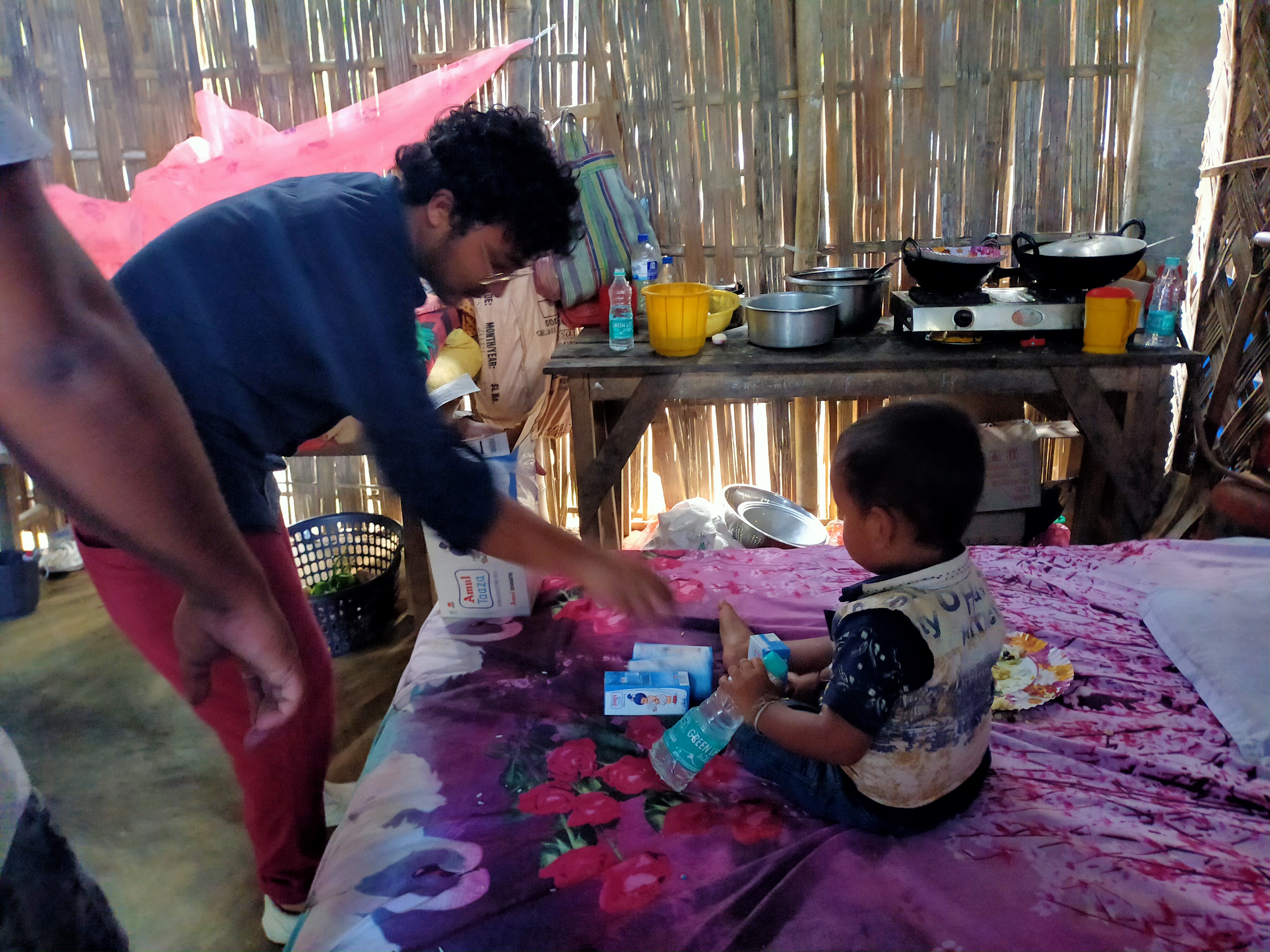
Workers noticed gas escaping from the capped well and began evacuating before the full blowout hit. The leaked gas -- a mix of propane, methane, and propylene -- spread quickly. When fire erupted on 9 June, it consumed nearby trees, crops, and houses. Fifty homes burned. Four people were injured immediately. The next day, firefighters Durlov Gogoi and Tikheswar Gohain died battling the blaze; their bodies were recovered from a water body near the site. Within days, 1,610 families -- roughly 3,000 people -- were evacuated to relief camps established by the National Disaster Relief Force. The Indian Air Force and Indian Army provided assistance. Meanwhile, the gas condensate contaminated the Maguri Motapung Beel wetland and leached into Dibru-Saikhowa National Park, poisoning bamboo groves, tea gardens, banana plantations, and betel nut trees. The Wildlife Institute of India would later conclude that the leak would have "prolonged ill effects on all life forms, including humans."
Six Months to Kill a Well
Four days after the initial leak, an OIL spokesperson acknowledged that well control operations had not yet started. The effort to cap the well became an ordeal of compounding failures. Severe monsoon flooding -- the same Assam floods that killed 16 people and collapsed the Doom Dooma-Baghjan bridge -- cut off access roads and made the site unsafe. In July, three Singaporean expert advisors were injured by a fire during a capping attempt. On 18 August, a blowout preventer was finally placed on the third try, but the kill operation failed when a valve in the well casing collapsed. The well kept leaking. Canada was called in. Sixty tonnes of snubbing equipment were flown from Calgary aboard an Antonov transport aircraft. On 15 November 2020 -- 173 days after the initial blowout -- the well was finally killed by injecting cement-laced chemical mud. The well was permanently abandoned on 3 December. By then, 500 people still lived in relief camps, and the surrounding area still echoed with the audible hiss of residual gas.
Accountability and Aftermath
The National Green Tribunal's expert committee, led by former judge A.P. Katakey, found that OIL had failed to comply with environmental laws and its own internal safety procedures. The preliminary report stated bluntly that following those procedures could have prevented the blowout entirely. Assam's State Pollution Control Board ordered a full shutdown of the Baghjan field -- then withdrew the order three days later. Sociologist Sanjay Barbora and geologist Sarat Phukan captured the paradox: ordinary citizens, atomized by pandemic lockdowns, dug out evidence of corporate greed and governmental collusion, generating enormous public interest. Yet none of that complicated history found its way into the responses of the state, the public sector, or the tea companies. OIL offered families 30,000 rupees in compensation. The Baghjan blowout was not the company's first: a 2005 blowout at Dikom evacuated 500 families, and in February 2020, just months before Baghjan, a punctured OIL pipeline set a stretch of the Burhi Dihing River on fire for 48 hours.
From the Air
Located at 27.60N, 95.41E in the Tinsukia district floodplains of upper Assam. The Baghjan Oil Field lies adjacent to Dibru-Saikhowa National Park, visible as dense wetland and forest along the Brahmaputra tributaries. Nearest airport is Mohanbari/Dibrugarh (VEMN), approximately 50 km southwest. The oil field infrastructure and river system are identifiable below 8,000 feet. The Maguri Motapung Beel wetland is a prominent water feature to the south.