2020 Calabasas Helicopter Crash
The flight had taken only thirty minutes the day before. On January 25, 2020, the Sikorsky S-76B lifted off from John Wayne Airport, ferried its passengers to Camarillo, and landed without incident at a general aviation airport twenty minutes by car from Mamba Sports Academy. The same route by road would have taken at least two hours from Kobe Bryant's Newport Beach home. On January 26, the helicopter took off again with the same pilot, the same destination, and a different outcome. Within hours, a hillside in Calabasas would become the site of the deadliest helicopter crash in Los Angeles County in over a decade.
Nine Lives, One Flight
Eight passengers and pilot Ara Zobayan departed John Wayne Airport at 9:06 a.m. that Sunday morning. Kobe Bryant, the five-time NBA champion, was traveling with his 13-year-old daughter Gianna to a basketball game where he was scheduled to coach her team. Also aboard were baseball coach John Altobelli, his wife Keri, and their 14-year-old daughter Alyssa; Sarah Chester and her 13-year-old daughter Payton; and basketball coach Christina Mauser. Zobayan had been Bryant's preferred pilot since 2015, when the retired basketball star began chartering through Island Express Holding Corporation, based in Fillmore, California. The helicopter itself, registration N72EX, had once transported Illinois governors and state officials before being sold to Island Express.
Into the Clouds
The conditions that morning were marginal. Los Angeles Police Department Air Support Division rules require at least two miles of visibility and an 800-foot cloud ceiling; the NTSB later estimated visibility at the moment of the accident was far below that threshold. At 9:40 a.m., Southern California TRACON made contact with Zobayan, confirming the helicopter's altitude and operation under Visual Flight Rules. Controllers informed him that at his current position, they would lose radar contact, advising him to squawk VFR until he could reach Camarillo approach. The helicopter climbed, attempting to break through the cloud layer. At 9:45:36 a.m., the last ADS-B signal was recorded. Moments later, the Sikorsky struck a hillside at approximately 1,085 feet elevation.
Seventy-Seven Minutes
A 9-1-1 call came in at 9:47 a.m. reporting a helicopter crash and fire near the intersection of Las Virgenes Road and Willow Glen Street. The impact had ignited a quarter-acre brush fire complicated by the presence of magnesium in the aircraft components, which reacts violently with both water and oxygen. Los Angeles County firefighters extinguished the blaze by 10:30 a.m. Debris was scattered across steep terrain over a field estimated to extend hundreds of feet. The crash site lay on public land behind the Las Virgenes Municipal Water District headquarters, at the upper end of Malibu Canyon. By January 28, all nine bodies had been recovered. Four were identified through fingerprints; five required DNA analysis. The Los Angeles County Medical Examiner-Coroner determined all nine died from blunt trauma.
The Investigation
The NTSB deployed an 18-person Go Team to the site that evening. Within days, investigators confirmed the helicopter was not certified to fly in instrument conditions, and the company, Island Express, lacked authorization for instrument flight rules operations. The aircraft had no terrain awareness and warning system installed, despite NTSB recommendations since 2004 that all helicopters carrying six or more passengers should be so equipped. The FAA had not enforced that recommendation. On February 9, 2021, the NTSB determined the probable cause: Zobayan had flown into thick clouds contrary to VFR requirements, resulting in spatial disorientation and loss of control. Contributing factors included self-induced pressure on the pilot to complete the flight and inadequate safety oversight by Island Express.
Aftermath and Accountability
The legal and institutional fallout extended for years. Deputies from the Los Angeles County Sheriff's office took and shared unauthorized photographs of the crash scene; Sheriff Villanueva ordered them deleted to avoid discipline, prompting questions from oversight bodies about a potential cover-up. In August 2022, a jury found the county liable for invasion of privacy and emotional distress, awarding Vanessa Bryant $16 million and co-plaintiff Chris Chester, who lost his wife and daughter, $15 million. California passed AB2655 in September 2020, making it a misdemeanor for first responders to take unauthorized photographs of crime or accident victims. The FAA imposed a five-mile no-fly zone around the crash site at Vanessa Bryant's request. The hillside where nine people died that foggy morning is now part of the public conscience, a reminder that the margin between routine and catastrophe can be measured in minutes and feet of visibility.
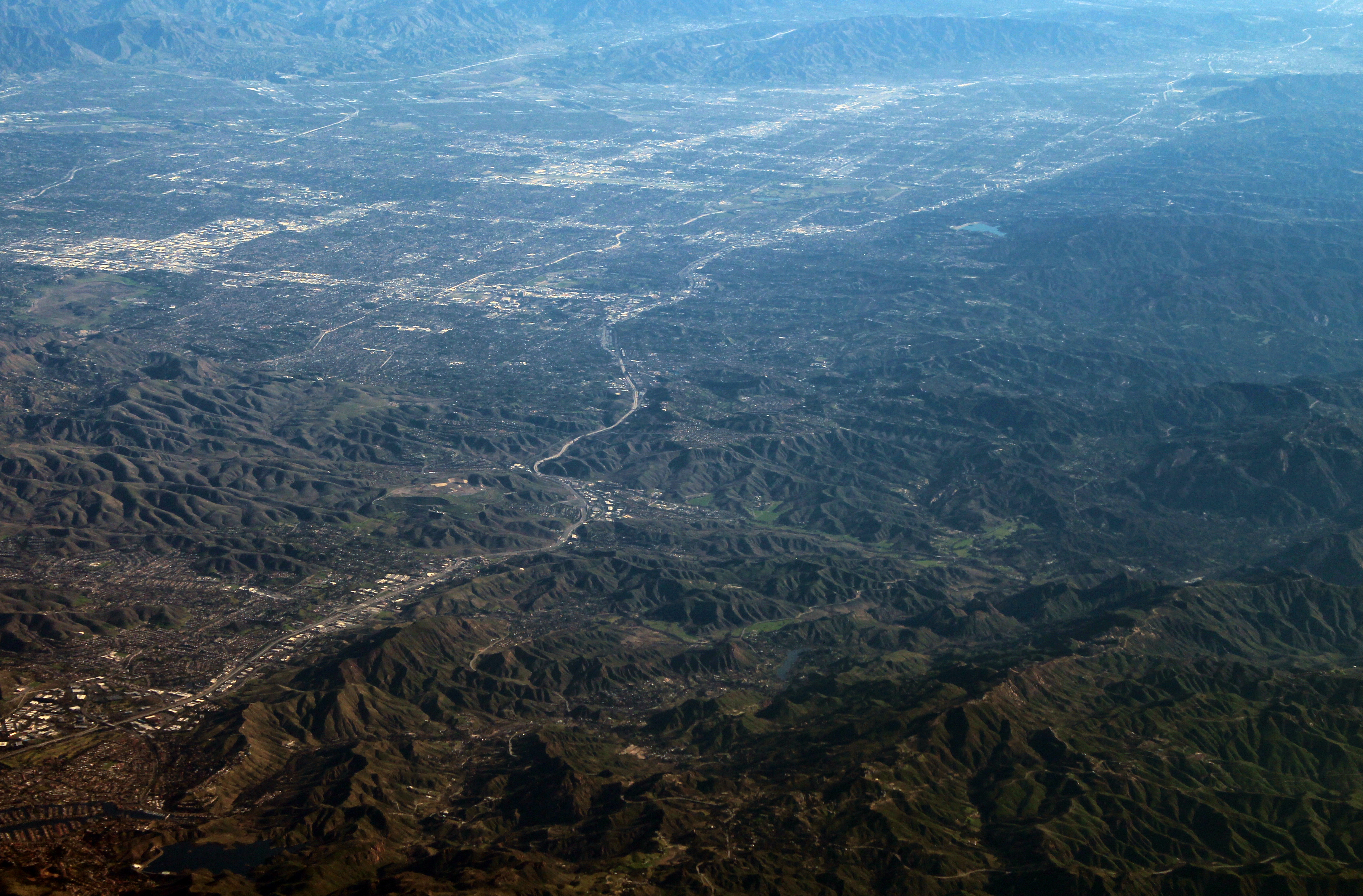
From the Air
The crash site is located at approximately 34.0083N, 118.7058W on a hillside in the Santa Monica Mountains, near the intersection of Las Virgenes Road and Willow Glen Street in Calabasas, California. This is roughly 30 nautical miles northwest of downtown Los Angeles, in terrain that rises rapidly from the coastal plain. The area is characterized by canyons and ridgelines that can funnel and trap low clouds and marine layer. Nearby airports include Camarillo Airport (KCMA) approximately 15 nm west, Van Nuys Airport (KVNY) approximately 15 nm east, and Santa Monica Airport (KSMO) approximately 15 nm southeast. This is Class G and Class E airspace with mountainous terrain requiring careful attention to minimum safe altitudes, particularly in reduced visibility conditions.