2020 Nashville Bombing
"If you can hear this message, evacuate now." The computerized female voice repeated itself from loudspeakers mounted on a recreational vehicle parked on Second Avenue North, between Church Street and Commerce Street in downtown Nashville. It was Christmas morning, 2020. The RV had arrived at 1:22 a.m. By 5:30 a.m., residents were calling 911 to report gunfire. Two Metropolitan Nashville police officers found no shots being fired -- but they found the RV, and they heard the warning. In the next hour, those officers and four colleagues went door to door evacuating homes. At 6:30 a.m., the vehicle exploded. The blast was felt miles away.
The Warning Nobody Expected
The bombing was unlike almost any terrorist act in modern American history. The RV broadcast escalating warnings: "All buildings in this area must be evacuated now." "Stay clear of this vehicle." "Do not approach this vehicle." "Your primary objective is to evacuate these buildings now." A 15-minute countdown played before detonation. The six responding officers -- later called heroes by the department -- knocked on doors and cleared the area while the timer ran. Two of them were injured in the blast. In total, eight people were hospitalized and discharged. The bomber, 63-year-old Anthony Quinn Warner, was the only fatality. National security experts struggled to categorize the act. One analyst noted similarities to Provisional IRA tactics, where warnings preceded bombings to minimize casualties. A USA Today analysis called the combination of features unprecedented: a suicide bombing designed to minimize human suffering, targeting infrastructure rather than people, with no clear political manifesto.
A City Goes Dark
The RV had been parked adjacent to an AT&T network facility containing a telephone exchange. The blast destroyed backup generators through fire and water damage. Services ran on battery power for hours before failing. By noon, cellular, landline, internet, and television services were disrupted across Middle Tennessee. Multiple 911 systems went offline. Nashville's community hotline and some hospital networks failed. The Memphis Air Route Traffic Control Center lost communications, and the Federal Aviation Administration grounded all flights from Nashville International Airport for about an hour. Stores switched to cash-only when credit card systems collapsed. ATMs stopped working. The outages persisted for days. AT&T deployed mobile cell sites downtown, but a fire that reignited overnight forced another evacuation of the damaged building. Mayor John Cooper called it an attack on infrastructure -- an apt description for a bombing that left most of its damage invisible, buried in severed fiber optic cables and fried switching equipment.
The Bomber's Trail
Human remains found near the blast site matched DNA recovered from gloves and a hat in a car registered to Anthony Quinn Warner. Investigators reconstructed a 17-digit vehicle identification number from the RV's wreckage, linking it to Warner. A Nashville native raised in the Antioch neighborhood, Warner had worked in information technology for decades. Neighbors described him as reclusive. In the weeks before Christmas, he had told a neighbor: "Nashville and the world is never going to forget me." Credit card records showed purchases of bomb-making components. What investigators could not find was a coherent motive. Packages Warner mailed before the bombing contained writings expressing belief in 9/11 conspiracy theories, moon landing denial, and reptilian conspiracy theories. He referenced a claim that space aliens had attacked Earth in 2011. "Everything is an illusion," he wrote. "There is no such thing as death." The FBI concluded Warner acted alone.
A Warning That Went Nowhere
The bombing exposed a failure in threat detection. In August 2019, Warner's friend Pamela Perry and her attorney had met with Nashville police. Perry told them Warner was building bombs in the RV. Her attorney -- who had previously represented Warner -- said he believed her. Officers visited Warner's neighborhood but could not make contact with him. They did not enter his home, yard, or RV. After a few days of observation that turned up no visible evidence of bomb-making, police closed the case as unfounded. They forwarded a report to the FBI and requested a database check. Neither the FBI nor the Department of Defense flagged anything. Sixteen months later, the RV detonated on Second Avenue.
Second Avenue After the Blast
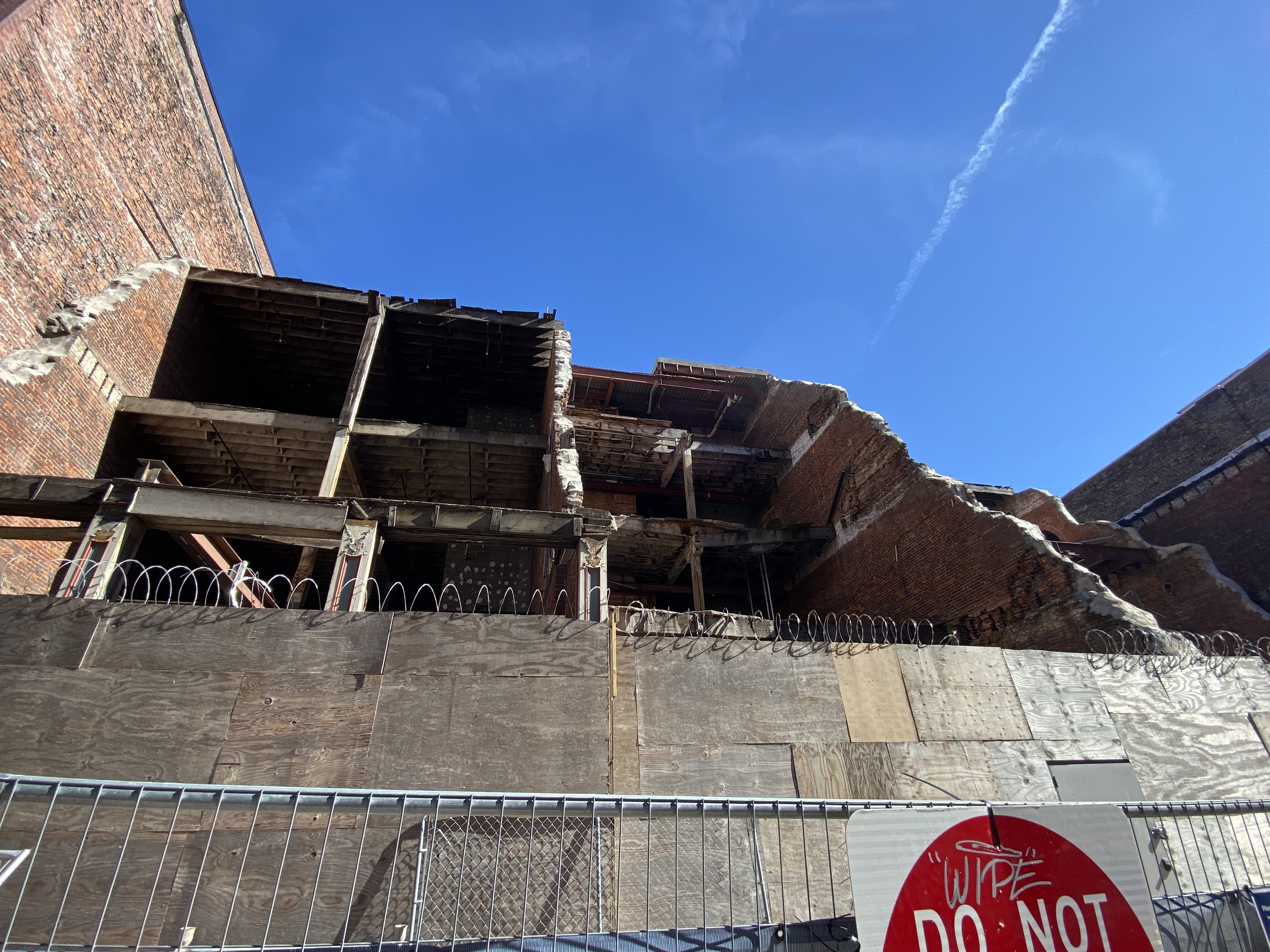
The explosion damaged over 60 buildings along one of Nashville's most storied commercial corridors. More than 1,000 people lost their jobs. Over 400 residents were displaced from their homes. The damage compounded what had already been a catastrophic year: Nashville had been struck by a tornado in March 2020, and the COVID-19 pandemic was devastating the city's hospitality and entertainment economy. A year after the bombing, over a third of directly affected buildings remained shuttered. The George Jones Museum and Bar closed permanently. The Old Spaghetti Factory, a Hooters, and a Melting Pot franchise never reopened. The Coyote Ugly Saloon sat empty for an extended period. Second Avenue -- the heart of Nashville's tourist district, blocks from Broadway's honky-tonks -- fell quiet for months. Mayor Cooper lifted the downtown curfew on December 28, three days after Christmas. The rebuilding of Second Avenue would take years, layered atop the rebuilding that Nashville was already doing from the tornado and the pandemic.
From the Air
Located at 36.16N, 86.78W in downtown Nashville, Tennessee. Second Avenue North runs parallel to the Cumberland River, one block west of the riverfront. The AT&T building (known locally as the 'Batman Building' for its twin spires, though the damaged facility was a separate network hub) is a major downtown landmark. The blast site is between Church Street and Commerce Street, adjacent to Broadway -- Nashville's famous entertainment strip. Nashville International Airport (KBNA) is 8nm southeast. John C. Tune Airport (KJWN) is 8nm west. The Cumberland River curves through downtown and is a prominent visual reference. Best viewed at 2,000-3,000 ft AGL. Note: The AT&T tower at 333 Commerce Street (the 'Batman Building') is 617 ft tall and is the tallest building in Tennessee -- maintain safe altitude.