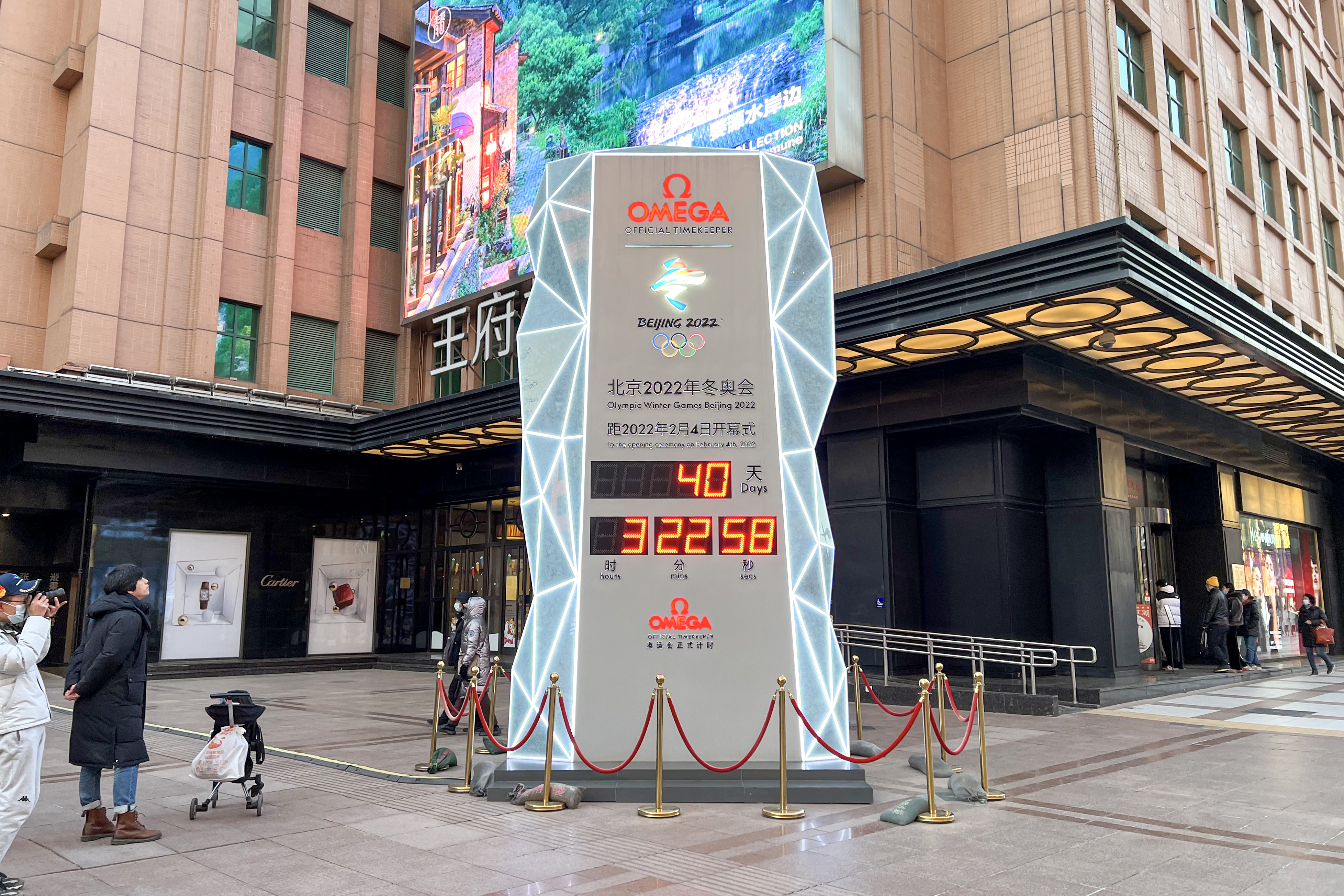
2022 Winter Olympics
No city had ever done it before. When Beijing opened the XXIV Olympic Winter Games on February 4, 2022, it became the first place on Earth to host both the Summer and Winter Olympics. The Bird's Nest stadium, built for the 2008 Summer Games, lit up once more -- but the world watching was a very different one. A pandemic had sealed the venues from the public. Diplomatic boycotts had emptied VIP boxes. And the snow that fell on alpine courses in Yanqing and Zhangjiakou was almost entirely machine-made, pumped across landscapes that rarely see natural winter precipitation.
Three Zones, One Vision
The Games spread across three distinct clusters spanning roughly 180 kilometers. Beijing itself hosted ice sports: figure skating and short track at the renovated Capital Indoor Stadium, speed skating at the new National Speed Skating Oval (nicknamed the "Ice Ribbon" for its exterior curves), ice hockey split between the National Indoor Stadium and Wukesong Sports Centre, and curling at the repurposed National Aquatics Center, where the famous "Water Cube" swimming pool was converted into curling sheets -- an Olympic first. Yanqing District, 90 kilometers northwest, hosted alpine skiing and sliding sports on Xiaohaituo Mountain using venues carved into terrain that rarely sees natural snow. And Zhangjiakou, in neighboring Hebei Province, hosted cross-country, biathlon, ski jumping at the distinctive "Snow Ruyi" hill, and freestyle events at Genting Snow Park. A new high-speed rail line cut the Beijing-to-Zhangjiakou journey to roughly 50 minutes.
The Bubble Olympics
COVID-19 defined the experience of every participant. Athletes, coaches, officials, and journalists lived inside a hermetically sealed "closed loop" -- tested daily, transported on dedicated vehicles, barred from contact with the general public. Ticket sales to ordinary citizens were canceled in January 2022 after the Omicron variant reached Beijing. Only invited guests attended, making these the second consecutive Olympics closed to the public. The NHL withdrew its players from the men's hockey tournament over pandemic concerns. Top athletes like Austrian ski jumper Marita Kramer, who led the World Cup rankings, were barred from competing after testing positive. Every participant was required to use the My2022 app, which tracked health data so extensively that several national committees recommended athletes carry burner phones rather than personal devices.
Boycotts and Geopolitics
The Games became a stage for geopolitical tensions that extended far beyond sport. Ten countries, led by the United States, mounted diplomatic boycotts over China's treatment of Uyghurs, Tibetans, and Hong Kong protesters -- sending athletes but no government officials. Lithuania announced its boycott first, in December 2021. China dismissed the moves as "politicizing sports" and noted the U.S. had never been formally invited. India joined the boycott after a People's Liberation Army commander involved in border skirmishes appeared as a torchbearer. Meanwhile, Russia's Vladimir Putin attended the opening ceremony; just days after the closing ceremony, Russia invaded Ukraine. Reports later alleged China had asked Russia to delay the invasion until after the Games, a claim Beijing denied.
Records on Ice and Snow
Despite the controversies, the competition itself set records. A total of 109 medal events across 15 disciplines -- the most in Winter Olympic history -- included debuts for big air freestyle skiing, women's monobob, and several mixed-team events. Norway dominated, winning 37 medals including 16 golds, the most gold medals ever won by a single country at a Winter Games. Germany followed with 27 medals, the United States with 25, and host nation China achieved its best-ever Winter Olympic performance with 9 golds and 15 total medals. The figure skating team event was later reshuffled after Russian skater Kamila Valieva's doping disqualification, with the United States upgraded to gold and Japan to silver in January 2024.
Legacy of a Dual Olympic City
The official budget came in at US$2.24 billion, a fraction of the $43 billion spent on the 2008 Summer Games, and organizers reported a $52 million profit. All 26 venues ran on renewable energy, a first in Olympic history. But the larger legacy remains contested. Zhangjiakou's ski resorts saw tourism boom even before the Games, with revenues exceeding 1.54 billion yuan during the 2015-16 season alone. The high-speed rail now connects Beijing to a winter sports corridor that barely existed a decade ago. Yet the environmental cost of manufacturing snow in a dry region, the surveillance infrastructure built for biosecurity, and the unresolved human rights concerns that prompted the boycotts ensure that Beijing 2022 will be remembered as much for its contradictions as for its athletic achievements.
From the Air
The three Olympic zones span from Beijing (39.99°N, 116.39°E) northwest to Yanqing (40.46°N, 115.97°E) and Zhangjiakou (40.79°N, 115.76°E). Beijing Capital International Airport (ZBAA/PEK) serves the city. The Olympic Green complex, including the Bird's Nest and Ice Ribbon, is visible from the air at 3,000-5,000 feet AGL in northern Beijing's Chaoyang district.