2023 Herat Earthquakes
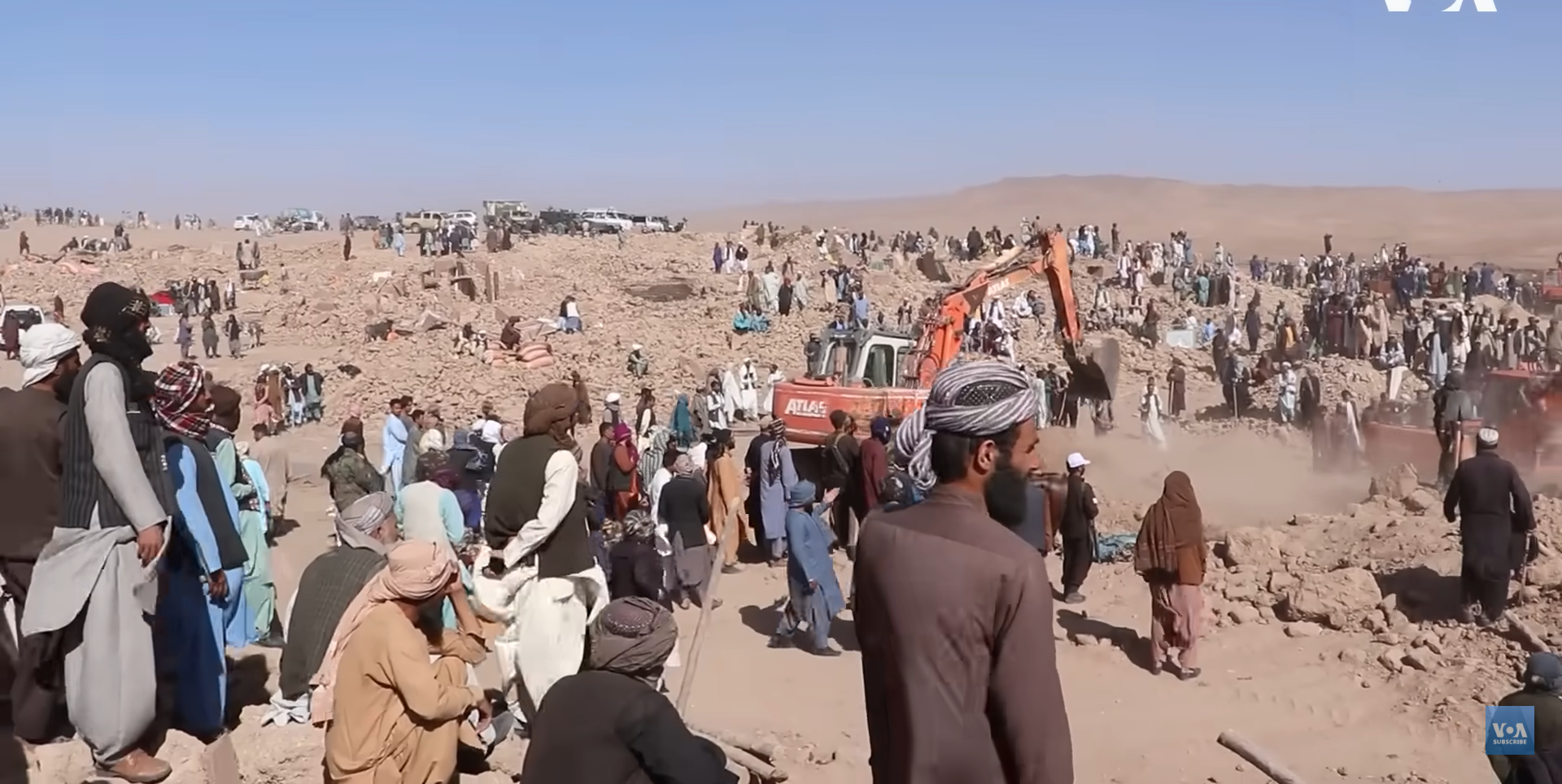
The first earthquake hit at 11:11 in the morning on October 7, 2023. Thirty-one minutes later, a second one struck. Both measured magnitude 6.3. Then on October 11, another 6.3. On October 15, a fourth. The ground beneath Herat Province would not stop moving, and with each tremor more mud-brick homes folded inward on the people inside them. The World Health Organization would eventually count 1,482 dead. Ninety percent were women and children. At the time the earthquakes struck, most men were outdoors. The women and children were home.
Fault Lines Visible and Invisible
Western Afghanistan sits within one of the most tectonically complex zones on Earth, where the Arabian, Indian, and Eurasian plates collide. The Harirud Fault runs near the city, though the earthquakes of October 2023 were caused by a different structure -- a blind thrust fault buried between the Herat and Siakhubulak faults. Satellite data from Sentinel-1A revealed an area uplifted by the quakes, with subsidence to the east. The geology was unforgiving, but the devastation was compounded by human factors. Homes in the affected villages were built of mud, a traditional construction method that performs catastrophically under seismic stress. Over 21,500 houses were destroyed and 17,088 more severely damaged. Entire villages disappeared. In Siah Aab, within Zinda Jan District, 300 people died. In Chahak, the October 11 aftershock destroyed all 700 houses -- a village that had survived the first earthquakes untouched.
Digging With Bare Hands
Rescue efforts began immediately, and they were desperate. In the affected villages, people used shovels and their bare hands to pull survivors from the rubble. Communication outages and blocked roads hampered organized relief. The national director of World Vision Afghanistan said on October 9 that the situation was worse than imagined, with people still clawing through debris. At Herat Regional Hospital, vans carrying bodies arrived every minute. The morgue was overrun. Beds were lined up outside to handle the overflow. Doctors Without Borders set up five medical tents for 80 patients, and seven teams from the Afghan Red Crescent Society deployed from other provinces. The World Food Program prepared food packages for 20,000 people, with plans to scale up to 70,000. UNICEF distributed 10,000 hygiene kits, 5,000 family kits, and 1,500 sets of winter clothes. The scale of need dwarfed the response capacity.
A Tent City in Winter
The earthquakes struck a population already in crisis. Since the Taliban takeover in 2021, foreign aid to Afghanistan had dropped sharply. Existing relief organizations were underfunded before the ground started shaking. Now thousands of newly homeless families faced the approaching Afghan winter without shelter. The WHO director-general described Herat Province as a tent city, with survivors crowding into parks and open spaces. Aftershocks left people in what the WHO called a persistent state of anxiety and fear. Many refused to return to standing homes, preferring the cold of a tent to the risk of being buried alive. More than 340 patients discharged from hospitals declined to leave because they had no homes to return to. The Supreme Court of Afghanistan ordered 473 prisoners released from a Herat prison after inspectors found cracks in its walls.
The World Responds
Despite the geopolitical isolation of Taliban-ruled Afghanistan, international aid arrived from dozens of countries. Kazakhstan sent 1,659 tons of supplies and 45 rescue workers who covered 76 affected areas in their first 24 hours. Iran dispatched 50 rescue workers with advanced equipment, tents, blankets, and food. The United States contributed $12 million through USAID. Germany pledged 60 million euros. Japan provided $3 million, and South Korea $1 million. The Red Cross and Red Crescent launched a $132.64 million appeal, though only 36 percent was funded by mid-October. Pakistan's aid offer was rejected by the Taliban after a controversial tweet from the Pakistani prime minister. Cricketer Rashid Khan pledged his World Cup fees to the relief effort. By February 2024, the UN estimated $400 million was needed for full reconstruction and recovery.
Building Back, One Wall at a Time
By January 2024, at least 3,000 new houses had been constructed in Zinda Jan, some using superadobe building techniques -- an earthquake-resistant method employed in Afghanistan for the first time. Nearly 300 schools had been damaged, affecting 180,000 students. Parts of the Great Mosque of Herat's rooftop had fallen, and the Herat Citadel sustained damage. Almost 100,000 children remained in urgent need of aid. The reconstruction raises a question that seismologists, engineers, and residents all understand: how to build in a region where the earth will move again. The blind thrust fault responsible for October 2023 remains active. The mud-brick construction that defines traditional Afghan villages remains the most affordable option for families with nothing. The gap between what the geology demands and what poverty permits is where the next disaster waits.
From the Air
The earthquake epicenters were located at approximately 34.61N, 61.92E, roughly 35 km north-northeast of Zinda Jan in western Herat Province. Herat International Airport (OAHR) lies to the southeast. From the air, the affected area appears as a broad agricultural plain with scattered villages, many of which were reduced to rubble. The Harirud Fault zone runs generally east-west through the region. Best viewed at 8,000-15,000 ft AGL for the geographic scope of the disaster zone.