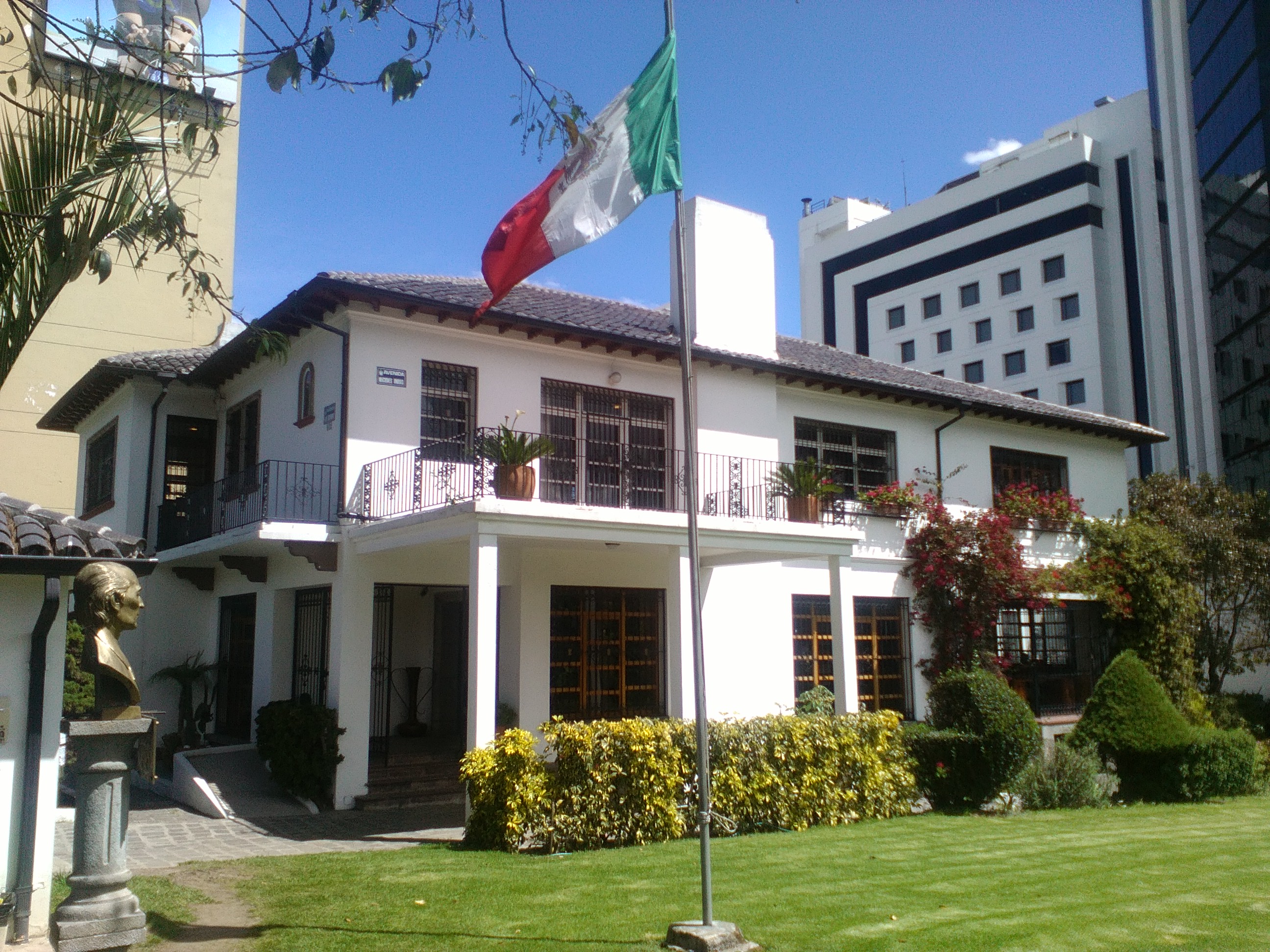
2024 Raid on the Mexican Embassy in Quito
At around ten o'clock on the night of April 5, 2024, the diplomatic order that had governed Latin America for sixty-three years broke against an embassy wall in Quito. An elite detachment of the National Police of Ecuador arrived at the Mexican mission carrying a battering ram. At least one agent climbed over the perimeter. A gun was pointed at the embassy's acting head, Roberto Canseco, as he tried to block their path. Inside, they seized former Ecuadorian Vice President Jorge Glas, who had been granted political asylum just hours earlier. They took him to a prison cell in Guayaquil. By dawn, Mexico had severed diplomatic relations, Nicaragua was preparing to do the same, and the 1961 Vienna Convention on Diplomatic Relations - the bedrock treaty that makes embassies inviolable - had entered a crisis that ended up before the International Court of Justice.
The Man Inside
Jorge Glas had been Ecuador's vice president under two presidents, Rafael Correa and Lenin Moreno. In December 2017, he was sentenced to eight years in prison for bribery and illicit association. He served part of the sentence, was released in November 2022, and was then facing new charges connected to the alleged misuse of funds raised for reconstruction after the 2016 earthquake in Manabi Province. On December 17, 2023, he walked into the Mexican embassy in Quito and requested asylum, alleging political persecution. For nearly four months, a diplomatic standoff played out in letters and press conferences. Mexico said nothing decisive until April 4, when Ecuadorian President Daniel Noboa's government declared the Mexican ambassador a persona non grata after Mexican President Andres Manuel Lopez Obrador made comments about Ecuadorian electoral politics. Mexico responded the next day by formally granting Glas asylum. A few hours later, Ecuadorian police came over the wall.
The Wall
What happened that night was captured on security video. Agents in tactical gear approached the compound, forced the outer doors with a battering ram, and began scaling the walls of a diplomatic mission whose inviolability was considered one of the most absolute principles in international law. Glas, according to his attorney, was kicked multiple times as he resisted arrest and dragged out of the building. Mexican diplomats were injured. Acting embassy head Canseco had a weapon pointed at him when he stood in the police path. Footage later released by Mexico showed the scene with stark clarity. Glas was taken to the attorney general's office, then to Guayaquil, then to a maximum-security prison. On April 12, an Ecuadorian tribunal ruled that his arrest had been illegal and arbitrary for lack of proper authorization from the Foreign Ministry, but upheld his continuing imprisonment based on his prior convictions.
A Continent Reacts
The condemnation was nearly universal across the Western Hemisphere. Nicaragua severed diplomatic ties with Ecuador the next day. Venezuela closed its embassy and consulates in Quito and Guayaquil. Argentina, Brazil, Chile, Colombia, the United States, and the European Union all condemned the raid. The Organization of American States Permanent Council, by a near-unanimous vote (Ecuador against, El Salvador abstaining, Mexico absent), passed a resolution strongly condemning the intrusion. UN Secretary-General Antonio Guterres said he was alarmed and reaffirmed the cardinal principle of the inviolability of diplomatic premises. Six days after the raid, Mexico filed an application at the International Court of Justice requesting that Ecuador be suspended from the United Nations until it issued a public apology. On April 29, Ecuador countersued, accusing Mexico of illegally granting asylum to Glas. In May 2024, the ICJ declined Mexico's request for provisional measures, accepting Ecuador's pledge to respect the mission grounds.
Why Noboa Did It
President Daniel Noboa, a 36-year-old political newcomer who had taken office only the previous November, offered no apology. He framed the raid as a necessary defense of Ecuador's rule of law, saying he had made exceptional decisions to protect national security, the rule of law, and the dignity of a population that rejects any type of impunity for criminals, corrupt people, or narco-terrorists. Noboa had campaigned as an action-oriented reformer in a country reeling from gang violence; the raid played well with a segment of the Ecuadorian electorate that had grown weary of impunity. Critics saw a different logic. Granting Glas asylum would have allowed a convicted former vice president to return to Mexico and speak freely, potentially damaging Noboa's political rivals in the Correa-aligned Citizen Revolution Movement. The raid ended that possibility before the diplomatic pouch could be packed.
The Precedent That Will Not Go Away
Diplomatic immunity is a strange legal fiction that works only because everyone agrees to respect it. The Vienna Convention's rule that embassy premises are inviolable rests not on walls or locks but on the shared interest of every government in having its own missions protected abroad. When one country breaks that rule - especially a country whose own diplomats serve in dangerous postings around the world - it sets a precedent that other governments can invoke when convenient. The raid on the Mexican embassy in Quito will be cited in international law textbooks for decades. Jorge Glas remains in an Ecuadorian prison. Mexico and Ecuador maintain no diplomatic relations. The embassy building where Ecuadorian police came over the wall now stands with its grounds in the legal care of the Swiss government, which took on protecting power duties after the rupture. What happens next - whether the International Court of Justice eventually finds Ecuador liable, whether Ecuador ever apologizes, whether the diplomatic norms hold - will help determine how safe the world's embassies are for the century to come.
From the Air
The Mexican embassy compound in Quito is located at approximately 0.18 degrees S, 78.48 degrees W, in the Gonzalez Suarez neighborhood on the eastern side of the central city. Quito sits at 2,850 meters elevation on the flank of Pichincha Volcano. Nearest airport is Mariscal Sucre International Airport (SEQM/UIO) in Tababela, about 18 km east of the city. Urban terrain with dense embassy row and government buildings nearby. Weather is variable; afternoon cloud development is common year-round.