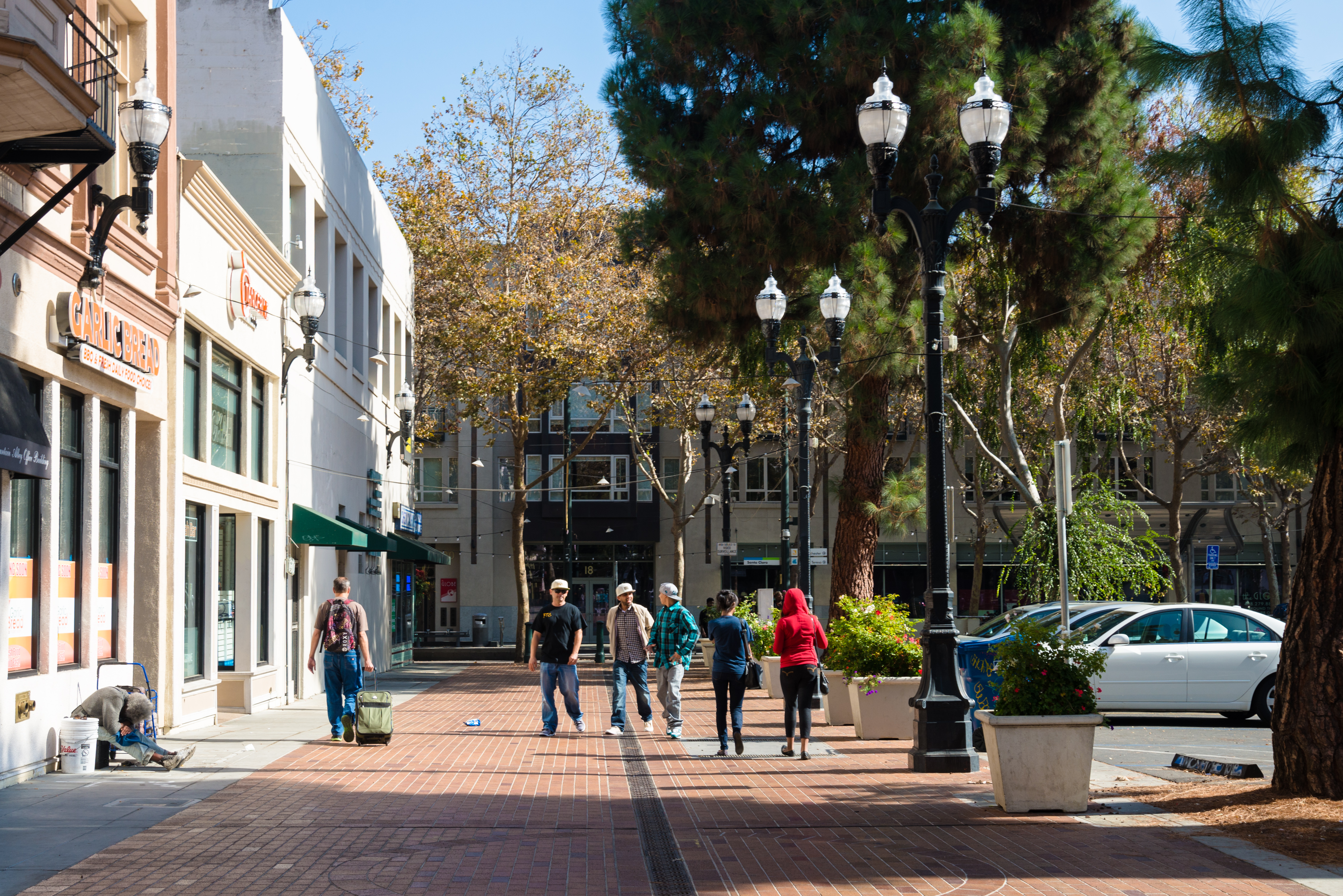
27-29 Fountain Alley
Fountain Alley is one of San Jose's oldest streets, a narrow passage that dates to the early days of the pueblo. At numbers 27 and 29, a late Victorian commercial building stands as the sole representative of its architectural era in this part of downtown. Listed on the National Register of Historic Places since March 2, 1982, the building is a quiet survivor in a city that has systematically demolished most of its nineteenth-century commercial fabric.
A Street with Memory
Fountain Alley earned its name from the public fountain that once stood at its intersection with First Street, a gathering point in the dusty pueblo that San Jose was during the mid-nineteenth century. The alley became a commercial corridor lined with small shops, offices, and services that served the downtown community. As San Jose grew and modernized, most of the buildings along Fountain Alley were replaced by newer structures. The building at 27-29 survived, its late Victorian facade a reminder of the scale and character of downtown commerce before the automobile and urban renewal transformed the city.
Victorian Commerce
The building's architectural significance lies in its uniqueness rather than its grandeur. It is the only remaining example of late Victorian commercial architecture in this section of San Jose, a style characterized by decorative brickwork, cornices, and the proportions of a merchant class that built to human scale. The structure has housed various businesses over its lifetime, each one contributing another layer to the building's history. Its survival through the aggressive development cycles of the twentieth century, when downtown San Jose was repeatedly reimagined, speaks to a combination of luck, neglect, and the eventual recognition that old buildings carry value.
Preservation in a City of Change
The National Register listing in 1982 came during a period of growing awareness that San Jose had been too aggressive in demolishing its historic structures. The building at 27-29 Fountain Alley is small, modest, and easily overlooked, exactly the kind of structure that cities tend to sacrifice for parking lots or new development. Its preservation matters precisely because it is ordinary, a representative of the everyday commercial architecture that defined nineteenth-century San Jose. Without it, Fountain Alley would have no physical connection to the era that gave the street its name.
From the Air
Located at 37.34°N, 121.89°W in downtown San Jose near First Street. Norman Y. Mineta San Jose International Airport (KSJC) is approximately 3 miles northwest. The building is part of the downtown commercial grid and not individually distinguishable from altitude.