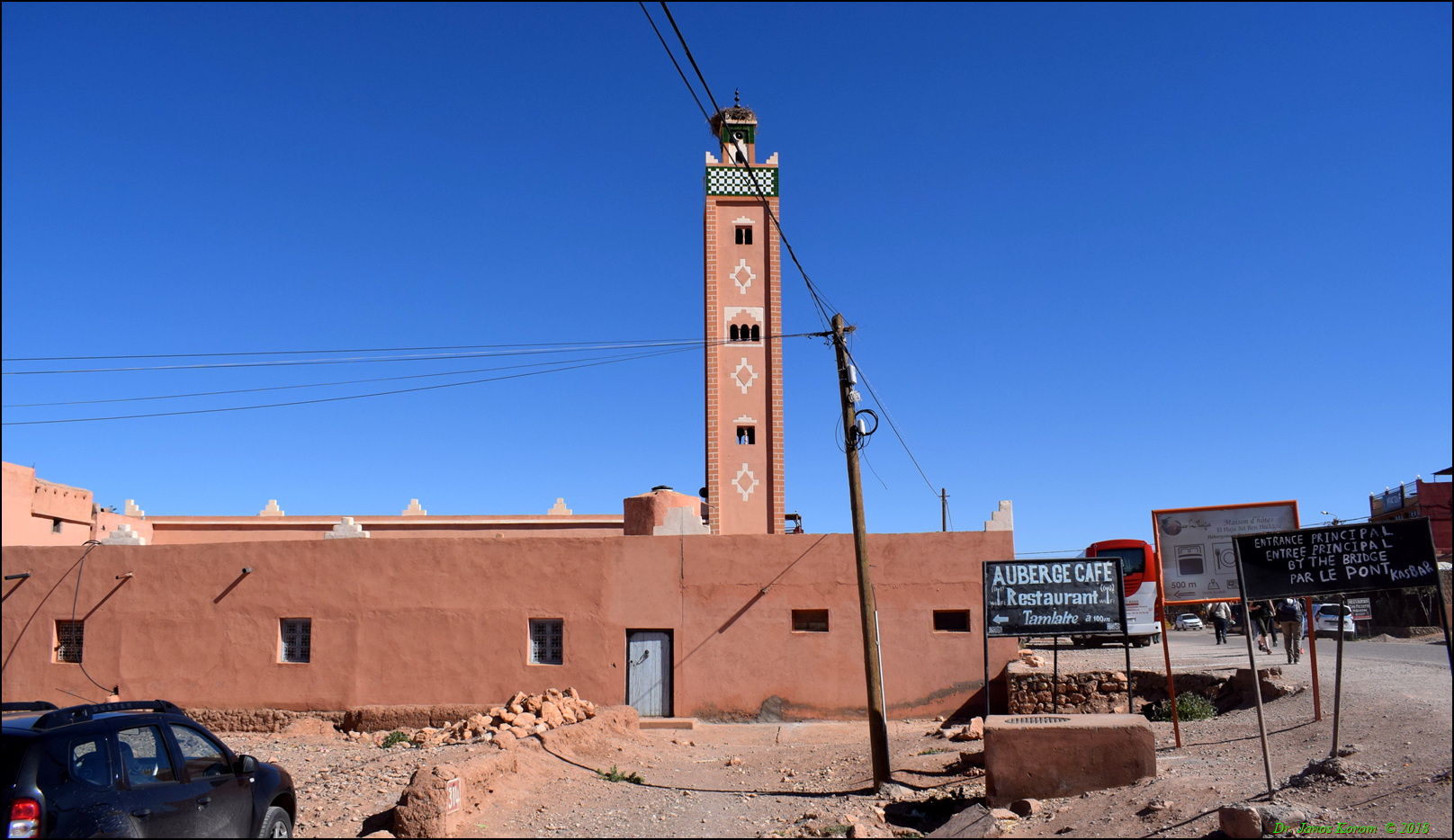
Ait Benhaddou
The sun hits the kasbahs of Ait Benhaddou differently each hour, transforming the earthen walls from pale ochre at dawn to deep amber at sunset, and cinematographers have been exploiting this light for decades. This fortified village at the edge of Morocco's High Atlas Mountains has portrayed ancient cities across the world: Jerusalem in Kingdom of Heaven, Yunkai in Game of Thrones, and the mysterious destination in countless desert epics from Lawrence of Arabia to Gladiator. Yet for all its screen fame, Ait Benhaddou remains a functioning settlement where a handful of families still live within walls built by their ancestors, where craft shops occupy rooms that once stored grain against siege, and where the call to prayer still echoes across the river valley each evening.
A City of Earth
The ksar - the Arabic term for a fortified village - climbs a hillside in a cascade of towers, walls, and terraces, all constructed from the same material: rammed earth mixed with straw, an ancient building technique that the Moroccan sun bakes into something almost as durable as stone. The buildings huddle together for mutual defense, their blank outer walls presenting a unified fortress face to potential attackers while inner courtyards provide light and air. At the summit stands a granary where the community once stored provisions, its position reflecting the precious value of food supplies in this harsh environment. The UNESCO World Heritage listing came in 1987, recognizing Ait Benhaddou as one of the finest surviving examples of traditional earthen architecture in southern Morocco.
Crossing the River
Two entrances lead into the ksar: one accessed by a modern bridge, built to accommodate the film crews and tourists who now form the town's economic lifeblood, and another reached by stepping stones across the riverbed. In the dry season the river shrinks to a trickle or vanishes entirely, leaving the stones exposed; in wetter months visitors must pick their way carefully or wait for locals to appear with offers of assistance. The crossing creates a natural boundary between the modern world and the ancient one, a threshold that visitors cross to enter a place where the 21st century feels distant and intrusive. Many stay overnight specifically to experience the ksar without the day-trip crowds, watching the light change on walls that glow like embers as the sun sets behind the Atlas peaks.
From Caravans to Cameras
Long before Hollywood discovered its photogenic qualities, Ait Benhaddou served as a waypoint on the trans-Saharan trade routes that carried gold, salt, and enslaved people between West Africa and the Mediterranean ports. The fortified design that makes it so visually striking originated in practical necessity: the need to protect valuable cargo and vulnerable families from the raiders who preyed upon the caravan trails. When the trade routes shifted and eventually closed, the settlement declined, its population drifting to the new town across the river. What remained attracted a different kind of traffic - location scouts seeking authentic-looking ancient cities that could be dressed to represent anywhere from biblical Jerusalem to fantasy realms. The income from film productions and tourism has funded careful restoration work, ensuring the earthen walls remain standing against the occasional desert rains that threaten to dissolve them back into the ground from which they rose.
From the Air
Located at 31.05N, 7.13W in southern Morocco, approximately 30 km northwest of Ouarzazate. The ksar sits at roughly 1,300 m elevation where the High Atlas foothills meet the pre-Saharan zone. Ouarzazate Airport (GMMZ) serves as the nearest commercial airport, 30 km southeast. The distinctive hilltop fortress is visible from moderate altitude, set against the dramatic backdrop of the Atlas Mountains to the north. The N9 road connecting Marrakech to Ouarzazate passes nearby.