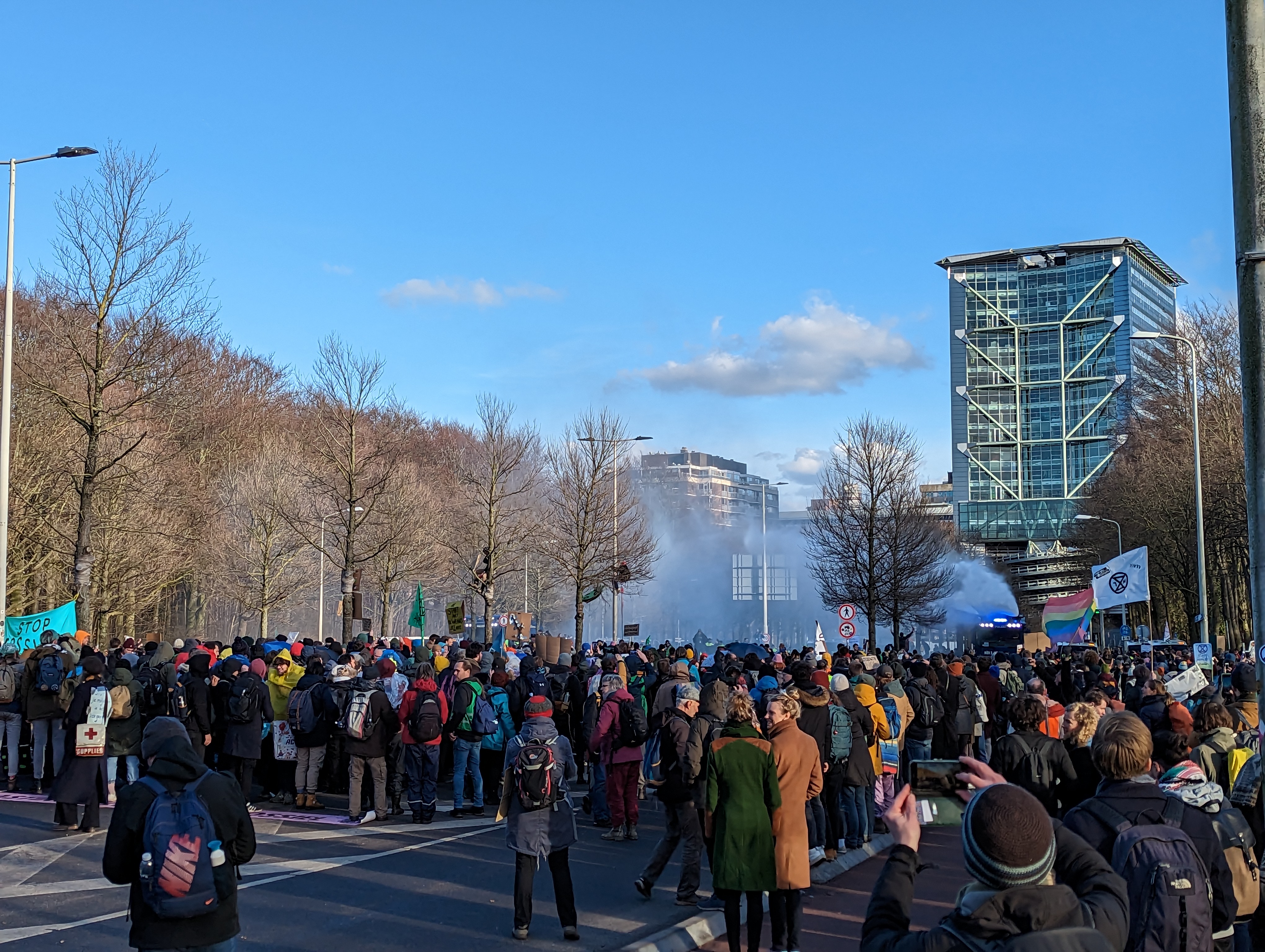
A12 blockade
The Utrechtsebaan is a strange stretch of road. Technically part of the A12 motorway, it functions as a sunken urban corridor cutting through The Hague between the temporary home of the Tweede Kamer - the Dutch House of Representatives - and the Ministry of Economic Affairs and Climate Policy. Legislators headed to debate fossil fuel policy can sometimes see the protestors before they see the lawyers. That geography is the point. On 6 July 2022, a few dozen Extinction Rebellion activists sat down on the asphalt for the first time. By 2025, the count of arrests had passed several thousand, and the blockade had become one of the longest-running acts of civil disobedience in modern Dutch history.
The number that lit the match
Extinction Rebellion's demand was specific and verifiable: end subsidies to the fossil fuel industry. In 2020 the Dutch government itself had calculated those subsidies at 4.5 billion euros, while admitting the figure excluded many entries. In January 2023, former MEP Alman Metten put the real number at 17.5 billion. Then, in September 2023, the Ministry of Economic Affairs and Climate Policy released its own revised estimate: somewhere between 39.7 and 46.4 billion euros a year. That figure, more than ten times the original government number, landed in the public conversation just as the activists were preparing the most ambitious phase of their campaign. Polling soon afterward by RTL Nieuws found that 80 percent of Dutch respondents opposed the blockade. Seventy percent agreed with its goal.
The daily ritual
On 9 September 2023, somewhere between ten thousand and twenty-five thousand people gathered on and around the Utrechtsebaan. Water cannons were turned on the seated protestors. Twenty-four hundred were arrested. The next afternoon, several hundred came back. The afternoon after that, several hundred more. For nearly a month they returned, day after day, knowing exactly what awaited them. Some glued themselves to the asphalt. Some sang. A handful from the German group Letzte Generation flew in and attached themselves to manhole covers with finger locks. Drivers stuck in detoured traffic shouted from windows. One reporter was punched by a furious motorist. Eggs were thrown by counter-protestors. The mayor of The Hague, Jan van Zanen, said the police were exhausted and that resources had to be drawn from across the Netherlands to clear the same road over and over.
What politics made of it
On 10 October 2023, the Tweede Kamer passed a motion asking the cabinet to draw up a plan to phase out fossil subsidies. Extinction Rebellion paused the daily blockades the next day. By February 2024 they had resumed - the plan had not, in their view, materialized. Right-wing parties argued the police were too soft. The Minister of Justice and Security shared some of that frustration but stood by the legal reality: a Dutch court had ruled in early 2023 that blocking a road was not in itself a crime, but a form of protest. She refused to negotiate with anyone on the asphalt. The Minister of Climate and Energy Policy, by contrast, walked over to a legal-support demonstration on 9 September and talked with the activists. Police unions, caught in the middle, called for dialogue between government and protestors and complained that ordinary policing was suffering. The eight activists who were arrested in their homes for sedition before the January 2023 action were eventually convicted - one acquitted, the others receiving community service - but the court openly criticized the police for the early-morning raids as disproportionate.
Two truths at once
Both sides of the argument here are worth taking seriously. The commuter whose drive home was lengthened by hours, the small business owner who lost a delivery window, the parent who couldn't reach a school in time - they were not abstractions, and their frustration was real. The activists, many of them young, knew they would be detained, soaked by water cannons, and dragged off the road. Greta Thunberg joined them and was arrested twice in 2024 alone. They saw the climate trajectory in front of them and decided that breaking traffic flow was the cost of being heard. The Dutch public mostly disliked the method while mostly agreeing with the goal. That gap - between what people thought should change and what they were willing to tolerate in pursuit of that change - is the political problem the A12 forced into the open.
Why this road
Choose any quieter street and the blockades would have been a footnote. The Utrechtsebaan put bodies directly between two centers of decision-making and made the dissonance impossible to ignore. By 28 October 2023, the day before a Dutch general election was widely expected to be called, the 45th blockade was announced - a deliberate reminder, as political pressure mounted, that the question of fossil subsidies had not gone away. Whether the road eventually empties because the subsidies end, the movement fragments, or the public simply tunes out, the A12 has already changed something. A patch of urban motorway, four lanes wide, became one of the most contested pieces of pavement in Europe.
From the Air
Utrechtsebaan, A12 section, The Hague, Netherlands. Coordinates: 52.08 degrees N, 4.33 degrees E. The protest site is a sunken stretch of urban motorway running west-east between the Tweede Kamer area and the eastern edge of central Den Haag. Recommended viewing altitude 1,500-2,500 feet to see the road corridor and the dense Randstad street grid. Nearest airport is Rotterdam The Hague (EHRD), about 12 nautical miles south. Schiphol (EHAM) sits roughly 25 nautical miles north. Watch for restricted airspace during political events.