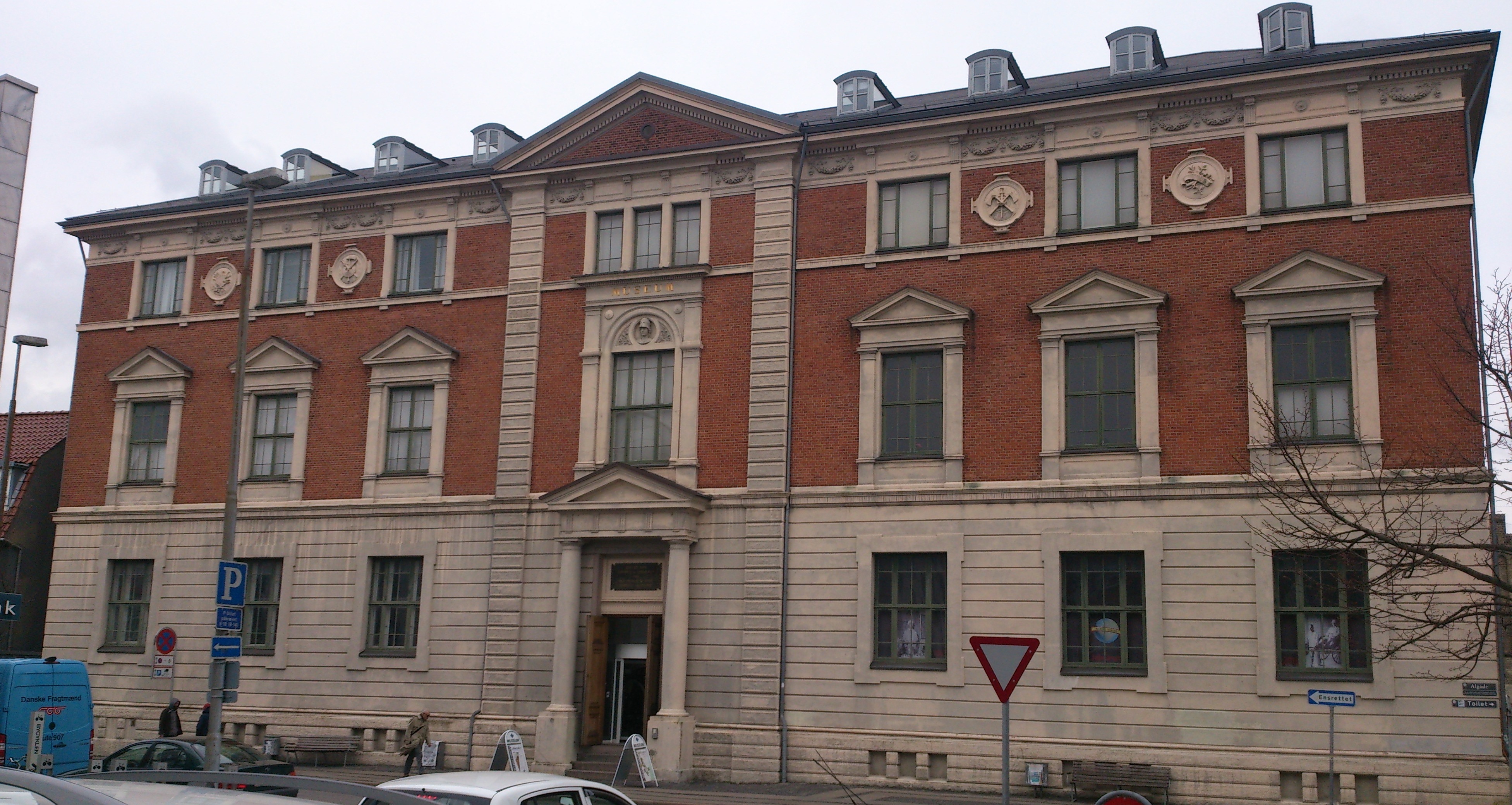
Aalborg Historical Museum
Step into the Aalborgstuen and the year is 1602. The oak-paneled walls, the carved ceiling, the proportions of a prosperous merchant's parlor all survive intact, claimed to be the best-preserved middle-class Renaissance interior in Denmark. It sits inside the Aalborg Historical Museum, a building that has been collecting the region's past since 1863, when a group of citizens decided that North Jutland's story deserved a permanent home. What they started has grown into a system that spans Viking burial grounds, underground medieval ruins, and a millennium of artifacts that track how people in this corner of Denmark have lived, worked, and died.
Born in the Museum Age
The museum was established in 1863, making it one of the earliest provincial museums in Denmark, part of a wave of institutional collecting that swept through Scandinavian cities in the mid-nineteenth century. The present building was constructed in 1878 and expanded in the early 1890s as the collections outgrew their original quarters. Silver and glass form the core of its most admired holdings, alongside a substantial collection of clothing and textiles spanning from the eighteenth century to the present. These are not royal garments but everyday fabrics, the kind that tell you how ordinary Danes dressed, what they could afford, and what they considered fashionable across three centuries.
Digging Into the Viking Age
In the 1950s, the museum turned from collecting to excavating. Archaeological campaigns at Iron Age and Viking sites in the surrounding area, most notably Lindholm Hoje, transformed the institution. Lindholm Hoje is a dramatic hilltop cemetery where hundreds of Viking-age graves, many outlined with stones set in the shape of ships, overlook the Limfjorden. The excavations were so significant that they ultimately led to the creation of a dedicated site museum, Lindholm Hoje Museet, one of Denmark's most important Viking heritage sites. The work at Lindholm Hoje connected Aalborg's museum to the deep past in a way that display cases alone could never achieve.
Under the City Streets
Decades later, the museum dug again, this time beneath central Aalborg itself. In 1994 and 1995, excavations at the site of the former Greyfriars Friary uncovered medieval foundations that had been buried for centuries. Rather than removing the finds to a gallery, the museum created the Grabrodrekloster Museum, an underground space where visitors walk among the ruins exactly where they were found. The decision to preserve the friary remains in situ turned a routine excavation into something more atmospheric: a passage through the medieval city that once existed beneath the modern streets of Aalborg.
A Network of Memory
In 2004, several organizations merged to form the Historical Museum of Northern Jutland, an umbrella institution administered by a twelve-member committee drawn from groups including the Museum Society of Hadsund, the Aalborg History Association, and the Cultural Historic Society of North Jutland. The merger reflects a truth about regional history: it does not respect municipal boundaries. Viking graves, medieval friaries, Renaissance parlors, and modern textile collections all belong to the same story, one that stretches across North Jutland and across a thousand years. The Aalborg Historical Museum, with its intact 1602 merchant's room at the center, remains the anchor of this network, the place where the region's long memory is most tangibly present.
From the Air
Located at 57.05N, 9.92E in central Aalborg, Denmark's fourth-largest city on the south bank of the Limfjorden. The museum is in the city center, not easily distinguished from the air, but Aalborg itself is identifiable by the Limfjorden crossing and the distinctive urban layout. Nearest airport is Aalborg (EKYT), approximately 6 km northwest. Best context at 3,000-5,000 feet AGL to see the city's relationship to the fjord.