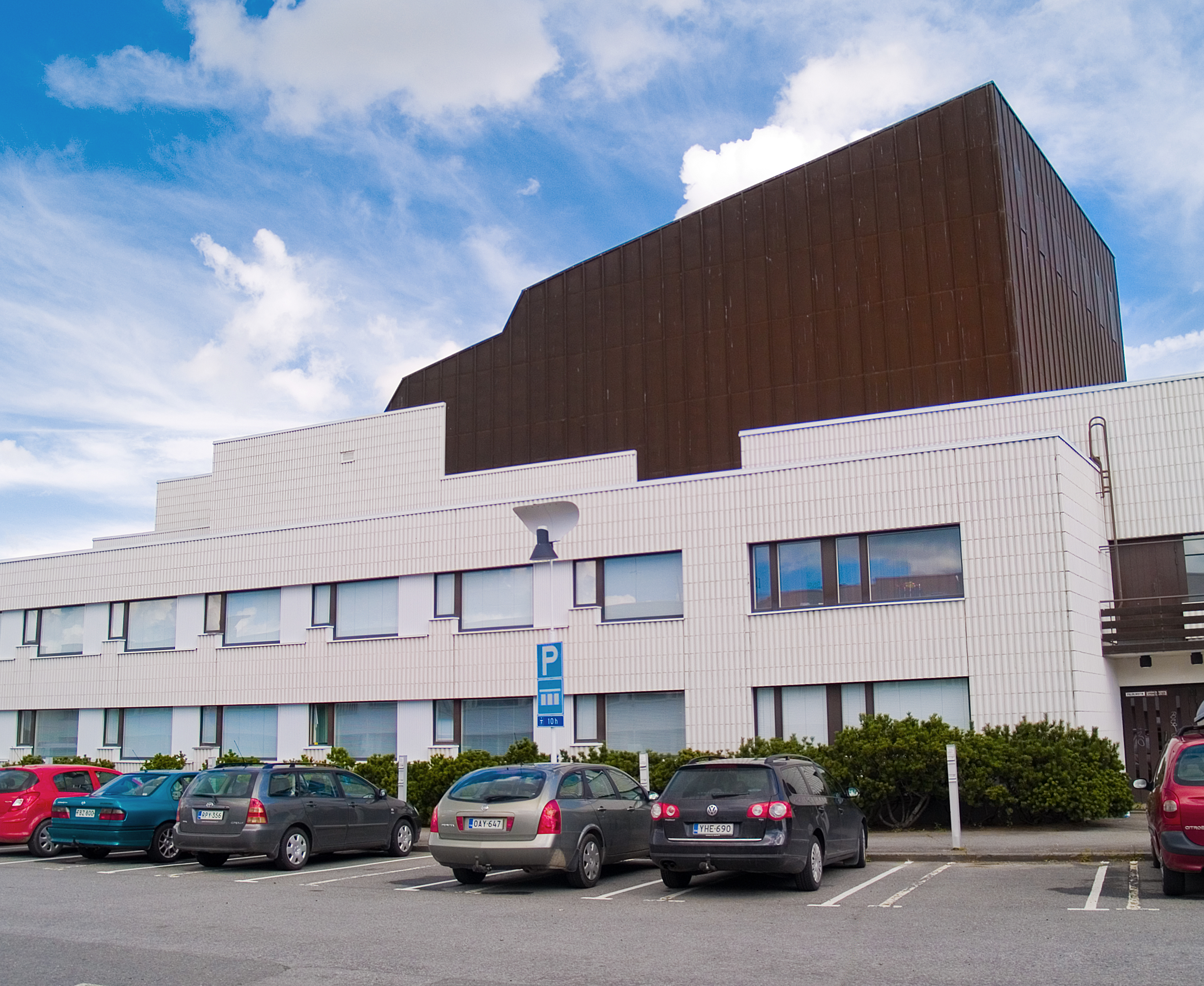
Aalto Centre, Seinäjoki
Alvar Aalto's competition entry exceeded the prescribed building area by twenty meters. The jury could not award him the prize. They gave it to him anyway -- purchasing his design and recommending it as the basis for the new church in Seinajoki, a small city in Finland's Ostrobothnia region. That 1951 decision set in motion a seventeen-year project that would give Seinajoki something no other Finnish city of its size possesses: a complete civic center designed by a single architect, six buildings arranged around a central square that together form one of Aalto's most important works.
The Competition That Broke the Rules
When Seinajoki parish announced a design competition for a new church in 1951, most entrants followed the brief: place the parish rooms under the church or in a small adjacent building, stay within the prescribed footprint. Aalto saw something different. Inspired by the large outdoor religious gatherings common in Ostrobothnia's flat agricultural landscape, he designed a sweeping piazza that sloped downward toward the church's main facade, bordered by parish facilities. The plan was bold, space-hungry, and technically disqualified. But the jury recognized its ambition and purchased the entry marked 'Lakeuksien risti' -- Cross of the Plains. Construction did not begin until 1957, six years after the competition, a delay that speaks to the complexity of realizing Aalto's vision in a modest provincial city.
Six Buildings, One Vision
The Aalto Centre comprises six buildings completed over nearly three decades. Lakeuden Risti Church came first, finished in 1960, its 65-meter cross-shaped bell tower rising as a landmark visible across the flat Ostrobothnian plain. The City Hall followed in 1962, then the Municipal-Provincial Library in 1965 and the Parish Center in 1966. A City and State Office Building was completed in 1968. The last piece, the City Theatre, was not finished until 1987 -- eleven years after Aalto's death in 1976. Together the buildings define a civic space that is coherent without being monotonous, each structure responding to its neighbors in material, scale, and sightline while serving a distinct function. The Finnish Government protected the ensemble as a cultural site in 2005, recognizing its significance not just to Seinajoki but to Finnish architectural heritage.
Modernism on the Plains
Aalto Centre is notable for what it is not: a single landmark building. Unlike the Sydney Opera House or the Guggenheim Bilbao, this is not a destination defined by one spectacular structure. It is a working civic center -- library, church, theater, town hall, offices -- that happens to be designed by one of the 20th century's most celebrated architects. The buildings share Aalto's characteristic vocabulary of white surfaces, warm wood interiors, and carefully controlled natural light, but they avoid the self-conscious monumentality that plagues many architect-designed civic projects. The church seats 1,200 people. The library lends books. The theater stages plays. Citizens' Square, framed by the buildings on three sides, hosts markets and events. The genius is in the ordinariness of the program elevated by the quality of the architecture -- a complete modernist ensemble functioning exactly as Aalto intended, in a city of roughly 60,000 people in western Finland.
Aalto's Ostrobothnian Legacy
Seinajoki was not the only Finnish city to benefit from Aalto's civic ambitions -- he designed a similar center in Rovaniemi and individual buildings across the country -- but the completeness of the Seinajoki ensemble is unmatched. The Museum of Modern Art in New York holds Aalto's original drawings for the town center, a mark of the project's international recognition. For visitors arriving in Seinajoki, a city better known for its annual Tango Festival and Ostrobothnian farmland than for architecture, the Aalto Centre comes as a quiet surprise: a cluster of white modernist forms arranged with the precision of a campus and the warmth of a village square. The bell tower of Lakeuden Risti serves as the anchor point, its cross silhouette visible for kilometers across the flatland, drawing the eye toward a place where one architect's stubborn refusal to follow the competition rules reshaped an entire city center.
From the Air
Located at 62.79°N, 22.84°E in Seinajoki, Ostrobothnia, western Finland. The Aalto Centre occupies the civic core of the city, identifiable from the air by the distinctive 65-meter cross-shaped bell tower of Lakeuden Risti Church. Nearest airport is Seinajoki Airport (EFSI), approximately 10 km south of the city center. The flat Ostrobothnian landscape makes the bell tower a useful visual reference point. Recommended viewing altitude: 2,000-4,000 ft to appreciate the layout of the six buildings around Citizens' Square.