ABBA The Museum
Somewhere in Stockholm, Benny Andersson sits down at his piano and begins to play. Simultaneously, on the island of Djurgarden, a grand piano in a museum springs to life, its keys dancing without a performer. This technological magic is just one wonder inside ABBA The Museum, where the distance between fan and phenomenon collapses entirely. Opened in May 2013, this interactive exhibition transformed how Sweden celebrates its most successful musical export, inviting visitors not merely to observe ABBA's legacy but to step inside it, to try on the costumes virtually, to perform the songs, to become, for a moment, the fifth member of a band that sold over 150 million records worldwide.
From Failed Customs House to Pop Cathedral
The museum that exists today almost never happened. Plans for an ABBA exhibition first emerged in 2006, when founders Ulf Westman and Ewa Wigenheim-Westman announced ambitious goals for Stockholm's former main customs building in the harbor. Organizers projected half a million annual visitors. But financial difficulties plagued the project, and by 2009 the customs building instead became Fotografiska, Stockholm's acclaimed photography museum. ABBA's permanent home seemed destined to remain a dream until October 2012, when new plans emerged. The traveling ABBAWORLD exhibition, which had toured Europe and Australia from 2009 to 2011, would finally anchor itself in Stockholm. The location chosen was a building near Grona Lund amusement park on Djurgarden, the island that serves as Stockholm's cultural playground.
Where Brighton Meets Stockholm
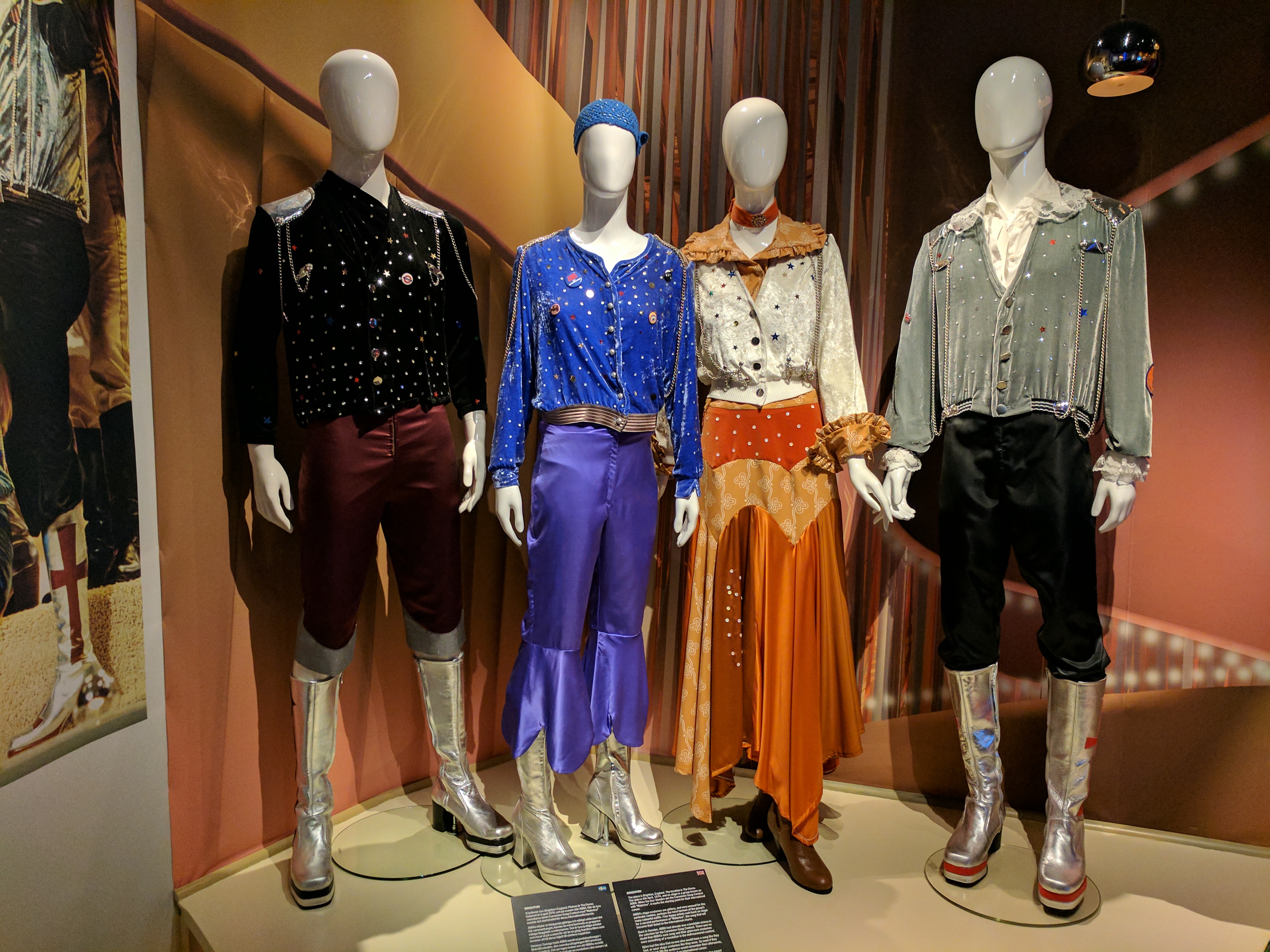
The museum's exhibits trace ABBA's trajectory from Swedish folk parks to global domination. The Folkpark recreation captures the modest venues where Agnetha, Bjorn, Benny, and Anni-Frid first crossed paths and eventually merged their talents. But the Waterloo section steals the show, recreating the atmosphere of Brighton, England, during the 1974 Eurovision Song Contest. That competition transformed four Swedish performers into international superstars overnight. Memorabilia from the event surrounds visitors, transporting them to the moment when 'Waterloo' conquered Europe's airwaves. Nearby, a faithful recreation of Polar Studios allows visitors to stand where ABBA recorded their later masterpieces, surrounded by original equipment from the legendary recording space.
The Magic Piano and the Secret Phone
Technology bridges the gap between museum visitors and the reclusive band members. Benny's Piano exemplifies this connection: a self-playing grand piano linked to an identical instrument in Andersson's home. When he plays, the museum piano performs in real time, creating an intimate connection across Stockholm's geography. Interactive stations let visitors perform ABBA songs, their voices mixing with the band's, their images projected alongside the famous foursome. The audio guide itself carries creative distinction, written by Catherine Johnson, who penned the screenplay for 'Mamma Mia!' Perhaps the most tantalizing exhibit is Ring Ring: a telephone whose number is known only to the four members of ABBA. Whether it ever rings is a secret the museum keeps.
Costumes That Conquered the World
The sequined jumpsuits and platform boots that defined ABBA's visual identity fill the museum's galleries. These aren't replicas; the band members donated their actual stage costumes, the same garments that dazzled audiences from Sydney to Stockholm. The elaborate outfits, which became as iconic as the music itself, reflected both 1970s glamour and Swedish design sensibility. Mannequins wear the outfits that accompanied the 'Waterloo' album, frozen in poses that recall performances watched by hundreds of millions. For fans who grew up with ABBA posters on their walls, standing inches from these costumes delivers an emotional impact no photograph could capture.
From the Air
Located at 59.325N, 18.096E on Djurgarden island in Stockholm harbor. The museum sits near Grona Lund amusement park, identifiable by its roller coasters along the waterfront. Djurgarden appears as a green peninsula extending east from central Stockholm, connected by bridges to Ostermalm. Stockholm Arlanda Airport (ESSA) lies 37km north. Stockholm Bromma Airport (ESSB) is 10km west. When approaching Stockholm by air, Djurgarden's parkland contrasts sharply with the urban density of the mainland, with Grona Lund's amusement park structures marking the museum's neighborhood.