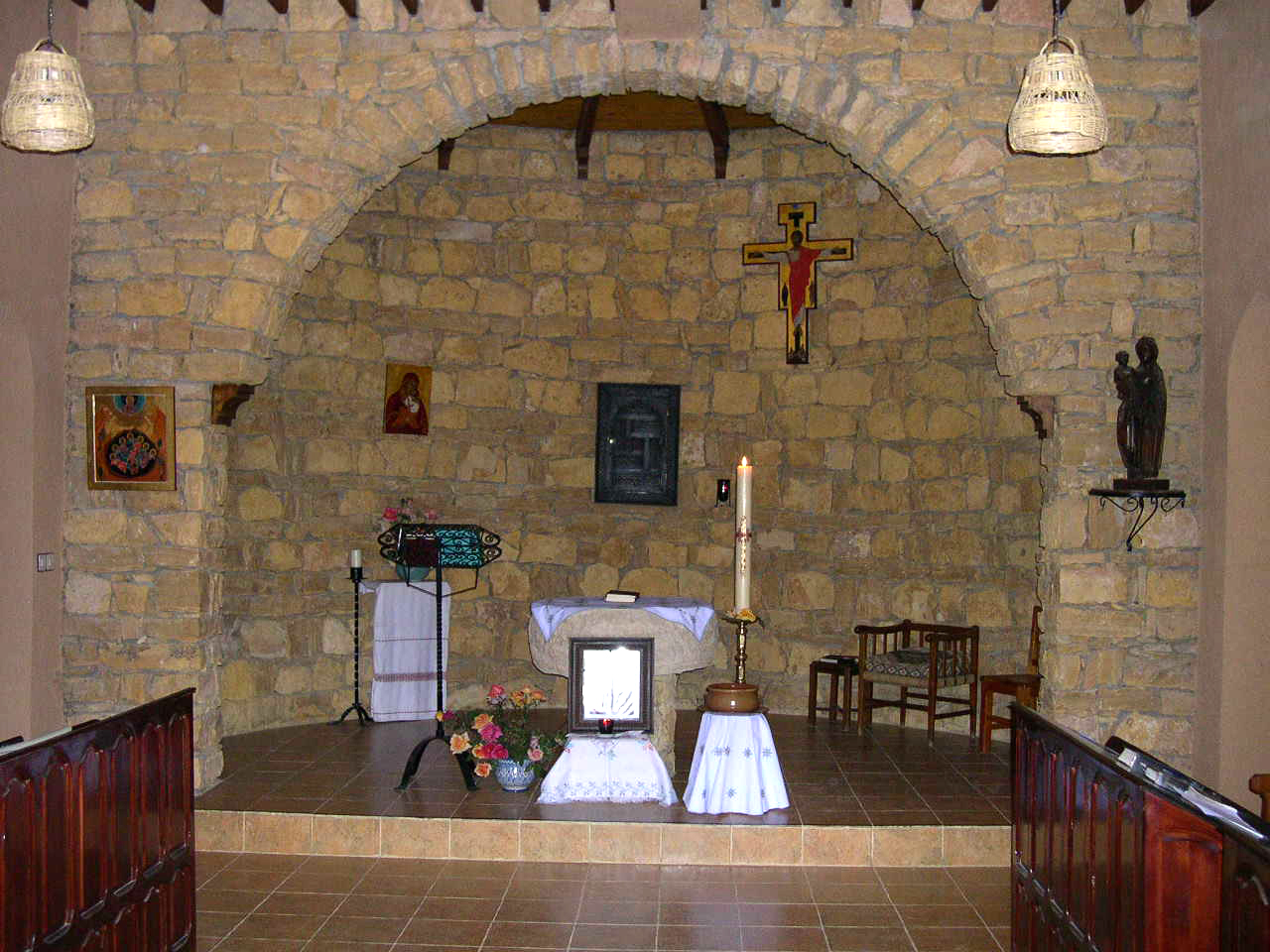
Abbey of Our Lady of Atlas
The name Tibhirine means "gardens" in Berber -- specifically, vegetable gardens, the kind that grow in terraces irrigated by collected rainwater. For nearly sixty years, Trappist monks tended those gardens in the Atlas Mountains south of Algiers, living by the Rule of Saint Benedict among Muslim neighbors who became their friends, patients, and employers. Then, in March 1996, seven of the monks were kidnapped from the monastery during Algeria's civil war. They were killed two months later. The story of their lives and deaths became the subject of the 2010 film Of Gods and Men, but the full arc of this place stretches back much further than its tragedy.
Roots in Two Centuries
Trappist presence in Algeria began in 1843, when monks from Aiguebelle Abbey in France established a monastery at Staoueli to teach modern agricultural techniques. That community grew quickly but collapsed in 1904, driven out by financial difficulties and France's new laws restricting religious congregations. Three decades later, in 1933, Trappists from Brestanica in modern-day Slovenia tried again, eventually settling in 1935 near Medea, 100 kilometers south of Algiers, in the Atlas mountain range. On March 7, 1938, they formally established the Abbey of Our Lady of Atlas close to a village that colonists had founded in 1848. The agricultural territory of Tib-Harins became Tibhirine after Algerian independence in 1962.
The Village and the Monastery
The monastery became an abbey in 1947, receiving the abbatial crozier from the old Staoueli Abbey -- a direct symbolic link across nearly a century of Trappist presence in Algeria. By 1951, around thirty monks lived there. The community shrank during the Algerian War, when Fellagha fighters raided the monastery in 1958, and by independence in 1962 only nine monks remained. The order considered closing the site, but fate intervened: the General Abbot of the Trappists, Dom Gabriel Sortais, died on the very night the closure decree was to be signed, and the decision was suspended. Eight new brothers arrived from French monasteries in 1964. Meanwhile, villagers from the mountain settlement of Tamesguida had moved down to Tibhirine for safety during the war, and the monastery's presence helped the village grow.
Neighbors Across Faith
The monks lived in silence and prayer, their days structured by the Benedictine hours. But their relationship with Tibhirine was anything but cloistered. They taught French, employed villagers on the monastery farm, provided medical care, and distributed clothing and shoes to those in need. The bond between the Christian monks and their Muslim neighbors was not abstract interfaith dialogue but the practical intimacy of shared daily life. When the seven monks were beatified in 2018 -- along with twelve other martyrs of Algeria as the 19 martyrs of Algeria -- the ceremony in Oran was attended by Muslims as well as Christians. The shared grief reflected a shared history.
After the Gardens
Two monks survived the kidnapping: Father Jean-Pierre and Father Amedee. They moved to the monastery's annex in Fez, Morocco, which the Trappist order elevated from a simple annex to an autonomous major priory -- acknowledging that the community of Our Lady of Atlas had not ended but relocated. In 2000, the monks moved again to a new monastery near Midelt, Morocco. Back in Tibhirine, the monastery buildings stood empty until 2016, when they were entrusted to the Chemin Neuf Community, a Catholic community from Lyon. The gardens still grow. The terraces still catch rain. The name Tibhirine still means what it always meant.
From the Air
Located at 36.30N, 2.72E in the Atlas Mountains, approximately 100 km south of Algiers, near the city of Medea. The monastery sits in a mountainous, forested area at moderate elevation. Best viewed at 3,000-5,000 feet AGL. Nearest airport: DAAG (Houari Boumediene Airport, Algiers), approximately 100 km north. The Tibhirine Forest dominates the surrounding area.