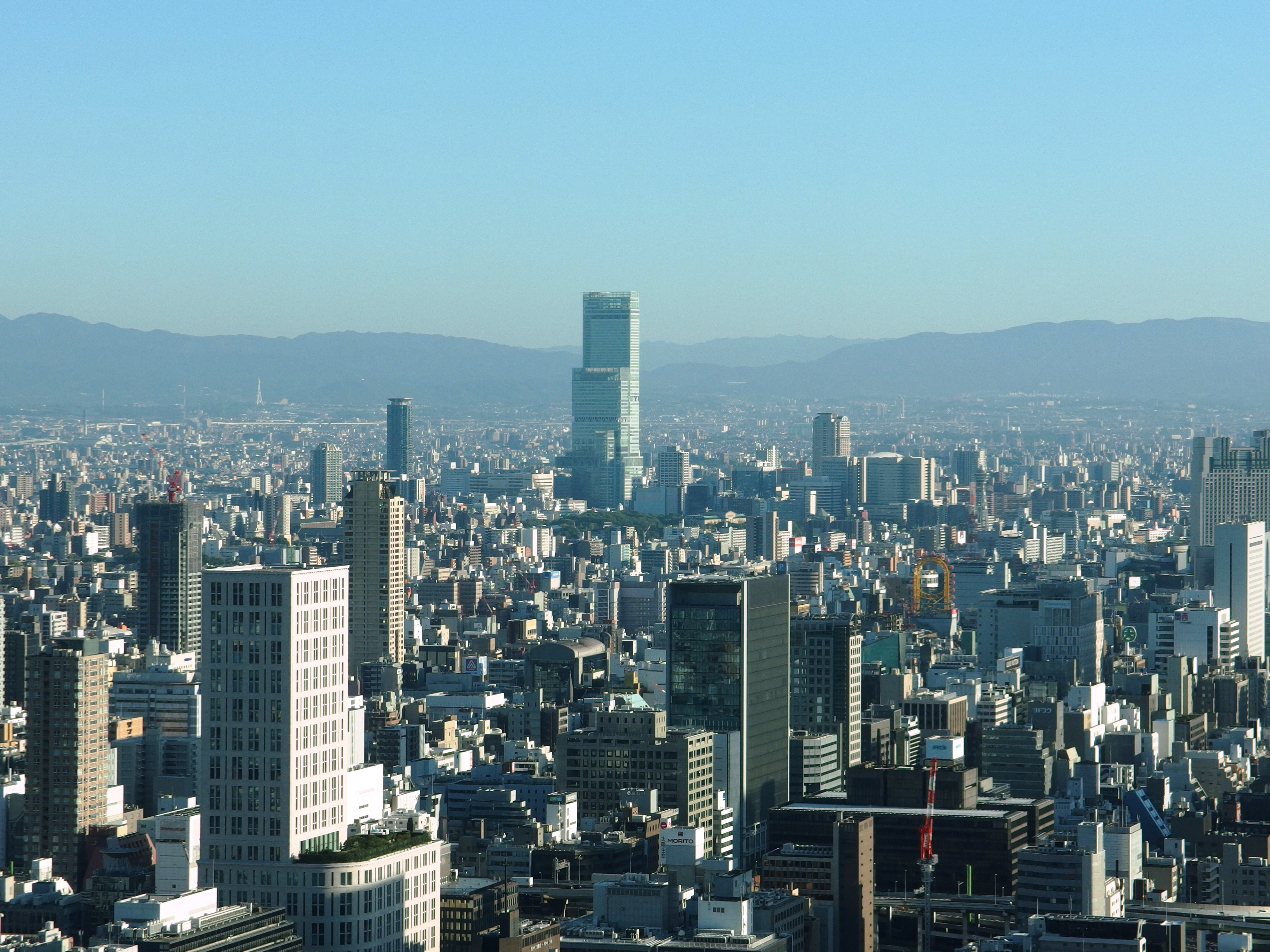
Abeno Harukas: Osaka's Tower That Clears the Sky
Its name is a promise. Abeno Harukas takes its identity from the old Japanese word harukasu -- to brighten, to clear up -- and from the observation deck on its 60th floor, the promise delivers. On clear days, the 360-degree panorama from 300 meters stretches across the entire Osaka basin, from the mountains of Nara to the cranes of Osaka Bay, from the dense urban grid of Tennoji to the distant shimmer of Kansai International Airport's artificial island. Designed by Cesar Pelli and completed on March 7, 2014, this 62-story supertall skyscraper held the title of Japan's tallest building for nearly a decade before Tokyo's Azabudai Hills Mori JP Tower claimed it in 2023. But Abeno Harukas was never just about height. It was about transforming a rail terminal into a vertical city.
A Station Reborn Upward
Abeno Harukas rises directly above Osaka Abenobashi Station, the terminus of the Kintetsu Minami Osaka Line, and that is not a coincidence. The tower was conceived as an alternative station building -- a radical reimagining of what a railway terminal could become. Kintetsu Railway, which operates the line, envisioned a single structure that would house the station at its base, a department store climbing through its lower floors, office space and university campuses in its middle section, a Marriott hotel in its upper reaches, and an observation deck at its crown. The result is one of Japan's largest department stores by floor space, the Kintetsu Department Store Main Store, sprawling across the basement levels through the ninth floor and rooftop of the adjacent wing building. Sharp Corporation maintains a sales office in the tower. The building's four basement levels include parking, while the first basement and ground floor integrate directly with the train station below. To arrive at Abeno Harukas is, for many visitors, simply to step off a train.
Three Hundred Meters of Ambition
The number 300 is embedded in the building's identity. The observation deck is branded Harukas 300, and the name doubles as the tower's exact height in meters. Cesar Pelli, the Argentine-American architect behind the Petronas Towers in Kuala Lumpur and the World Financial Center in New York, designed the structure with a stepped profile that narrows as it rises, reducing wind load and creating outdoor terraces at transition points. The 58th floor features a timber-decked open-air garden -- the Sky Garden -- where visitors can feel the wind at 280 meters above street level. Above it, the 60th floor's floor-to-ceiling glass walls erase the boundary between indoors and the Osaka skyline. For those who want to push further, the Edge the Harukas experience offers a guided walk along the building's exterior edge, harnessed against the sky with nothing but air between you and the city below. A separate heliport tour takes visitors to the actual rooftop, the full 300 meters above ground.
The Abeno District Below
Abeno Harukas anchors a commercial ecosystem that has grown around the Abenobashi terminal over decades. The surrounding blocks are dense with shopping complexes: Abeno Cues Town, Abeno Lucias, Tennoji MiO, and the underground Abechika shopping arcade that connects directly to the station. The district sits at the southern edge of central Osaka, near Tennoji Park and the ancient Shitennoji Temple, one of Japan's oldest Buddhist temples. This part of Osaka has historically been less glamorous than the neon corridors of Namba or the business towers of Umeda, but Harukas changed that calculus. The tower gave Abeno-ku a landmark visible from across the city and drew foot traffic that revitalized surrounding retail. Standing at the tower's base and looking up, the glass facade reflects clouds in a way that lives up to the building's name -- the sky does seem to clear.
A Title Lost, A Landmark Kept
In November 2023, the 325-meter Azabudai Hills Mori JP Tower opened in Tokyo's Minato ward, ending Abeno Harukas's nine-year reign as Japan's tallest building. The loss of the superlative barely registered in Osaka. Harukas was never primarily about competing with Tokyo -- it was about giving the Kansai region its own vertical statement, a tower that merged transit, commerce, culture, and hospitality into a single address. The Abeno Harukas Art Museum on the 16th floor hosts rotating exhibitions. The Osaka Marriott Miyako Hotel occupies floors 38 through 55, offering some of the highest hotel rooms in western Japan. And the observation deck continues to draw visitors who discover that the view from 300 meters tells a story no guidebook can: the way Osaka spreads outward from its rivers, the way the mountains frame the plain, the way a city of 2.7 million people pulses with life below your feet.
From the Air
Located at 34.646N, 135.513E in Abeno-ku, southern central Osaka. At 300 meters, Abeno Harukas is a prominent visual landmark from any approach, particularly distinctive for its stepped profile that narrows toward the summit. The tower rises directly above Osaka Abenobashi Station (Kintetsu line). Osaka International Airport at Itami (RJOO) is approximately 10 nautical miles to the north-northwest. Kansai International Airport (RJBB) is approximately 25 nautical miles to the south-southwest. From altitude, the tower is identifiable by its height relative to the surrounding Tennoji district and its proximity to Tennoji Park, a large green space immediately to the east.