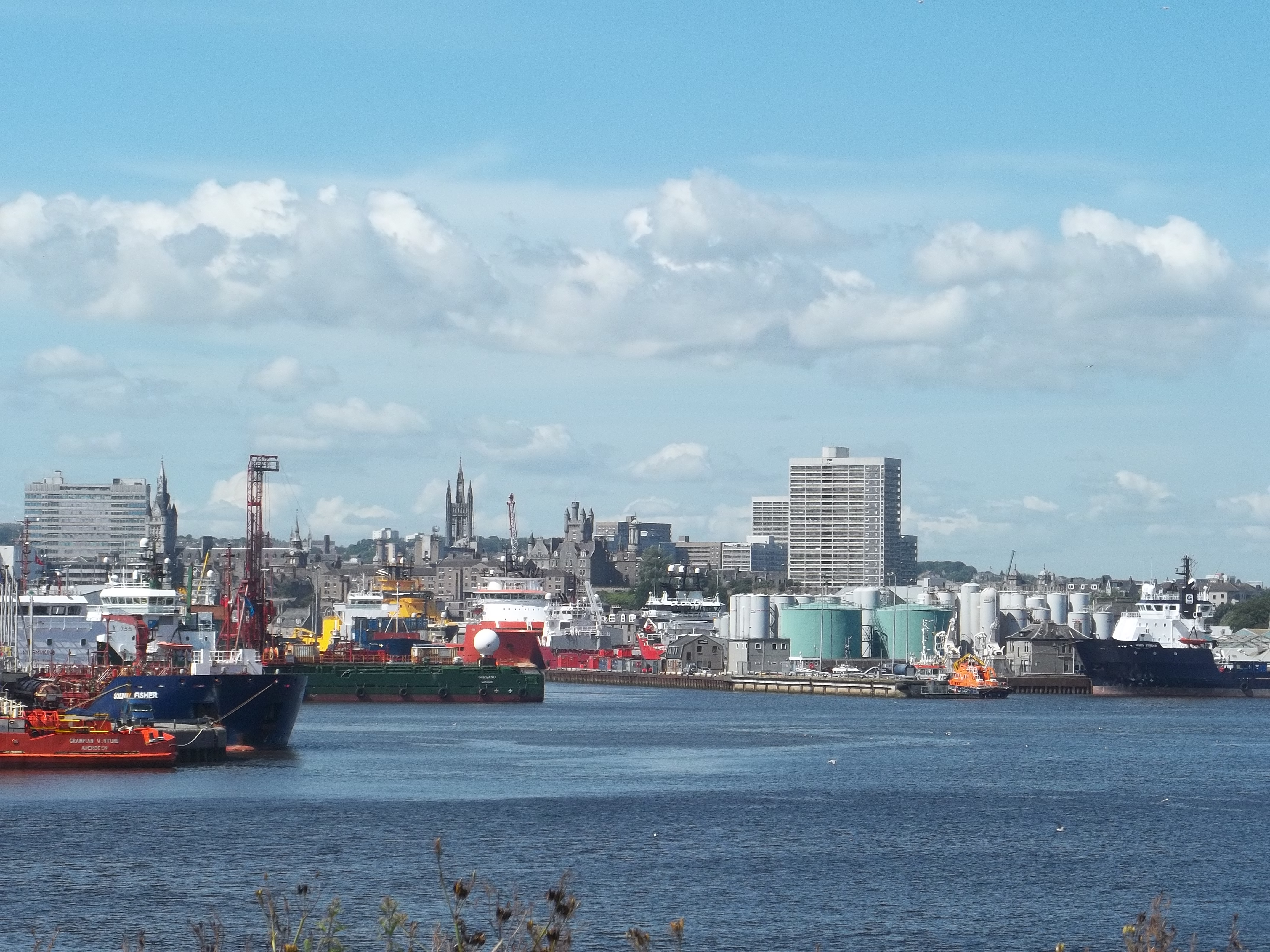
Aberdeen
When the sun breaks through the clouds over Aberdeen - and despite its reputation for dreich weather, the city enjoys more sunny days than its latitude would suggest - the granite buildings seem to shimmer. This is the Granite City, constructed almost entirely from stone quarried in and around the settlement, a material that gives Aberdeen its distinctive silver-grey character. Union Street stretches for a mile through the center, lined with Victorian buildings so grand and confident that they bankrupted the city in 1817, probably a civic first. Aberdeen recovered through fishing, farming, and textiles, but by the late 20th century these traditional industries were declining. Then, in the 1960s, they struck oil.
The Oil Revolution
The discovery of commercially viable oil in the North Sea transformed Aberdeen from a regional center into an international hub. The quirks of international boundaries gave Britain the lion's share of the northern fields, and Aberdeen found itself ideally positioned as a support base for offshore operations. The oil never actually came through the city - it was piped to terminals in Shetland and on the Firth of Forth - but the helicopters ferrying workers to and from the rigs filled the skies, and the expertise required to extract oil from increasingly challenging deepwater environments concentrated here. 'It's Scotland's Oil!' became a political rallying cry, though a 2014 independence referendum voted against breaking from the UK. The oil price collapse that followed illustrated the risks of depending on a single commodity, and Aberdeen now faces the challenge of diversifying as sentiment turns against carbon-based fuels.
Two Aberdeens
The city's history stretches back to 1179, when King William the Lion granted New Aberdeen its charter. Two distinct settlements evolved: Old Aberdeen by the River Don, home to the university since 1495, and New Aberdeen by the River Dee, whose superior harbor made it the commercial center. They remained legally separate until 1891. Old Aberdeen retains its medieval character, with the Crown Tower of King's College serving as a symbol of both city and university, and St Machar's Cathedral standing on the northern edge where Cathedral Walk crosses to student residences. The 'new' city rebuilt itself in the early 19th century along the grand axis of Union Street, its confident architecture reflecting prosperity from fishing and the granite trade - the same stone that built Aberdeen also paved streets across Britain and beyond.
Doric and Dreich
The local dialect, known as Doric, remains so distinctive that it 'defies machine translation' according to one guide. This is Scots as spoken in the northeast, a linguistic survivor that marks Aberdeen's separation from the central belt and its closer cultural ties to the agricultural hinterland of Aberdeenshire. The weather vocabulary alone requires study: 'dreich' describes the grey, drizzly conditions that can persist for days when northeasterly winds push fog banks onshore, while 'haar' names the sea mist that cloaks the coast in summer evenings. Midwinter offers just seven hours of potential daylight, though the sun often fails to appear at all between the low grey clouds. But summer compensates with 18-hour days when the twilight never fully darkens and the granite buildings catch the extended northern light.
Parks and Pints
Aberdeen has won Britain in Bloom gold more than any other city - 14 gold titles and counting - a dominance that reflects the extensive parks and gardens that soften the granite cityscape. Duthie Park along the Dee features the Winter Gardens, while Johnston Gardens and Hazlehead Park provide green escapes from the urban center. The two-mile beach stretches from Footdee - pronounced 'Fittie' - a preserved fishing village at the harbor mouth, north to the wildlife reserve at Donmouth. The Belmont Street strip anchors the nightlife, with an array of pubs serving the traditional Aberdeen buttery or rowie, a salty, flaky bread that locals take to the beach or eat with afternoon tea. Visitors from the UK and Europe should note the roaming charges: Aberdeen may feel remote, but its 5G coverage in the city center is comprehensive.
From the Air
Located at 57.15N, 2.11W on Scotland's northeastern coast. Aberdeen International Airport (EGPD/ABZ) at Dyce lies 11 km northwest of the city center, serving as a major hub for offshore helicopter operations as well as commercial flights. The city sits where the Rivers Dee and Don meet the North Sea. NorthLink ferries sail overnight to Kirkwall (Orkney) and Lerwick (Shetland). The A90 connects to Edinburgh (190 km south) and the A96 to Inverness (160 km northwest). The Cairngorms National Park begins 50 km west, with Royal Deeside offering access to Balmoral and the Highland scenery.