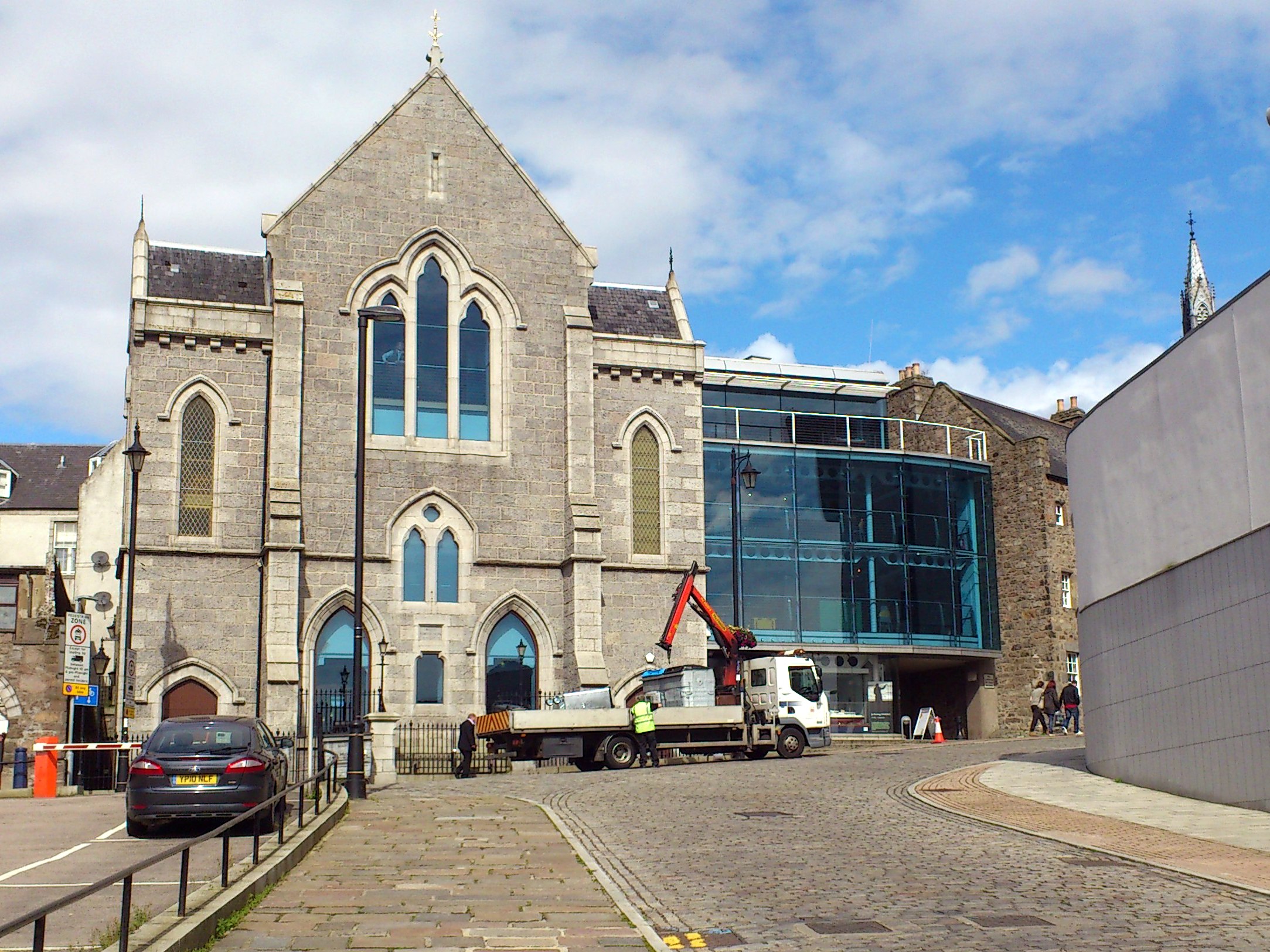
Aberdeen Maritime Museum
Walk down the historic Shiprow toward Aberdeen's harbour and you will find two buildings joined together in an unlikely marriage: Provost Ross' House, one of the oldest domestic buildings in the city, and the former Trinity Congregational Church. Between them, they hold the Aberdeen Maritime Museum -- a collection that traces the story of a city whose fortunes have always been shaped by the North Sea, from the age of fast sailing ships to the era of offshore oil.
The Shiprow and the Sea
Aberdeen's relationship with the water is ancient and continuous. The Shiprow, where the museum sits, has connected the city centre to the harbour for centuries, its name declaring its purpose. Provost Ross' House anchors the museum in domestic history -- a structure old enough to remember when Aberdeen's wealth came from fishing and coastal trade rather than hydrocarbons. The building was acquired by the city council and opened as a museum on 26 April 1984, a moment when the North Sea oil industry was transforming Aberdeen from a granite fishing port into an energy capital. The timing was deliberate: the museum would document the old maritime world even as the new one reshaped the city outside its doors.
Clippers and Oil Rigs
The collections cover shipbuilding, fast sailing ships, fishing, and port history, alongside displays on the North Sea oil industry that has defined Aberdeen since the 1970s. A scale model of the clipper ship Thermopylae -- one of the fastest sailing vessels ever built and constructed in Aberdeen by Alexander Hall and Sons -- captures the era when speed under canvas meant commercial advantage. Nearby, displays on diving equipment, first aid kits, and the industrial machinery of offshore extraction tell a very different story of working at sea. The museum does not sentimentalise the maritime past or glamorise the oil present; it documents both with the straightforward honesty of a port city that has always understood the sea as workplace rather than backdrop.
A Church Becomes a Gallery
A few years after opening in Provost Ross' House, the museum expanded. The council acquired the adjacent Trinity Congregational Church with the intention of converting it into an extension. The church reopened as part of the museum in 1997, its high ceilings and open interior providing space for larger exhibits and the kind of dramatic display that domestic rooms cannot accommodate. The architectural contrast between the intimate proportions of Provost Ross' House and the soaring volume of the former church creates a journey through scale as well as time -- from the cramped quarters of historical domestic life to the industrial ambition of modern offshore engineering.
From the Air
Located at 57.15N, 2.09W on the Shiprow in central Aberdeen, near the harbour. The museum buildings are embedded within the city's urban fabric and not distinctively visible from altitude. Nearest airport: Aberdeen (EGPD), approximately 5 miles northwest.