Abijatta-Shalla National Park
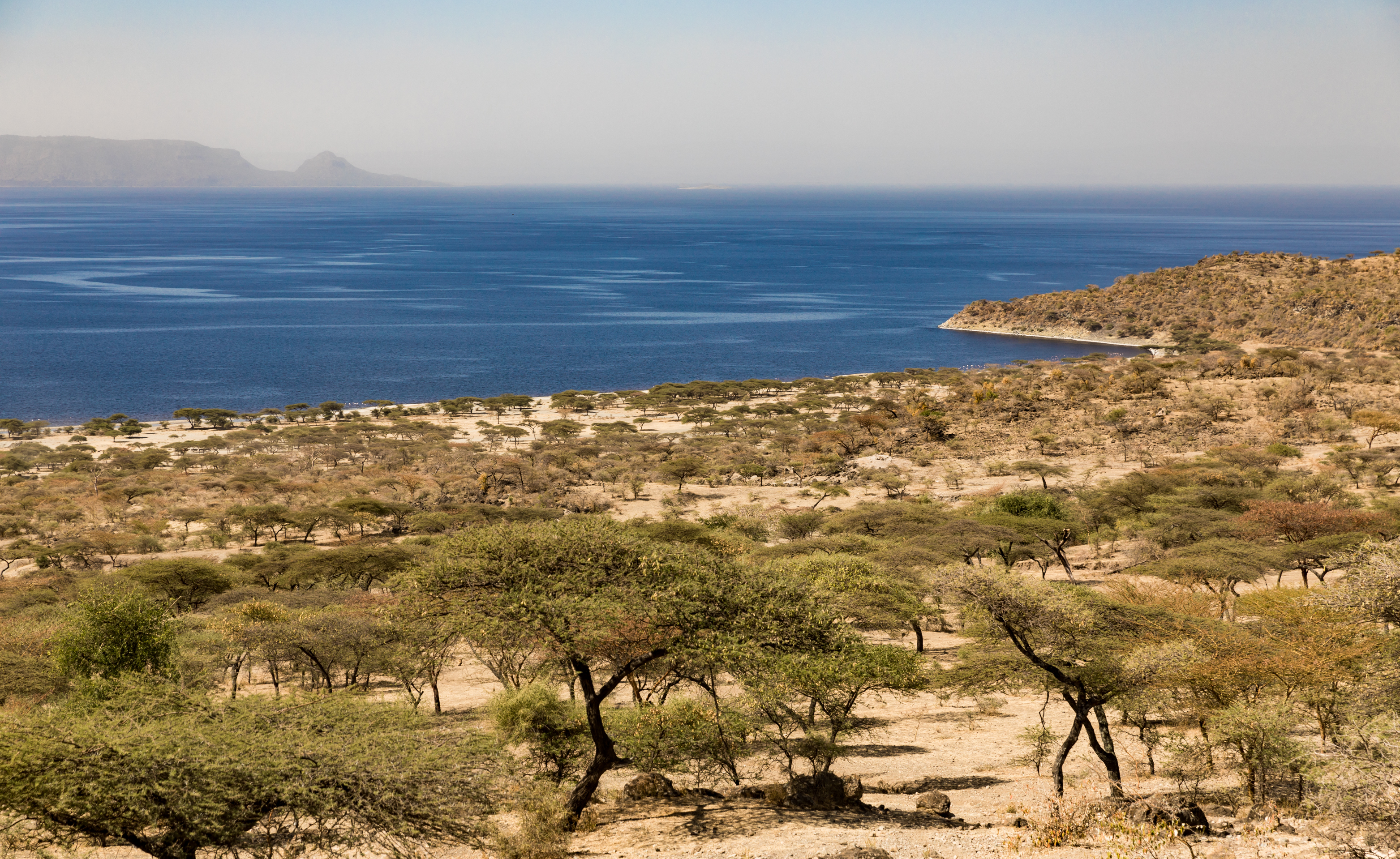
Drive too close to the edge of Lake Abijatta and the ground may swallow your vehicle. The lake's shoreline is a treacherous crust of dried alkaline mud, thin enough to collapse without warning beneath the weight of a car. It is a fitting introduction to Abijatta-Shalla National Park, a place where the earth's surface cannot be trusted to stay put. Located 200 kilometers south of Addis Ababa in Ethiopia's Oromia Region, the park's 887 square kilometers straddle two alkaline lakes that were once a single, much larger body of water. Volcanic activity from the O'a Caldera split them apart, leaving Lake Abijatta shallow and receding and Lake Shalla plunging to depths that make it the deepest lake in Ethiopia. Between them rises Mount Fike, the park's highest point at 2,075 meters, offering a vantage from which three lakes are visible: Abijatta, Shalla, and neighboring Langano.
Where the Rift Cracked Open
The Great Rift Valley runs like a scar through eastern Africa, and Abijatta-Shalla sits squarely in the wound. Both lakes are alkaline, their waters shaped by millennia of volcanic mineral deposits and the absence of any outflowing river. Hot springs bubble along the northeast shore of Lake Abijatta and on Shalla's southwest and eastern edges, evidence that the caldera beneath remains geologically restless. The altitude ranges from 1,540 meters at the lake surfaces to 2,075 meters at Mount Fike's summit. South of Shalla lies Lake Chitu, a small saline pool so saturated with blue-green algae that its surface takes on an otherworldly turquoise hue. The landscape oscillates between open grassland, dry savanna, arid shrubland, and deciduous woodland dominated by acacia species including umbrella thorn, red acacia, and gum acacia, along with Egyptian balsam trees and sycamore figs.
A Kingdom of Wings
More than 300 bird species have been recorded in and around the park, making it one of Ethiopia's premier birding destinations. Flamingoes mass on the shallow, alkaline waters of Lake Abijatta in concentrations large enough to tint the shoreline pink. The park harbors wattled ibis and yellow-fronted parrot, the only endemic bird species found exclusively in Ethiopia, alongside near-endemics like the black-winged lovebird, white-winged cliff chat, and white-billed starling. Seventy-six mammal species call the park home, including Grant's gazelles, greater kudus, caracals, honey badgers, colobus monkeys, aardvarks, spotted hyenas, and olive baboons. Several small mammals are endemic, among them Scott's hairy bat and Harrington's rat. But the list of what once lived here reads like a casualty report: lions, giraffes, waterbucks, buffaloes, and Swayne's hartebeests have all been extirpated from the park through hunting and habitat loss.
A Park Under Siege
Abijatta-Shalla was established to protect wildlife, but the protection has largely failed. During the final chaotic years of the Derg regime in the early 1990s and the instability that followed, nomadic herders moved into the park with their livestock, exploiting the power vacuum left by a collapsing central government. Much of the acacia woodland surrounding Lake Abijatta has been felled for charcoal production. People scrape the salty soil from the lake's shrinking shoreline and sell it. Baboons remain common, but they are now outnumbered by cattle. A visitor searching for the park's signature mammals would likely find only evidence of their absence — viable breeding populations of greater kudu, Grant's gazelle, black-backed jackal, and spotted hyena may persist, but sightings are rare. Near the gatehouse, a few Grant's gazelles and ostriches are kept in a fenced enclosure, a modest display that underscores how much has been lost.
Fragile Renewal
Rehabilitation efforts began in 1996, with plans to integrate local communities into the park's management and development. The challenge is formidable: reversing decades of deforestation, overgrazing, and resource extraction requires persuading people whose livelihoods depend on the land to adopt new practices. Lake Abijatta itself has been shrinking for years, its waters drawn down by evaporation, reduced inflows, and extraction for a nearby soda ash factory. The birds, however, remain. Despite everything, the flamingoes still arrive, the lovebirds still nest in the surviving woodland, and the hot springs still steam along the lakeshore. Whether the park can recover its larger wildlife remains an open question, but the fact that 300 bird species continue to find habitat here suggests that the ecosystem, though battered, has not yet surrendered.
From the Air
Abijatta-Shalla National Park is located at 7.50°N, 38.50°E in the Ethiopian Rift Valley, roughly 200 km south of Addis Ababa. From 5,000–8,000 feet AGL, both lakes are clearly visible, with Abijatta's shallow turquoise waters contrasting against Shalla's deeper blue. Mount Fike rises between them. The nearest significant airport is Addis Ababa Bole International (HAAB), about 200 km north. Regional airstrips exist near Shashamane and Hawassa to the south. Expect highland climate conditions with monsoon rains June through September and generally clear skies October through May.