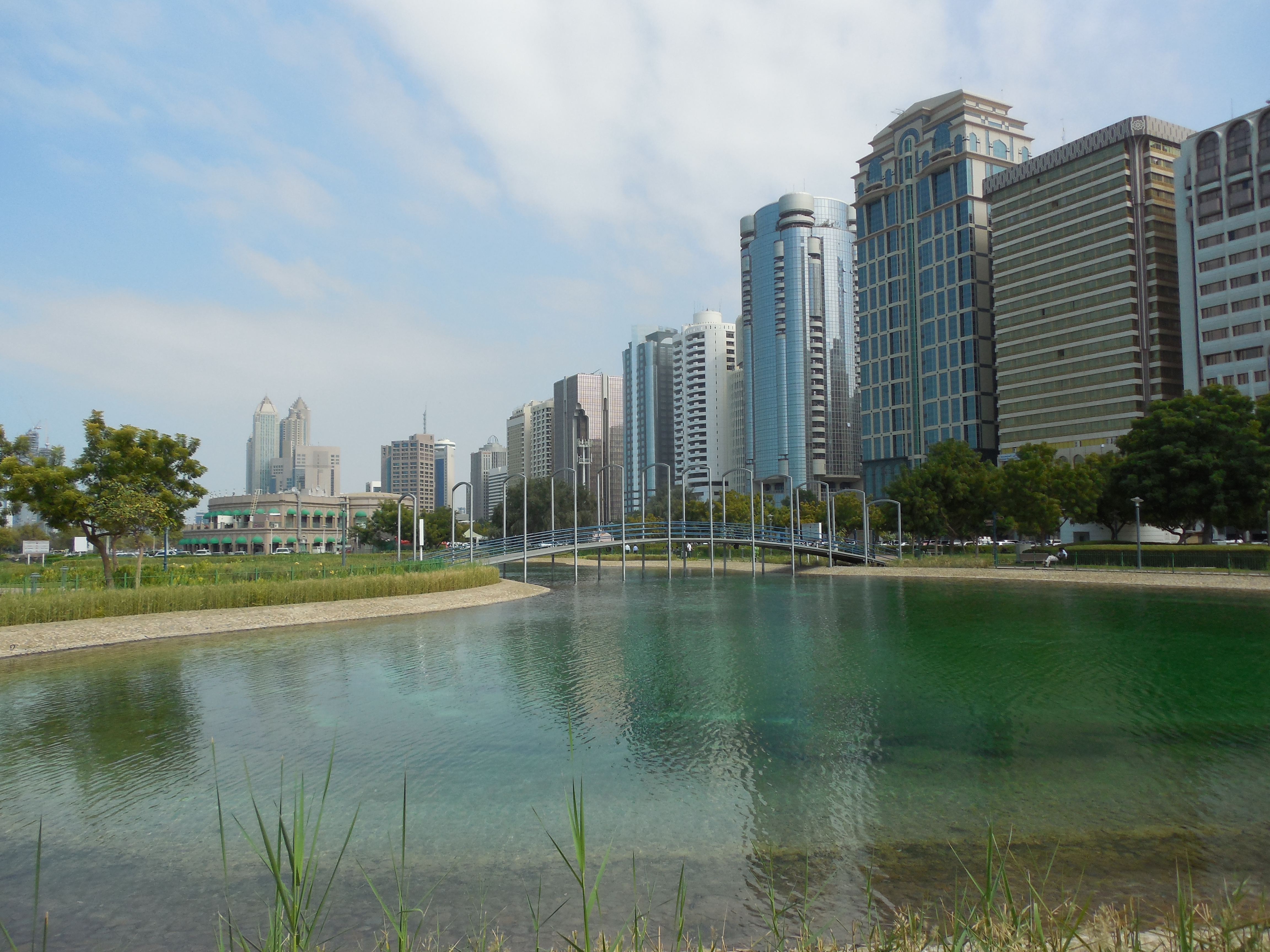
Abu Dhabi
F-16 fighter jets streak across the sky, escorting a visiting head of state toward the city that has transformed itself from a pearl-diving village into the capital of one of the world's wealthiest nations. Abu Dhabi sprawls across a wedge-shaped island and its neighbors in the Persian Gulf, connected by bridges that carry traffic between theme parks, five-star hotels, and the largest mosque in the United Arab Emirates. The Sheikh Zayed Grand Mosque gleams white against the desert sky, its eighty-two domes and four minarets visible for miles. Nearby, the Louvre Abu Dhabi floats beneath its latticed dome, housing art that spans human civilization. This is a city of superlatives and contradictions, where the strictest rules against public drinking coexist with hotel bars serving any cocktail imaginable, where traditional souks sell gold by weight while Ferrari World offers one of the world's fastest roller coasters. The temperature outside can exceed forty-five degrees Celsius, but inside the air-conditioned malls, shoppers browse in climate-controlled comfort.
An Accidental Capital
Abu Dhabi was never supposed to be the capital of the UAE. When the seven emirates united in 1971, plans called for a purpose-built city between Abu Dhabi and Dubai named Al Karama, meaning dignity in Arabic. But the early union proved volatile, and Abu Dhabi, home of founding father Sheikh Zayed, became the temporary seat of government. Temporary became permanent by agreement of the seven rulers, and today the city hosts the three branches of federal government, the headquarters of the armed forces, and the diplomatic missions of nations worldwide. The American embassy, with its distinctive triangular design, has become almost a landmark. The airport is one of few in the world offering US pre-clearance, allowing passengers to arrive in America as domestic travelers. Military presence is common, Emiratis in fatigue a familiar sight, the enormous Sheikh Zayed Military City standing guard outside the urban core.
Islands of Ambition
Abu Dhabi is not one island but many, connected by bridges and bound together by vision. The main island contains the historic core, government buildings, and the Corniche, a waterfront promenade where residents escape the heat during cooler evening hours. Mariyah Island hosts the Abu Dhabi Global Market and the gleaming Galleria Mall. Saadiyat Island has become a cultural district, home to the Louvre Abu Dhabi and eventually a Guggenheim museum still under construction. Yas Island offers pure entertainment: the Formula One circuit that hosts the annual Grand Prix, Ferrari World, Warner Bros. World, SeaWorld, and Waterworld, a constellation of attractions that draw millions. Hudayriyat features pristine beaches and nature reserves. Together, these islands create a city where kayaking through mangroves and attending a UFC championship can happen on the same weekend.
Faiths and Facades
The Sheikh Zayed Grand Mosque welcomes non-Muslims to explore its Islamic architecture, a gesture of openness that defines Abu Dhabi's approach to the wider world. Religious buildings dot the city in abundance, from traditional sandstone mosques near the Gold Souk to the futuristic Al Aziz Mosque on Reem Island. A cluster of churches for various Christian denominations stands near Umm Al Emarat Park, and in 2024, a massive Hindu temple opened between Abu Dhabi and Dubai. Yet beneath this tolerance runs traditional conservatism. Alcohol is served only in licensed hotel venues. During Ramadan, eating in public during daylight hours is officially prohibited. The female fashion dichotomy surprises many visitors: shops sell halter tops alongside floor-length abayas, and both find their wearers. The city transforms for visiting dignitaries, streets draped in Chinese flags for one leader, yellow and white for Pope Francis, the UAE's red-white-black-green always present on buildings, tunnels, and skyscrapers.
Life Among the Minority
Emiratis comprise less than sixteen percent of Abu Dhabi's population of nearly two million. The majority are expatriates: Indian and Filipino workers staffing shops and restaurants, Western professionals filling corporate offices, laborers from across South Asia building the ever-expanding skyline. English functions as the lingua franca, Arabic heard less often than Hindi in many neighborhoods. This demographic reality shapes daily life. The cheapest and often best food comes from Indian restaurants serving generous thalis on steel trays. Delivery apps bring everything from falafel to fine dining to any address. The weather dictates rhythms: summer drives life indoors, while winter brings outdoor brunches and evening strolls. Ranked the world's safest city for over a decade running, Abu Dhabi offers security alongside its contradictions. The taxi drivers are GPS-monitored, the police patrols constant, the rules clear and enforced. Within these bounds, a city unlike any other continues to rise from the Gulf.
From the Air
Located at 24.47N, 54.37E on islands in the Persian Gulf. The city sits at sea level with the main island oriented northwest to southeast. Abu Dhabi International Airport (OMAA) lies east of the city on the mainland. Al Dhafra Air Base (OMAM), a major UAE-US facility, is located nearby. Yas Island with its distinctive Formula 1 circuit is visible on approach from the east. The Sheikh Zayed Grand Mosque complex is a prominent white landmark visible from altitude. Saadiyat Island's Louvre Abu Dhabi features a distinctive domed structure. The city connects to Dubai via the E11 highway, 130km to the northeast.