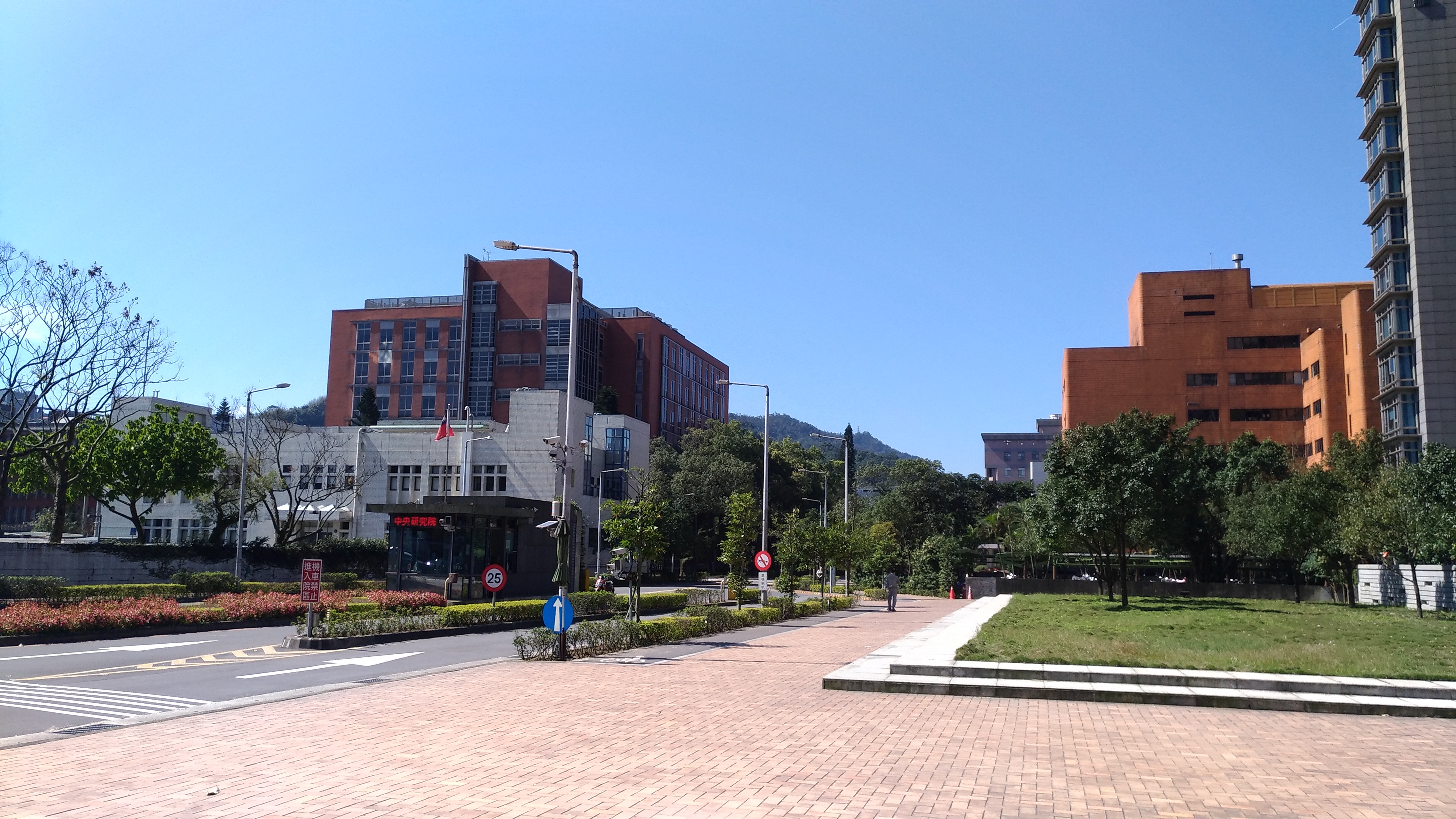
Academia Sinica
When the Chinese Civil War forced the Republic of China to retreat to Taiwan, the government's plan was to bring all fourteen institutes of Academia Sinica across the strait. In the end, only one made it: the Institute of History and Philology. The head of the Institute of Mathematics, Jiang Lifu, resigned in June 1949 and never boarded a ship. The rest of Academia Sinica's mainland facilities continued operating under Communist rule, eventually becoming the Chinese Academy of Sciences. From that single transplanted institute in the Nangang district of Taipei, Taiwan rebuilt its national academy into a research institution with 28 institutes, 281 academicians, seven Nobel laureates, and a campus that includes an ecological pond, a forest park, and a Tudigong temple to the local earth god.
From Nanjing to Nangang
Academia Sinica, which translates as "Chinese Academy," was established in 1928 in Nanjing, then the capital of the Republic of China. Its first meeting was held in Shanghai. For two decades it operated as the nation's premier research institution, spanning the physical sciences, life sciences, humanities, and social sciences. By December 1948, with the Communists advancing, all fourteen institutes agreed to relocate to Taiwan. The logistics of moving an entire national academy across a strait during a civil war proved overwhelming. Only the historians and philologists completed the journey. The main campus in Nangang was constructed beginning in 1954, and the second convocation of academicians was not held until 1957. Rebuilding a national academy from a single institute took patience, funding, and the kind of institutional stubbornness that academic institutions happen to specialize in.
The Presidents' Gallery
The roster of Academia Sinica's presidents reads like a compressed history of modern Chinese and Taiwanese intellectual life. Its first president, Cai Yuanpei, served from 1928 until 1940. Hu Shih, who took office in 1958, was a philosopher and essayist who championed vernacular Chinese over classical literary language, a movement that fundamentally changed how hundreds of millions of people read and write. Yuan T. Lee, who served from 1994 to 2006, won the Nobel Prize in Chemistry in 1986 for his work on the dynamics of chemical elementary processes. The current president, biochemist James C. Liao, took office in 2016. Seven academicians in total have been Nobel laureates, including Steven Chu in physics (1997) and Daniel C. Tsui in physics (1998). The academy's presidency is appointed by the president of Taiwan from three candidates recommended by the Council Meeting, a process that keeps the institution close to the state while preserving academic independence.
A Campus With Creeks and Temples
The Nangang campus is less a sterile research park and more a small town. In addition to the Central Office of Administration and 28 institutes and research centers, the grounds include 10 museums and memorial halls open to the public, an ecological pond, and Sifen Creek, which runs through the campus to the National Biotechnology Research Park to the north. The Fude Temple, dedicated to Tudigong, the earth god of local folk religion, sits among the research buildings, a reminder that even Taiwan's most elite scientific institution operates within a landscape of traditional belief. The National Biotechnology Research Park, inaugurated in October 2018 by President Tsai Ing-wen, extends the campus northward. Three physics-related institutes are hosted separately on the main campus of National Taiwan University, and a Southern Campus opened in Tainan in 2024 to promote regional balance and focus on agricultural biotechnology and early Taiwanese archaeological research.
Open Doors and Shifting Boundaries
For most of its history, Academia Sinica elected academicians based on scientific merit without regard to nationality, as long as the candidate was of Chinese descent. More than half of its 281 academicians are overseas scholars. This openness began to narrow in 2023, when election was restricted to citizens of the Republic of China, prompting discussions about creating formal categories for honorary or foreign members. The academy also runs the Taiwan International Graduate Program, offering English-language PhD training in fields ranging from biology to earth sciences, attracting students from around the world with monthly stipends starting at 40,000 NTD. Research stations extend the academy's reach far beyond Nangang: from Green Island's marine station to the Dongsha Atoll in the South China Sea, from a GNSS site in Luzon to the Yuan Tseh Lee Array on Mauna Loa in Hawaii. What began as a single institute carried across a strait has grown into an institution that reaches across oceans.
From the Air
Coordinates: 25.042N, 121.615E in the Nangang District of eastern Taipei. The campus is visible as a large green area near the Nangang MRT station. Taipei Songshan Airport (ICAO: RCSS) is approximately 6 km to the northwest. Taoyuan International Airport (RCTP) is 45 km to the west. The National Biotechnology Research Park is immediately to the north, adjacent to the Nankang Software Park.