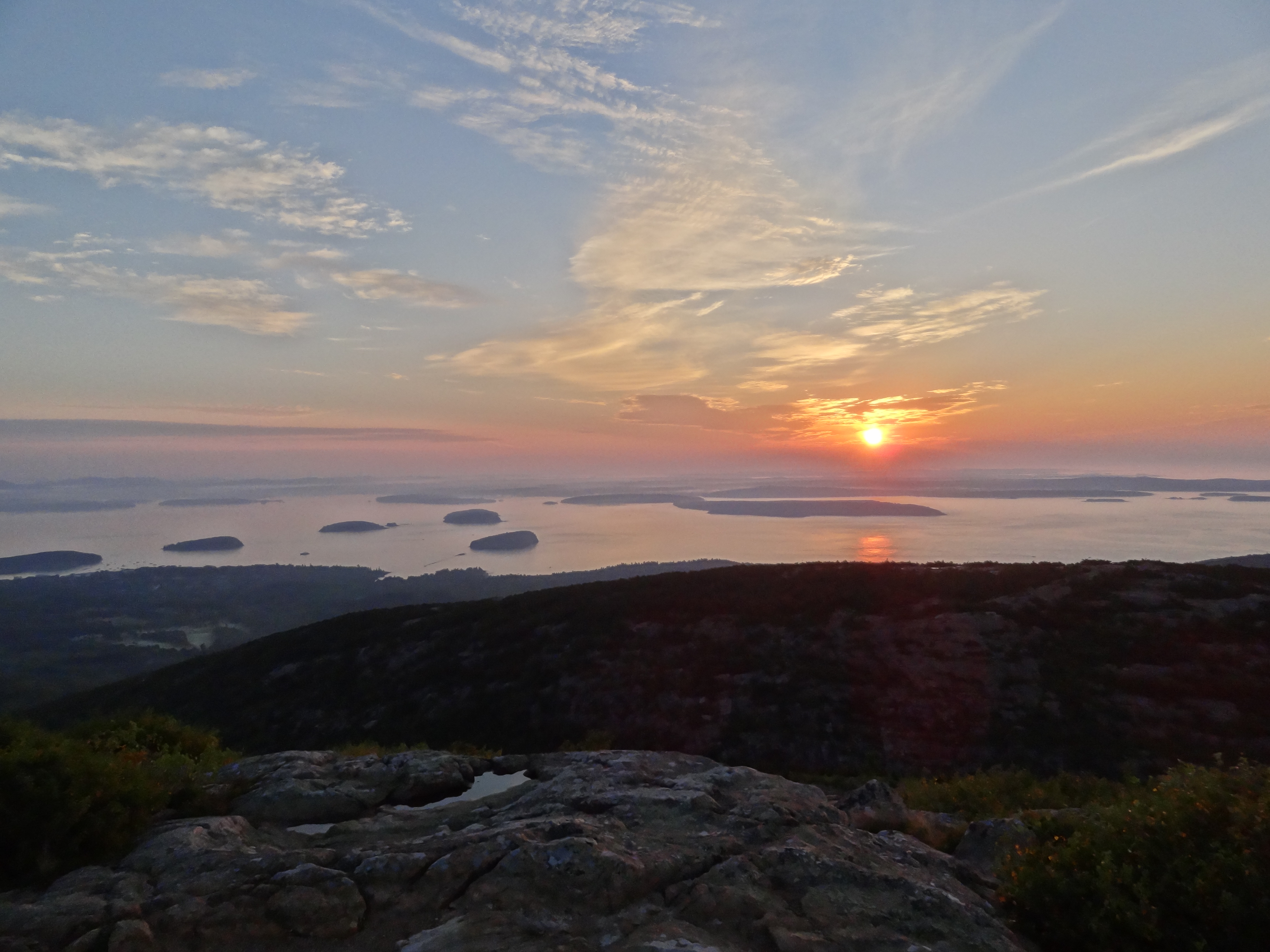
Cadillac Mountain: Where America Sees the First Sunrise
Every morning, crowds gather on Cadillac Mountain to watch the United States wake up. The 1,530-foot summit in Acadia National Park is famous as the first place in America to see sunrise - a claim that's technically true only from early October through early March, when the combination of latitude, elevation, and the Earth's axial tilt aligns properly. The rest of the year, other points see sunrise first. But the crowds come anyway, because watching dawn break over the Atlantic from Maine's highest coastal peak is worth doing regardless of whether you're technically first. The sunrise doesn't care about technicalities, and neither do the viewers.
The Claim
The 'first sunrise' claim is complicated. From October 7 through March 6, Cadillac Mountain receives the first sunlight in the United States (excluding Alaska). Other times of year, the honor goes to Mars Hill, Maine (spring and fall) or West Quoddy Head (near the equinoxes). Cadillac's advantage comes from its combination of eastern longitude and elevation - the mountain is the highest point on the Atlantic coast north of Brazil, giving it sight lines that lower ground lacks. The technicalities matter to astronomers; for tourists, the experience matters more.
The Experience
Watching sunrise from Cadillac requires arriving in darkness. The summit road opens 30 minutes before sunrise (by reservation from May through October); parking fills quickly. Viewers spread across the granite summit, wrapped in blankets and jackets, watching the eastern horizon for the first glow. The moment itself is subtle - a brightening, then color, then the sun's edge breaking the Atlantic. The view is genuinely spectacular: Frenchman Bay, the Porcupine Islands, and mainland Maine visible in the growing light. The experience is communal: strangers share coffee and silence, watching together.
The Mountain
Cadillac Mountain rises 1,530 feet above sea level - modest by mountain standards, dramatic when the base is Atlantic Ocean. The summit is bare granite, scoured by glaciers and too exposed for trees. Views extend in every direction: Bar Harbor and Frenchman Bay to the east, the other peaks of Mount Desert Island to the south and west, the mainland to the north. The mountain was named for French explorer Antoine Laumet de La Mothe, sieur de Cadillac, who received a land grant including Mount Desert Island in 1688. He later founded Detroit.
The Park
Acadia National Park protects much of Mount Desert Island and surrounding areas - the first national park established east of the Mississippi, created largely through private donations of land. The park offers classic New England coastal scenery: rocky shores, mixed forests, glacially carved ponds, and some of the finest hiking on the Atlantic coast. Cadillac Mountain is the park's highest point but not its only attraction - the carriage roads built by John D. Rockefeller Jr., the tide pools at Thunder Hole, and the harbor town of Bar Harbor all draw visitors.
Visiting Cadillac Mountain
Cadillac Mountain is located in Acadia National Park, Maine. The summit road requires vehicle reservations from May through October (book through Recreation.gov). Sunrise reservations open 90 days in advance and fill quickly. Hiking to the summit via the North Ridge or South Ridge Trails takes 2-3 hours. Bar Harbor serves as the primary gateway with lodging and restaurants. The park requires entrance fees. Sunrise viewing requires warm clothing year-round - summit temperatures are often 20°F colder than sea level. The sunset view is equally spectacular and less crowded. Clear mornings are not guaranteed; fog is common.
From the Air
Located at 44.35°N, 68.23°W on Mount Desert Island, Maine. From altitude, Cadillac Mountain is visible as the highest point on the island - a bare granite summit rising above forested slopes. Frenchman Bay stretches to the east; Somes Sound (the only fjord on the U.S. Atlantic coast) cuts into the island to the west. Bar Harbor is visible on the island's eastern shore. The Atlantic Ocean extends to the eastern horizon. The summit road is visible as a thin line winding up the mountain. This is the highest point on the Atlantic coast of North America north of Brazil - modest elevation, but dramatic position.