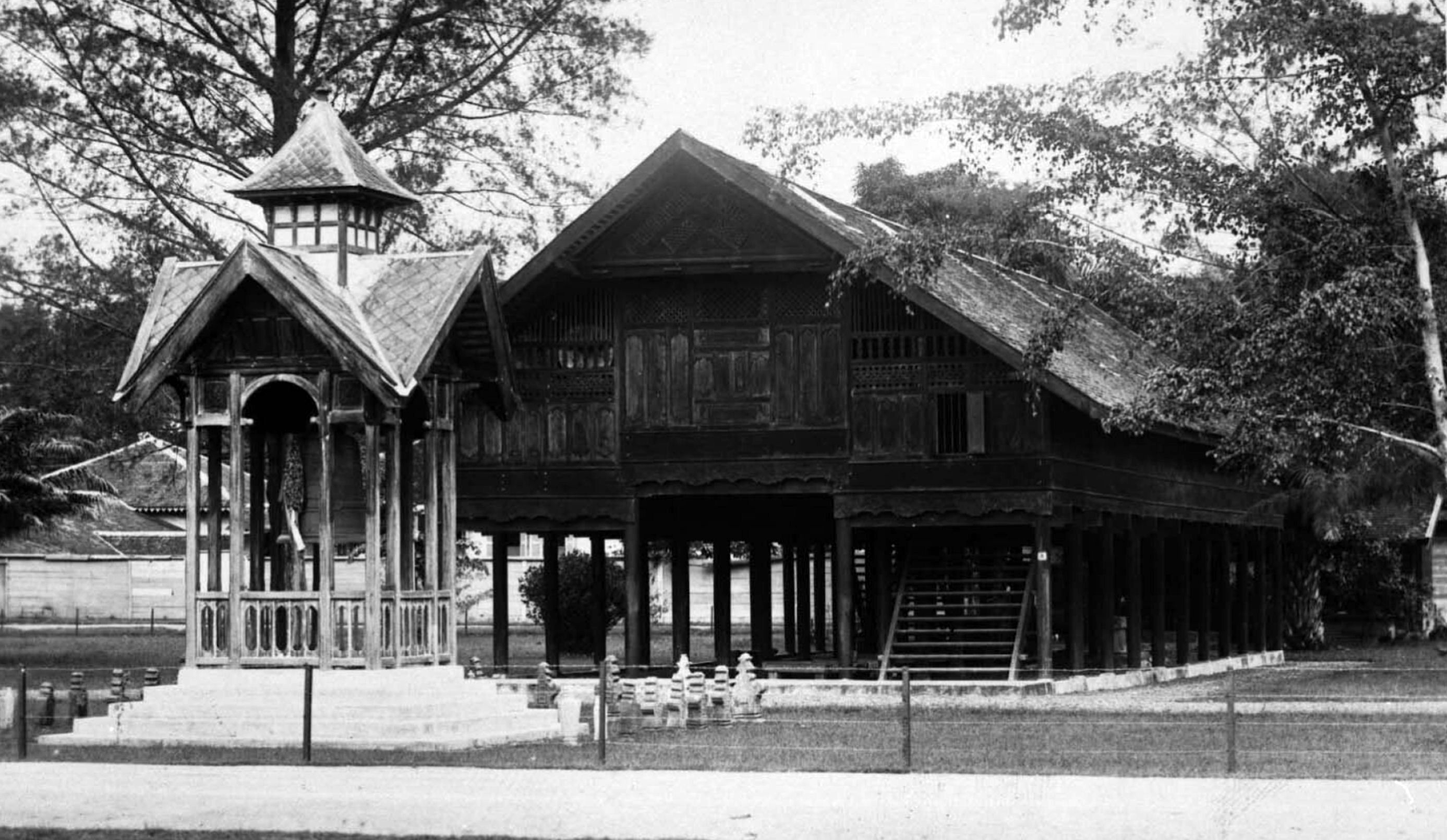
Aceh Museum
The building that became the Aceh Museum was never supposed to stay. In 1914, a traditional Acehnese stage house -- a Rumoh Aceh, raised on stilts with a sweeping roof -- was assembled in Semarang, Java, for the Colonial Exhibition, a sprawling showcase of Dutch East Indies culture and commerce. The Aceh Pavilion won the exhibition's top prize. The original plan was to dismantle the structure and ship it to the Netherlands as an ethnographic trophy. Instead, an ethnographer named Friedrich Stammeshaus convinced the colonial governor to send it home. On 31 August 1915, the building reopened on the Esplanade of Koetaradja -- what is now Banda Aceh -- as one of Indonesia's first museums, with Stammeshaus as its founding curator.
Stammeshaus and the Collector's Dilemma
Friedrich Stammeshaus was an unlikely museum founder. A German-born ethnographer working within the Dutch colonial administration, he had amassed a personal collection of Acehnese artifacts over years of fieldwork -- gold jewelry, intricately forged weapons, protective amulets, photographs, and everyday household objects. When the Colonial Exhibition needed an Aceh display, Stammeshaus provided many of the items from his own holdings. His success at Semarang gave him the leverage to argue that Aceh deserved a permanent home for its material culture. He served as curator from 1915 until 1933, shaping the museum's identity around Acehnese heritage. But his retirement revealed the fragility of colonial-era collecting: Stammeshaus sold his personal collection of 1,300 ethnographic objects to the Colonial Institute in Amsterdam, now known as the Tropenmuseum. Among those objects was the personal coat of Teuku Umar, one of the most celebrated Acehnese resistance leaders against Dutch rule -- an artifact of anti-colonial defiance, preserved in the colonizer's capital.
A House Built for Display
The Rumoh Aceh itself is as much an artifact as anything inside it. Traditional Acehnese houses are raised on wooden stilts, an architectural response to flooding, ventilation, and the social customs of a culture where the space beneath the house served communal purposes. The steep, multi-tiered roof channels tropical rain while allowing hot air to rise and escape. When the structure was erected in Semarang in 1914, it stood among pavilions from across the archipelago -- Javanese, Balinese, Sundanese -- each competing for attention. That the Acehnese house won the exhibition's highest honor says something about the craftsmanship embedded in its construction: the joinery, the proportions, the carved ornamentation that encoded social status and spiritual protection. Returned to Aceh, the building spent decades on the Blang Padang esplanade before the museum relocated in 1969 to a larger site on Jalan Sultan Alaidin Mahmudsyan, occupying 10,800 square meters of land.
Treasures Split Across Continents
The museum's collection tells a story of division. Some of its most significant objects -- Stammeshaus's 1,300-piece assemblage of Acehnese material culture -- remain in Amsterdam at the Tropenmuseum. Teuku Umar's coat, perhaps the collection's most symbolically charged item, has never returned to Aceh. What the museum retains and has continued to acquire covers a broad sweep of Acehnese civilization: archaeological finds, ethnographic objects, old manuscripts in Jawi script, stones and minerals from the region, ceramics, coins and royal seals from the Sultanate of Aceh, and historic paintings. The Cakra Donya Bell, an artifact of the Sultanate itself, anchors the collection's historical core. A Neusu Inscription in Tamil script hints at the ancient trade networks that connected Aceh to South India centuries before European ships appeared on the horizon. Each object carries the weight of a culture that resisted colonial domination longer and more fiercely than almost any other in the archipelago.
Aceh's Living Memory
Banda Aceh is a city shaped by catastrophe and resilience. The 2004 Indian Ocean tsunami devastated the city, killing tens of thousands and destroying much of its built environment. The Aceh Museum, located inland from the worst of the destruction, survived and has become part of the city's broader effort to preserve cultural memory alongside disaster memory. Walking through its galleries today, visitors encounter a timeline that stretches from ancient maritime trade through the Sultanate of Aceh's golden age, the brutal decades of the Aceh War against the Dutch from 1873 to 1914, Indonesian independence, and the long civil conflict that ended only in 2005. The museum does not try to be comprehensive in the way that a national institution might. Instead, it offers something more intimate: a regional collection, rooted in one place, insisting that Acehnese identity is worth preserving on Acehnese soil -- even if some of its finest artifacts remain eight thousand kilometers away in Amsterdam.
From the Air
Located at 5.55N, 95.32E in Banda Aceh, at the northern tip of Sumatra, Indonesia. From altitude, the city sits where the Aceh River meets the Strait of Malacca, with the Indian Ocean visible to the west. The coastline still bears visible marks of the 2004 tsunami. Nearest airport is Sultan Iskandar Muda International Airport (WITT), approximately 12 km southeast of the museum. The distinctive Baiturrahman Grand Mosque is a prominent visual landmark nearby.