Acoma Pueblo
The elders call it 'the place that always was.' Atop a sandstone mesa rising sharply from the high desert of western New Mexico, Acoma Pueblo has endured for more than two millennia. Known as Sky City, this is one of the oldest continuously inhabited settlements in North America, a place where three-story adobe buildings still stand without windows or doors on their lower levels, their upper floors reached only by wooden ladders that could be pulled up in an instant to repel invaders. When Lieutenant Hernando de Alvarado arrived with Coronado's expedition in 1540, he described it as 'one of the strongest places we have seen' and admitted his party 'repented having gone up to the place.'
A Fortress in the Sky
The mesa itself is Acoma's greatest defense. For more than 1,200 years, this elevated perch sheltered the community from raids by Navajo and Apache peoples. Three rows of apartment-style buildings face south along the mesa top, constructed from adobe brick with roof beams covered in poles, brush, and plaster. Each level serves as the floor for the one above. Ladders connect the stories, and the traditional design includes no windows or doors at ground level. The lower floors stored food and supplies; the upper levels served as living quarters. Seven rectangular kivas and a central plaza anchor the spiritual life of the village. Water collects in two natural cisterns, and baking ovens stand outside the buildings. About 300 two- and three-story structures remain on the mesa today, a living architectural record spanning centuries.
The Spanish Arrive
When Juan de Onate came to colonize New Mexico in 1598, the Acoma warrior Zutacapan organized a defense. But the pueblo elder Chumpo counseled against war, partly because many believed the Spaniards were immortal. Onate visited on October 27, 1598, and the Acoma met him peacefully. He demanded surrender and fired a gun salute to demonstrate his power. Zutacapan offered to formalize the encounter in the religious kiva, the traditional place for sacred oaths, but Onate refused to descend the ladder into the dark chambers. The uneasy peace would not last. Within months, conflict erupted that would lead to the devastating Acoma Massacre of January 1599, killing hundreds of Acoma men, women, and children. Despite this catastrophe, the Acoma rebuilt. Forced to adopt Catholicism, they practiced their traditional religion in secrecy, blending elements of both faiths into a syncretic whole that endures today.
Woven into the Land
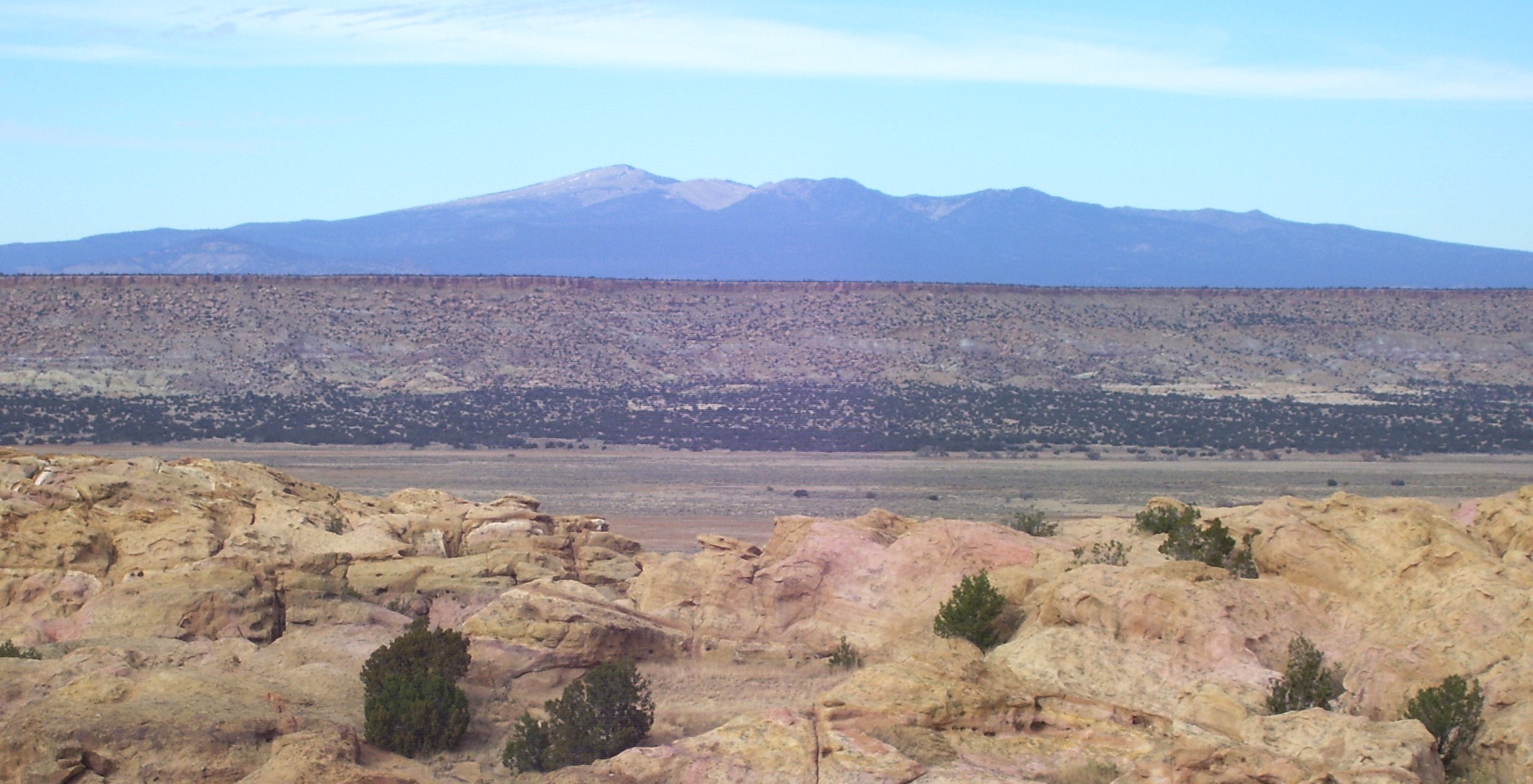
The Acoma reservation spans parts of Cibola, Socorro, and Catron counties, covering nearly 595 square miles of mesas, valleys, hills, and arroyos at high altitude. Since 1977, the Acoma have expanded their domain through land purchases, and about 6,000 tribal citizens belong to the nation today, with approximately 3,230 living on the reservation as of the 2020 census. Four communities make up modern Acoma Pueblo: Sky City (Old Acoma), Acomita, Anzac, and McCartys. The reservation borders Laguna Pueblo to the east and sits near El Malpais National Monument to the west. Only tribal citizens may own land on the reservation. A road blasted into the rock face during the 1950s now provides vehicle access to the mesa top, though the old footpaths still wind down the cliffs.
Art from Ancient Clay
Acoma pottery is among the most celebrated in the Southwest. The tradition runs deep, with potters working in styles passed down through generations. Fine-line black-on-white designs are a hallmark, and seed pots, small vessels once used to store seeds and broken open as needed, represent a distinctive Acoma form. Men contribute weavings and silver jewelry to the artistic legacy. Since the 1970s, Acoma Pueblo has controlled its own education services, a crucial step in maintaining both traditional and contemporary lifestyles. The San Estevan Del Rey Mission Church, built atop the mesa, was designated a National Trust Historic Site in 2007, the only Native American site to receive that recognition from the National Trust for Historic Preservation. The Acoma language, classified in the western division of the Keresan languages, continues to be spoken, connecting today's community to voices that have echoed across this mesa for thousands of years.
Governance from the Antelope Clan
Acoma governance reflects layers of tradition and adaptation. Historically, a cacique and a war captain led the pueblo until their deaths, both maintaining strong religious connections to their roles in what amounted to a theocracy. The Spanish imposed their own governing structure, but the Acoma never took that authority seriously. Today, the cacique remains active, drawn from the Antelope clan, appointing tribal council members, staff, and the governor. The Acoma also participate in the All Indian Pueblo Council, an institution that traces its origins to 1598 and was revived in the twentieth century. Alcohol is banned on the pueblo. The Sky City Casino Hotel operates alcohol-free under the Acoma Business Enterprise, which oversees most tribal businesses, a modern economic engine for a community whose roots stretch back to an era long before written history.
From the Air
Acoma Pueblo sits at approximately 34.90N, 107.58W, about 60 miles west of Albuquerque. The mesa is a striking visual landmark from the air, rising abruptly from the surrounding desert. Best viewed at 3,000-5,000 feet AGL for the full mesa profile. Nearby airports include Albuquerque International Sunport (KABQ) to the east and Grants-Milan Municipal Airport (KGNT) to the west. The adjacent Enchanted Mesa is another prominent formation visible from altitude. Clear weather typical of the high desert provides excellent visibility year-round.