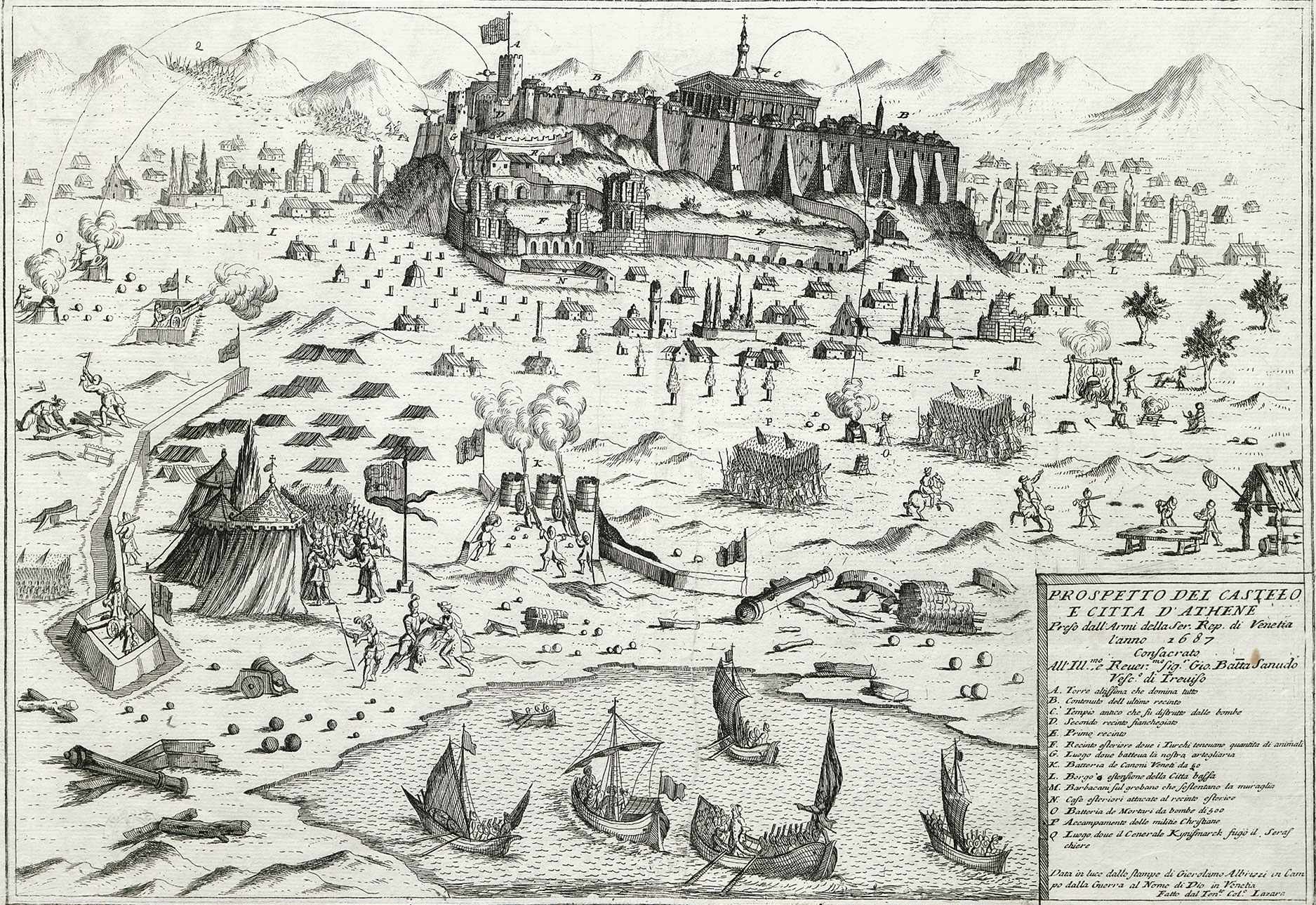
The Acropolis: Where Western Civilization Built Its Greatest Temple
The Acropolis of Athens has been sacred for 5,000 years. Mycenaean kings built palaces here. Archaic Greeks constructed temples. Then, in the 5th century BC, Pericles transformed the limestone plateau into a monument to Athenian democracy and the goddess Athena. The Parthenon, rising at the summit, was the greatest temple of the ancient world, housing a statue of Athena made of gold and ivory standing 40 feet tall. The statue is gone. The gold was stripped. The temple was converted to church, to mosque, then blown apart when Venetian cannons hit the gunpowder stored inside. What remains is still sublime.
The Rock
The Acropolis is a flat-topped limestone outcrop rising 490 feet above Athens, with sheer cliffs on three sides. The name means 'high city' - it was the defensible heart of Athens since Mycenaean times, around 1400 BC. Bronze Age walls survive in fragments.
After the Persian Wars, when Athens led the Greek victory against Xerxes, the city had money and pride. Pericles convinced the assembly to rebuild the Acropolis, destroyed by the Persians in 480 BC, as a monument to Athenian greatness. The result was the classical buildings that still define Western architecture.
The Parthenon
The Parthenon was built between 447 and 432 BC as a temple to Athena Parthenos (Athena the Virgin). Its architects, Ictinus and Callicrates, and sculptor Phidias created perhaps the most famous building in Western history.
The temple is a masterpiece of optical refinement. The columns bulge slightly (entasis) to appear straight. The stylobate curves imperceptibly to prevent the illusion of sagging. No two columns are identical. The proportions follow mathematical ratios that architects still study. Inside once stood Phidias's chryselephantine statue of Athena - 40 feet tall, covered in gold plates that could be removed (and were, by various thieves over the centuries).
The Conversions
The Parthenon remained a temple to Athena for nearly 1,000 years. In the 6th century AD, it was converted to a Christian church dedicated to the Virgin Mary. Byzantine alterations added an apse and painted over pagan imagery.
In 1458, after the Ottoman conquest, the Parthenon became a mosque. A minaret was added. The building remained intact, protected by religious use. Then in 1687, the Venetians besieged Athens. The Ottomans stored gunpowder in the Parthenon, assuming the enemy wouldn't shell a temple. They were wrong. A Venetian mortar hit the ammunition dump. The explosion killed 300 people and destroyed the central structure.
The Marbles
In 1801, Lord Elgin, British ambassador to the Ottoman Empire, received permission to remove 'some blocks of stone with inscriptions and figures.' He interpreted this broadly, removing half the surviving Parthenon sculptures - friezes, metopes, and pediment statues - shipping them to London.
The 'Elgin Marbles' remain in the British Museum. Greece has demanded their return since independence in 1832. Britain argues Elgin saved them from destruction; Greece argues he stole them. The controversy continues, symbolizing broader debates about imperial collection and cultural heritage. The Parthenon's sculptures are split between Athens and London.
The Symbol
Today, the Acropolis is Greece's most visited site - 3 million visitors annually climbing the rock that anchors Western civilization. Restoration continues, using marble from the original quarries. The frieze sculptures in Athens are displayed in the Acropolis Museum, built to house them and shame Britain into returning the rest.
The Parthenon has become a universal symbol of democracy, Western culture, and ancient wisdom. Banks, courthouses, and government buildings worldwide copy its columns. But it was built by a slave-owning society, financed by tribute extracted from other Greeks, to house a weapon (Athena's statue held a golden spear). The symbol is more complicated than it appears.
From the Air
The Acropolis (37.97N, 23.73E) rises above central Athens, Greece. Athens International Airport (LGAV) is 30km east. The limestone plateau is unmistakable from the air - a flat-topped rock crowned by the Parthenon's columns, surrounded by the modern city. The Acropolis Museum is visible to the south. The ancient agora lies to the north. Weather is Mediterranean - hot dry summers, mild wet winters.