Action at Sihayo's Kraal
"By whose orders do you come to the land of the Zulus?" The challenge echoed across the horseshoe-shaped gorge on Ngedla Hill. Below, the men of the Natal Native Contingent hesitated, their advance stalling. The reply, shouted back by an interpreter named Duncombe, was admirably blunt: "By the orders of the Great White Queen." Gunfire followed. It was 12 January 1879, the second day of the Anglo-Zulu War, and the engagement about to unfold at Chief Sihayo kaXongo's kraal would be the conflict's first taste of blood. It was also its first, and most consequential, misreading.
A War Built on Pretexts
Sir Henry Bartle Frere needed a reason to invade Zululand. Appointed High Commissioner for Southern Africa in 1877, his mandate was to bring the region's colonies, Boer republics, and African kingdoms under British control. The independent Zulu Kingdom under King Cetshwayo stood in the way. Frere convened a boundary commission hoping to provoke the Zulu, but its report largely vindicated Cetshwayo's territorial claims. So Frere seized on a different incident: in July 1878, two sons of Chief Sihayo kaXongo crossed into Natal, seized two of their father's wives who had fled there, and returned them for execution. Frere folded this into an ultimatum demanding sweeping changes to Zulu governance - abolition of the military system, admission of missionaries, British supervision. The terms were designed to be rejected. Cetshwayo's emissaries pleading for more time were turned away.
Old Men and Boys in a Gorge
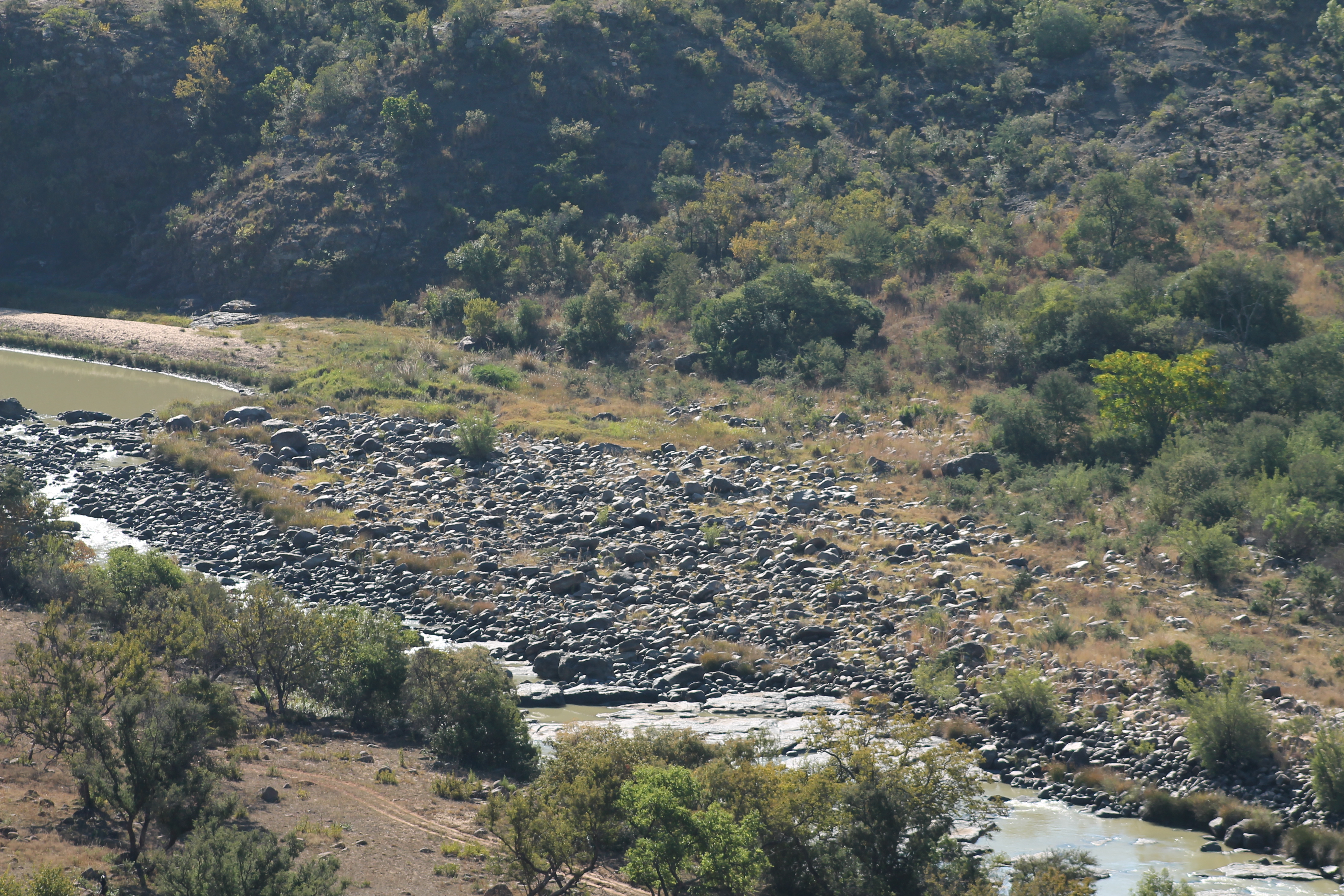
When Chelmsford's centre column crossed the Buffalo River at Rorke's Drift on 11 January, Sihayo himself was already gone. He had departed the day before with his best warriors to answer Cetshwayo's call to arms at Ulundi, leaving perhaps 200 to 300 defenders - many of them old men and boys - under his son Mkumbikazulu. Chelmsford determined to attack the kraal anyway, partly to secure his flank and partly to demonstrate to London that he was acting against the individuals named in the ultimatum. At 3:30 a.m. on 12 January, a force under Colonel Richard Glyn set out from camp. Chelmsford accompanied the column and, characteristically, interfered in its tactical direction while leaving formal command unclear. The Zulu defenders held a steep gorge on Ngedla Hill, its base choked with boulders and scrub, the cliff paths barricaded and covered by marksmen.
A Fight Harder Than Expected
The Natal Native Contingent led the assault. Hamilton-Browne's men advanced in good spirits until they came within range of Zulu defenders hidden among the rocks. The NNC had received almost no military training, and Hamilton-Browne had ordered them not to use their firearms at all - they advanced with spears and clubs. When the Zulu opened fire, breaking one man's thigh with their first shot, the attack faltered. Major Wilsone Black tried to rally the NNC by waving his hat and sword overhead; a marksman shot the hat from his hand, and a boulder hurled from the cliffs struck him below the belt. Captain Harford spotted a warrior taking aim at Colonel Glyn and shouted a warning that likely saved his life. The regulars of the 24th Regiment steadied the attack with fixed bayonets, outflanking the gorge by climbing the cliffs elsewhere. Around thirty Zulu defenders were killed, including Mkumbikazulu, who died leading his men. Two NNC soldiers died and at least fourteen were wounded.
The Wrong Lesson
After clearing the gorge, British troops marched to Sihayo's kraal and burned it to the ground. They found three old women and a young girl but no warriors. They seized livestock - 413 cattle, 332 goats, 235 sheep - and marched back to camp through a thunderstorm. The Natal Times reported it as a victory over a Zulu attack. Its editorial noted confidently that "the prediction of those best acquainted with the Zulus, that they would never stand the fire of regular forces, has been abundantly verified." Historians Adrian Greaves and Ian Knight have both argued that Chelmsford drew exactly the wrong conclusion from the engagement. Rather than noting the determination of a small force of old men and boys to hold their ground - or the courage of Mkumbikazulu dying at their head - Chelmsford focused on the ease of the British victory. This complacency, Knight argues, contributed directly to the catastrophe ten days later at Isandlwana, where the main Zulu army would prove rather harder to dislodge.
The Decision That Changed the War
News of the attack on his kraal reached Cetshwayo while he was weighing which of the three British columns to engage with his main army. The presence of Chelmsford himself directing the assault on Sihayo's homestead appears to have convinced the king that the centre column was the most important force. He dispatched the bulk of his army - 20,000 warriors - against it. Ten days later, on 22 January, they destroyed Chelmsford's camp at Isandlwana. The irony runs deeper still. Prisoners taken at Sihayo's kraal were interrogated with violence but revealed nothing about the main Zulu army of 25,000 warriors positioned just thirty kilometres away. They were released on 13 January. When the survivors of Isandlwana later fled toward the Buffalo River, the people of Sihayo's burned kraal were among those waiting at the drifts. Lieutenants Teignmouth Melvill and Nevill Coghill, carrying the Queen's Colour of the 1/24th, were killed at what became known as Fugitives' Drift. The first battle of the war had pointed directly toward the second - if anyone had been paying attention.
From the Air
Located at 28.30S, 30.61E in the Bashee River valley, KwaZulu-Natal, South Africa. The site lies in hilly terrain near Ngedla Hill, with the horseshoe-shaped gorge still identifiable from the air. Rorke's Drift is approximately 8km to the south; Isandlwana battlefield approximately 15km to the east. The exact location of Sihayo's kraal is debated, but historian Keith Smith places it near the settlement of Sokhexe, still occupied by Sihayo's descendants. Nearest airports: Ulundi (FAUL) approximately 80km northeast; Dundee airfield approximately 45km northwest; King Shaka International, Durban (FALE) approximately 300km south. Elevation approximately 1,000m ASL. Rolling green hills with river valleys; good visibility in winter months.