Action of 1 January 1800
The wind died on New Year's Day, 1800, and five American ships went nowhere. Becalmed off the island of Gonave in the Bight of Leogane, the armed schooner Experiment and her convoy of four merchant vessels sat motionless on glassy Caribbean water while, from the shore, eleven oar-powered barges pushed out to meet them. The men at the oars served Andre Rigaud, a French-aligned Haitian general locked in a civil war with Toussaint L'Ouverture and desperate enough to seize any foreign ship carrying supplies. The Americans had stumbled into the overlap of two conflicts they barely understood - the Quasi-War between the United States and France, and the Haitian War of Knives - and what followed was an all-day fight that would save two ships, lose two others, and destroy a captain's reputation.
A Dead Calm and a Swarm of Oars
The convoy had departed in late December 1799, bound through waters contested by French privateers. Experiment, a 135-ton schooner armed with twelve six-pounder guns and crewed by seventy men, was the escort for three smaller schooners and a brig, none carrying more than three guns apiece. When the wind abandoned them off Gonave's north shore, Rigaud's picaroons - the raiding barges that terrorized Caribbean shipping - saw their chance. Each barge carried forty to seventy men, propelled by twenty-six oars, and armed with swivel guns and four-pounders. Eleven set out first. Behind them, on call, waited twenty-six more barges and fifteen hundred additional fighters. The Americans did not know this. Commander William Maley ordered Experiment's gunports kept closed, hoping the picaroons would mistake the warship for just another merchantman and come within killing range.
Three Assaults, Three Hours
The ruse worked. When the barges closed to musket range, Experiment threw open her ports and answered with grapeshot. The first volley shredded the lead barges, and the picaroons withdrew to Gonave to land their wounded and regroup. They returned with reinforcements, splitting into three squadrons of four barges each, attacking Experiment from both sides and the stern simultaneously. During the lull, Maley's crew had raised boarding nets, positioned musketeers, and loaded every gun. For three hours Experiment fought them off, sinking two barges and inflicting heavy casualties.
But the picaroons adapted. Two barges slipped behind the schooner Mary, using her hull as cover, and boarded her. Mary's captain was killed - the only American fatality of the day. When Experiment raked Mary with grapeshot to drive off the boarders, the remaining picaroons used the distraction to drift toward the unprotected Daniel and Mary and Washington. Those crews abandoned ship and fled to Experiment. Rigaud's men plundered both vessels and towed them away. The remnants of the convoy - Experiment, Mary, and Sea Flower - limped into Leogane under the protection of the American consul.
The Accusation That Outlasted the Battle
Experiment had saved two ships and lost two. One captain dead, one civilian wounded, and Experiment's own second-in-command, Lieutenant David Porter, shot through the arm. By the metrics of the day, it was an acceptable outcome against overwhelming odds. But the battle's afterlife proved more damaging than its gunfire.
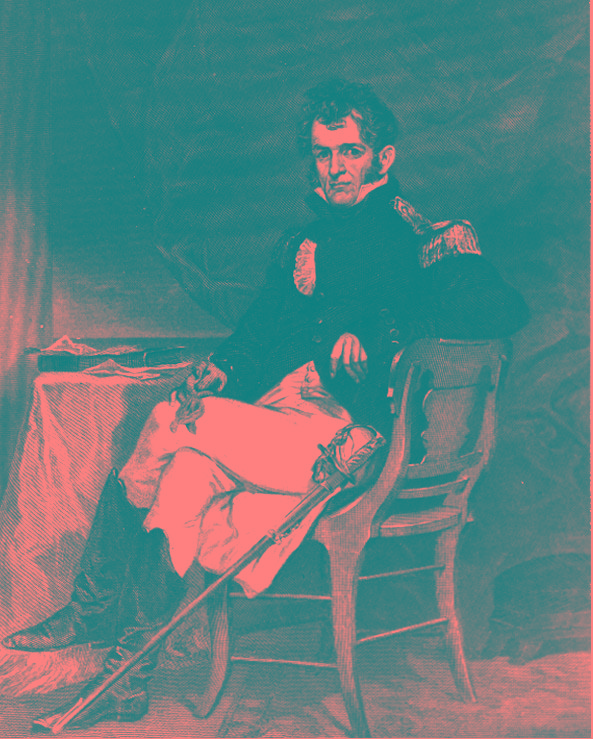
Porter - who would later become one of the most celebrated naval officers of the War of 1812 - accused Commander Maley of cowardice. According to Porter, Maley had wanted to surrender the moment the barges appeared, attempting to strike the colors before a single shot was fired. Porter claimed he had saved the ship by ignoring his commander and rallying the crew to fight on his own authority. The American consul at Leogane, who had been aboard Experiment during the entire engagement, told a different story entirely, praising Maley's bravery. Threats of court-martial circulated, but formal charges never materialized. On July 16, 1800, Maley was quietly replaced as Experiment's commander by Charles Stewart. The accusation, never proven and never dismissed, haunted Maley for the rest of his career.
The Wider Storm
The action off Gonave was a single skirmish in a forgotten conflict. The Quasi-War between the United States and France never produced a formal declaration of hostilities - it was fought entirely at sea, a slow-motion naval brawl over trade rights and revolutionary politics. Haiti's War of Knives, meanwhile, was tearing the former colony of Saint-Domingue apart as Rigaud and L'Ouverture fought for control of the first Black republic in the Western Hemisphere.
Rigaud's picaroons continued raiding American shipping throughout 1800, attacking another convoy later that year. The raids ended only when L'Ouverture's forces drove Rigaud from power. In a twist of symmetry, Rigaud fled to Guadeloupe and then boarded the schooner Diane for France - only to be intercepted on October 1, 1800, by the same ship that had fought his barges on New Year's Day. Experiment captured Diane and delivered Rigaud to Saint Kitts. The little schooner had bookended the picaroon campaign, from its bloodiest day to its final chapter.
From the Air
Located at 19.00N, 73.50W in the Bight of Leogane, between the Haitian mainland and the island of Gonave. The battle site sits in the gulf northwest of Port-au-Prince. Gonave Island is clearly visible from altitude - a large, mountainous island roughly 60 km long. The nearest major airport is Toussaint Louverture International (MTPP) in Port-au-Prince, approximately 50 km to the southeast. Approach from the north or west for the best view of the Bight. Leogane sits on the southern shore of the gulf. Expect tropical conditions with good visibility except during afternoon convective buildup.