Action of 14/15 February 1918
On the night of 14 February 1918, the skipper of the drifter Shipmates fired a red-and-white Very light. Lieutenant Denson had spotted what he thought was a U-boat west of buoy No. 12 in the Strait of Dover and was trying to alert the rest of the barrage patrol. Within an hour, seven German destroyers of the II Flotilla had split into two half-flotillas, slid past Shipmates in the dark, and were systematically destroying the line of small fishing boats whose searchlights and flares had been making the strait too dangerous for U-boats to cross. The captains of nearby British warships heard the guns. Some thought it was artillery from Flanders. One thought it was an air raid on Dover. By the time the truth came clear, a trawler and seven drifters were sunk and eighty-nine men were dead.
The Dover Barrage
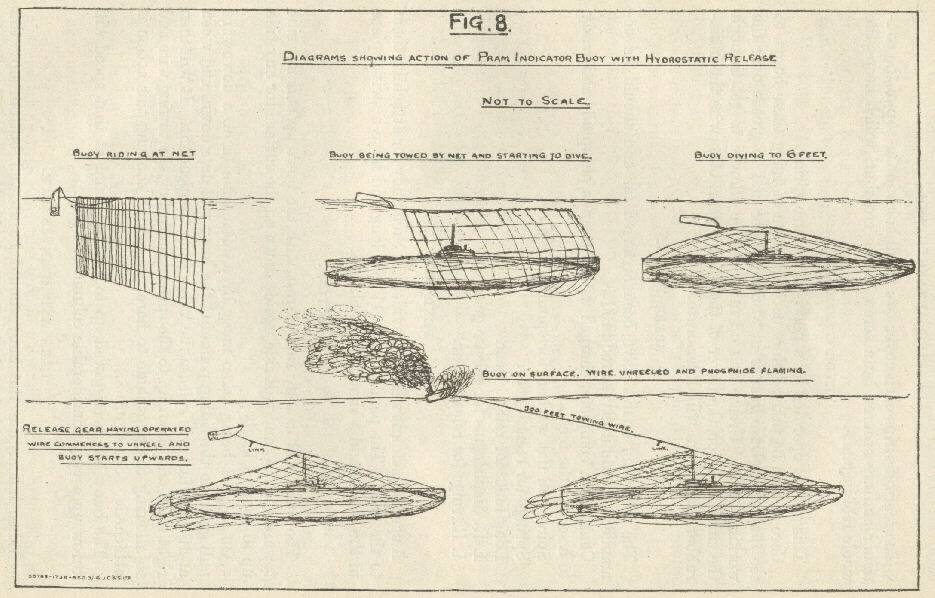
The Strait of Dover is only 33 kilometers wide at its narrowest, and by 1918 the Royal Navy had spent four years trying to seal it against German submarines. After earlier minefields drifted with the tide and proved more dangerous to friend than enemy, a deep mine barrage was laid from Folkestone to Cap Gris-Nez, backed by patrol lines of small ships whose job was simple and brutal: light up the water at random intervals so that any U-boat trying to creep through would be seen, fired at, and driven down into the mines. Fifty-eight drifters - converted fishing boats crewed largely by Royal Naval Reserve men - manned the indicator-net divisions, each armed with little more than rifles and Very pistols. It worked. Between mid-December 1917 and mid-February 1918, three U-boats had been sunk in or near the strait.
Schroder Picks Up the Phone
From the German side of the Channel, those losses looked like a strategic emergency. Korvettenkapitan Karl Bartenbach, commanding the Flanders flotillas, sent the request up the chain to Vice-Admiral Ludwig von Schroder, who passed it to Admiral Reinhard Scheer, commander of the High Seas Fleet. Scheer, never one to refuse a chance to bloody the Dover Patrol, detached the II Destroyer Flotilla - eight modern destroyers under Korvettenkapitan Heinecke - and sent them west. The flotilla was meant to leave on 7 February but bad weather and British minelaying around their planned route forced delays. On 14 February they slipped out of Den Helder, raced down the Dutch coast under cover of darkness, and reached the Sandettie Bank around midnight, undetected.
The Confusion
Heinecke split his force. The 4th Half-Flotilla swung north to attack the British line from Folkestone to the Varne bank; the 3rd Half-Flotilla, under Kapitanleutnant Kolbe, headed south to come up the French side of the barrage from Cap Gris-Nez. Then chaos. The paddle minesweeper Newbury, recently out of refit, was caught and left burning - her captain unable to find the green Very lights that signaled surface attack. Most ships nearby heard the gunfire but misread it. The Dover signal station, knowing only that a U-boat had been reported near buoy 12, assumed the firing was the U-boat being engaged. The captain of HMS Racecourse thought it was an air raid on Dover. The commander of motor launch ML 12, bombarded by destroyers he was certain were British, only learned otherwise when a trawler skipper insisted they were German. Green lights did go up. Some were never seen. Others were dismissed.
Eighty-Nine Men
While the British puzzled over what was happening, the German destroyers worked methodically down the line of drifters. James Pond was hit and its own flares set it alight. Clover Bank, Cosmos, and Silver Queen sank one after another. The drifter Jeannie Murray went down with all hands. Violet May and Treasure were left burning. By the time anyone in Dover had a clear picture, the Germans had vanished back into the dark. The casualty count from that night, depending on which historian is consulted, was eighty-nine men killed or missing - reservists, fishermen, men whose pre-war jobs had been hauling herring nets off Lowestoft and Yarmouth, now lying dead in the cold February Channel. Survivors and thirty-six recovered bodies were brought ashore at Dover the next morning, wrapped in blankets, laid out in the Market Hall.
A Pinprick That Failed
The official histories called it a disaster. Vice-Admiral Roger Keyes, commanding the Dover Patrol, sacked three officers - including the commander of the monitor M-26 - and ordered courts-martial. He also engineered a wave of medals for the reservists on the barrage line: five Distinguished Service Crosses, thirteen Distinguished Service Medals, three Conspicuous Gallantry Medals. The barrage itself was rebuilt within weeks. The German destroyers tried the same raid the next night and found no one to shoot at - the British had pulled the illumination patrols back temporarily - but the Germans never came again in force. Historian Mark Karau later judged it a transient victory: a brilliant tactical success that the German Navy lacked the ships to follow up, leaving the Dover Barrage to grow steadier and deadlier through the final months of the war.
From the Air
The action took place along the mine-barrage line from Folkestone (51.08°N, 1.18°E) to Cap Gris-Nez (50.87°N, 1.58°E), with the worst attacks falling near buoys 12-14 (roughly 51.00°N, 1.50°E) and at the French end near Les Quenocs between Calais and Cap Gris-Nez. From cruise altitude the entire 33 km of strait is visible in clear weather; the chalk White Cliffs of Dover and the cliffs at Cap Blanc-Nez and Gris-Nez are unmistakable landmarks. Recommended viewing altitude FL200-FL350 on the Dover-Calais corridor. Nearby airfields: Lydd (EGMD), Manston (EGMH), and Hawkinge on the English side; Calais-Dunkerque (LFAC) and Le Touquet (LFAT) on the French side. The waters below remain among the busiest shipping lanes in the world.