Actions in Nordland
The German mountain troops covered 125 miles from Grong to Mosjoen on foot, against armed opposition, in five days. That pace tells you everything about the campaign fought in Nordland during May 1940 -- the speed of the German advance, the hopelessness of the Allied position, and the brutal terrain that made every mile a fight. When Germany launched Operation Weserubung on 9 April 1940, seizing Norway's ports, the Allies scrambled to respond. In the far north, the port of Narvik became the prize, and to prevent German forces from relieving their isolated garrison there, a patchwork of British, French, and Norwegian units was thrown into the mountainous, sparsely populated county of Nordland. What followed was a month of ambushes, retreats, disasters at sea, and a final evacuation that left Bodo in ruins.
Scissorsforce and the Independent Companies
The British units sent to Nordland were among the most unusual in the army. MI(R), a War Office branch specializing in irregular warfare, had formed ten Independent Companies for raiding purposes under Lieutenant Colonel Colin Gubbins -- the man who would later direct the Special Operations Executive. Official authorization came only on 20 April, and the first companies sailed for Norway just a week later. On 2 May, Gubbins was ordered to form four of these companies into 'Scissorsforce' and secure three key points: Bodo, Mo i Rana, and Mosjoen. The landscape they entered was mountainous and nearly empty of population, with almost no cover from air attack. At these northern latitudes in late spring, there was effectively no darkness to hide in either.
Ambush at Mosjoen
The first real engagement came on 10 May. No. 5 Independent Company and two Norwegian companies held a position ten miles from Mosjoen, where the road from the south squeezed between the Bjornaa river and steep hillsides. When German troops from the 181st Infantry Division advanced up the road on bicycles, a platoon commanded by Captain John Prendergast -- one of eight Indian Army officers attached to the Independent Companies -- ambushed them, inflicting about fifty casualties. It was a sharp, efficient action, but it could not hold. Austrian ski troops outflanked the position later that morning, and Gubbins agreed there was nowhere else to make a stand before Mosjoen. The Independent Companies evacuated by sea aboard the Norwegian steamer Erling Jarl, which Gubbins had chartered for 5,000 krone. Meanwhile, in a daring flanking move, 300 German mountain infantry commandeered a coaster and landed behind the Allied lines at Hemnesberget, cutting off the Norwegian retreat.
Disasters at Sea
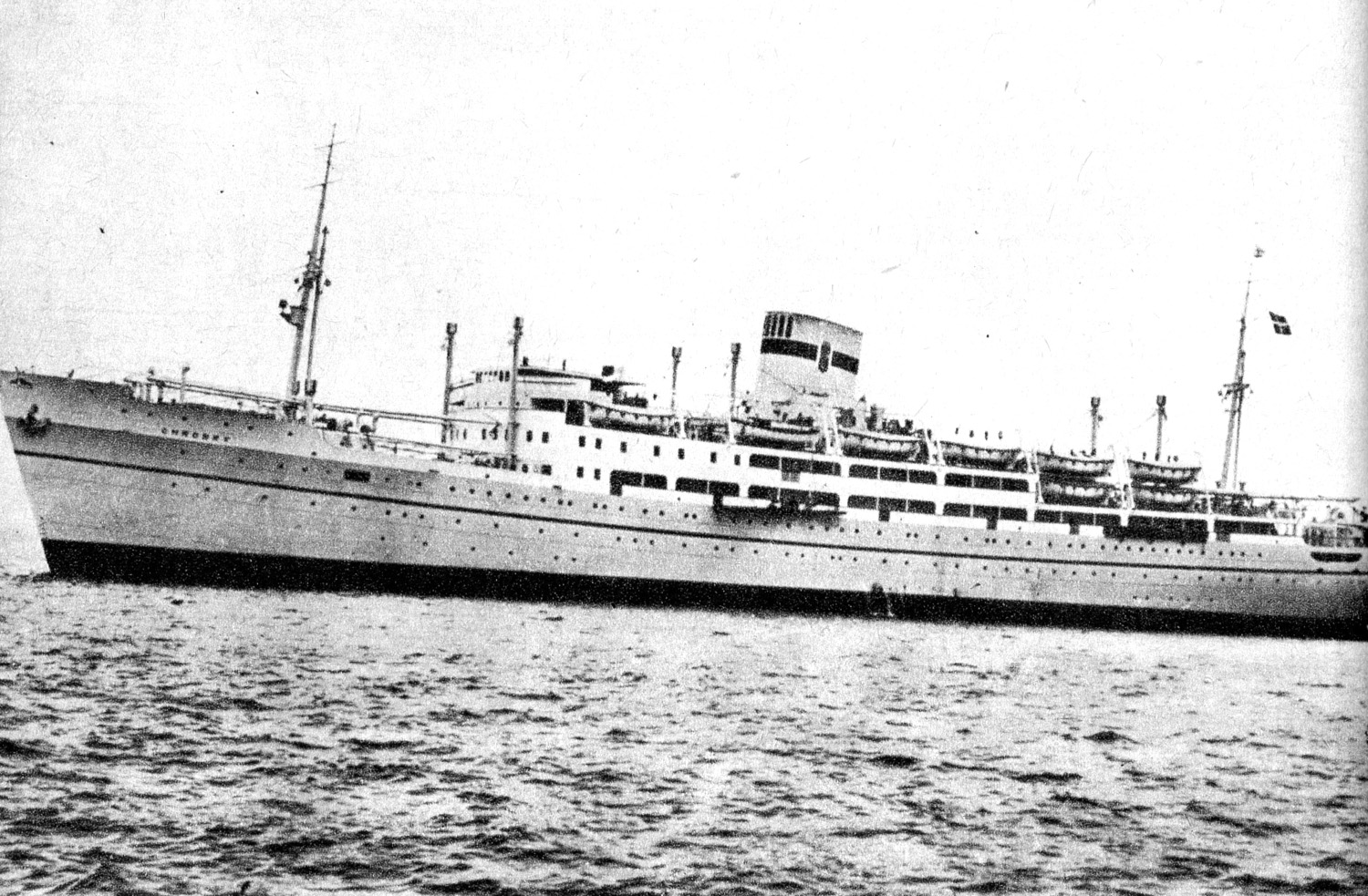
The deployment of reinforcements -- the 24th Guards Brigade, diverted from the Narvik siege -- became a catalogue of misfortune. On 14 May, the destroyer carrying Brigadier William Fraser was bombed and forced to limp to Scapa Flow, taking the brigade commander with it. The next day, the Polish troopship Chrobry, carrying the Irish Guards and brigade headquarters, was attacked by German bombers off the Lofoten Islands. Bombs killed all the Irish Guards' senior officers and set the ship ablaze. Over 700 survivors were rescued, their stoic bearing on the burning foredeck compared by the captain of HMS Wolverine to the legendary Birkenhead drill. Two days later, the cruiser HMS Effingham struck a rock at 23 knots while taking an unusual route to avoid air attack. She was carrying most of the equipment of the 2nd South Wales Borderers, who had to return to Harstad empty-handed. Also lost aboard Chrobry were three light tanks -- the only British tanks in Norway.
Fighting Retreat to Bodo
Gubbins assumed command and orchestrated a fighting withdrawal northward through the Saltdal valley. At Pothus, Lieutenant Colonel Hugh Stockwell held a delaying position with the reconstituted Irish Guards -- whose senior surviving officer was a captain -- the Independent Companies, a troop of 25-pounders firing over open sights, and a Norwegian machine-gun company. The Germans attacked with two mountain battalions and a cyclist company. Some defenders fell back across the river clinging to linked rifle slings. Two Gloster Gladiator biplanes, one flown by Rhodesian ace Caesar Hull, operated from Bodo's newly completed airstrip, challenging German air supremacy for the first time in the campaign. On the evening of 27 May, the Luftwaffe bombed Bodo, destroying 420 of the town's 760 buildings, killing twelve people, and leaving 5,000 homeless. Over three nights beginning 29 May, the British force was evacuated by destroyers. Gubbins sailed on the last one, the night of 31 May. By 8 June, the entire Allied force had left Norway, and on 14 June, the first German ski patrols from Nordland linked up with General Dietl's troops near Narvik.
Seeds of Special Operations
The Nordland campaign's legacy extended far beyond its immediate military failure. Gubbins was awarded the Distinguished Service Order and, rather than receiving the divisional command he had earned, was sent back to MI(R) to organize the Auxiliary Units -- a secret stay-behind force prepared for a German invasion of Britain. Later in 1940, he became director of operations of the Special Operations Executive, and in 1943 its overall director. The Independent Companies were disbanded after Norway, but their personnel seeded the British Commandos. Stockwell, also awarded the DSO, went on to run a Commando training centre before commanding a brigade and eventually a division. The improvised, irregular warfare tested in the fjords and valleys of Nordland became the blueprint for Allied special operations throughout the rest of the war.
From the Air
Located at 65.60N, 13.12E in the Nordland county of Northern Norway. The campaign stretched along the coast from Mosjoen in the south to Bodo in the north, following the narrow valleys and fjord-indented coastline. Key landmarks visible from the air include Bodo (ENBO) and the Saltdal valley running south toward Mo i Rana. The Lofoten Islands lie to the northwest. Skjerstad Fjord, a critical geographic feature in the campaign, cuts inland east of Bodo. Recommended viewing altitude: 5,000-8,000 feet to appreciate the terrain that shaped the fighting -- narrow valleys, steep mountainsides, and limited road networks.