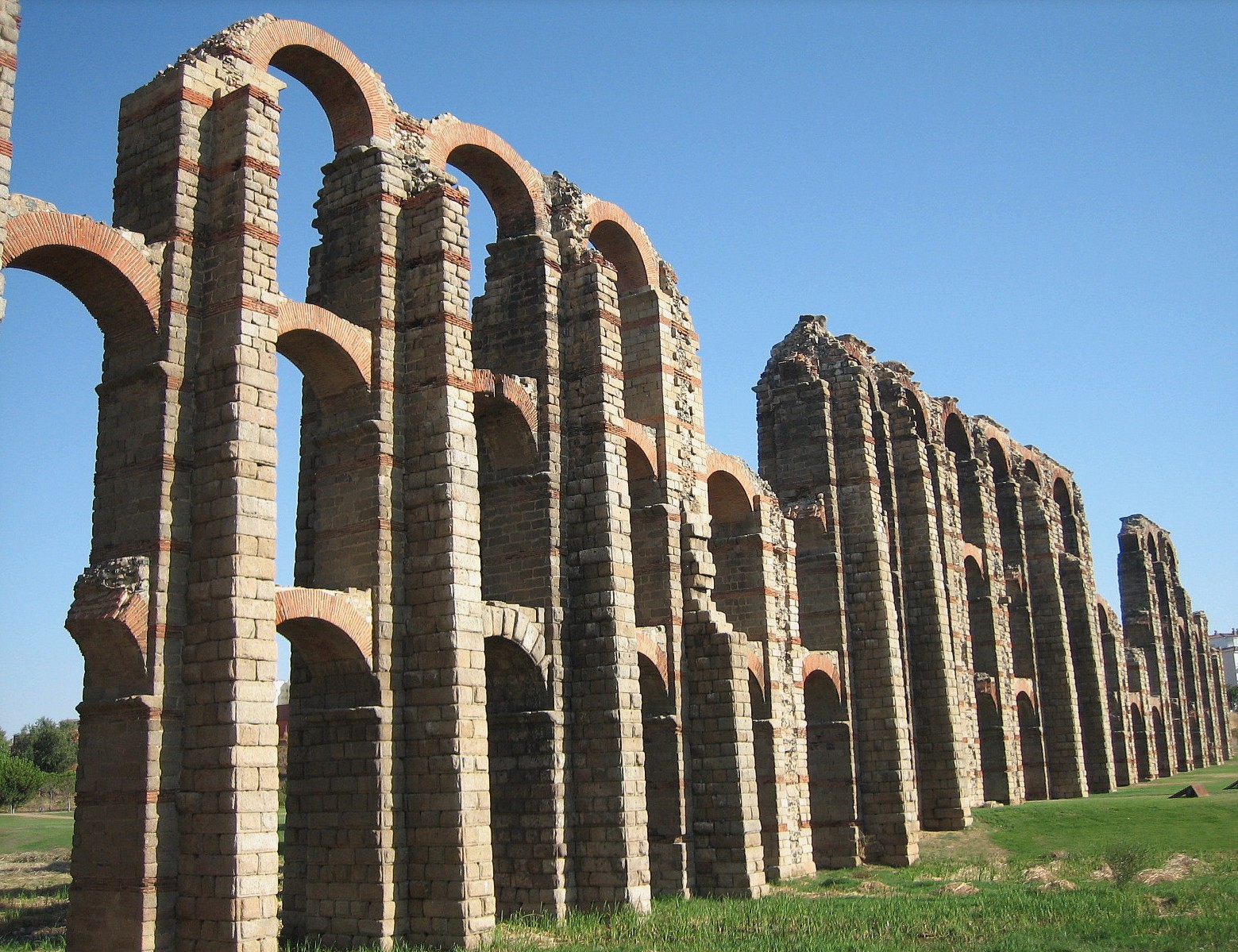
Acueducto de los Milagros
The locals called it a miracle. Centuries after Rome fell and its engineering marvels crumbled across the continent, thirty-eight pillars of the old aqueduct still stood tall over Merida, their alternating bands of granite ashlar and red brick striped against the Extremaduran sky like something too stubborn to die. The people of medieval Merida, who had largely forgotten the empire that built them, could not fathom how such structures persisted. So they gave it the only name that seemed to fit: the Acueducto de los Milagros -- the Aqueduct of the Miracles.
Water for Emerita Augusta
When Augustus founded the colony of Emerita Augusta in 25 BC as a retirement settlement for veterans of the Cantabrian Wars, he needed infrastructure to match his ambitions. The city would become the capital of Lusitania, one of Rome's most important provinces on the Iberian Peninsula, and capitals required water. The Aqueduct of the Miracles was one of three built to supply the growing city. This one drew from the Proserpina Dam, fed by a stream called Las Pardillas roughly 5 kilometers northwest of town. The other two -- the 15-kilometer Aqua Augusta, fed by the Cornalvo reservoir, and the San Lazaro aqueduct, supplied by underground channels -- served different quarters. Together, the three systems transformed a military settlement into a city worthy of its imperial name.
Granite Bones, Brick Skin
The aqueduct's construction technique, called opus mixtum, gives it its distinctive appearance. Massive granite blocks laid in ashlar form the structural skeleton, while courses of red brick are interspersed between them at regular intervals -- not merely decorative, but functional, providing horizontal bonding that distributes weight and absorbs the slight movements that centuries of use and weather demand. The double arcade arrangement, with smaller arches supporting larger ones above, allowed the structure to reach 25 meters in height while minimizing the amount of material needed. The surviving stretch runs approximately 830 meters. Built during the 1st century AD, with a probable second phase of construction or renovation around 300 AD, it continued carrying water until the empire's administrative collapse severed the maintenance chains that kept Roman infrastructure alive.
Among the Ruins of an Empire
Today the aqueduct stands within the Archaeological Ensemble of Merida, inscribed as a UNESCO World Heritage Site in 1993. The ensemble is one of the largest and most extensive archaeological sites in Spain, preserving the bones of an entire Roman capital -- theatre, amphitheatre, circus, temples, and bridges alongside the aqueducts. Running parallel to the surviving arcades is the Puente de Albarregas, a small Roman bridge whose intimate scale contrasts with the towering pillars beside it. The juxtaposition captures something essential about Roman engineering: it was never just monumental. It was also practical, connecting neighborhoods and carrying pedestrians across streams with the same care it brought to spanning valleys. The miracles, it turns out, were just good engineering -- though standing beneath those arches two thousand years later, the word still feels earned.
From the Air
Located at 38.92N, 6.35W in Merida, Extremadura, western Spain. The aqueduct's tall pillars are visible from the air running roughly north-south on the northwestern edge of the city. The Roman theatre and amphitheatre complex lies to the southeast. Nearest airport is Badajoz (LEBZ), approximately 60 km west. The flat Guadiana valley provides clear sightlines in good weather.