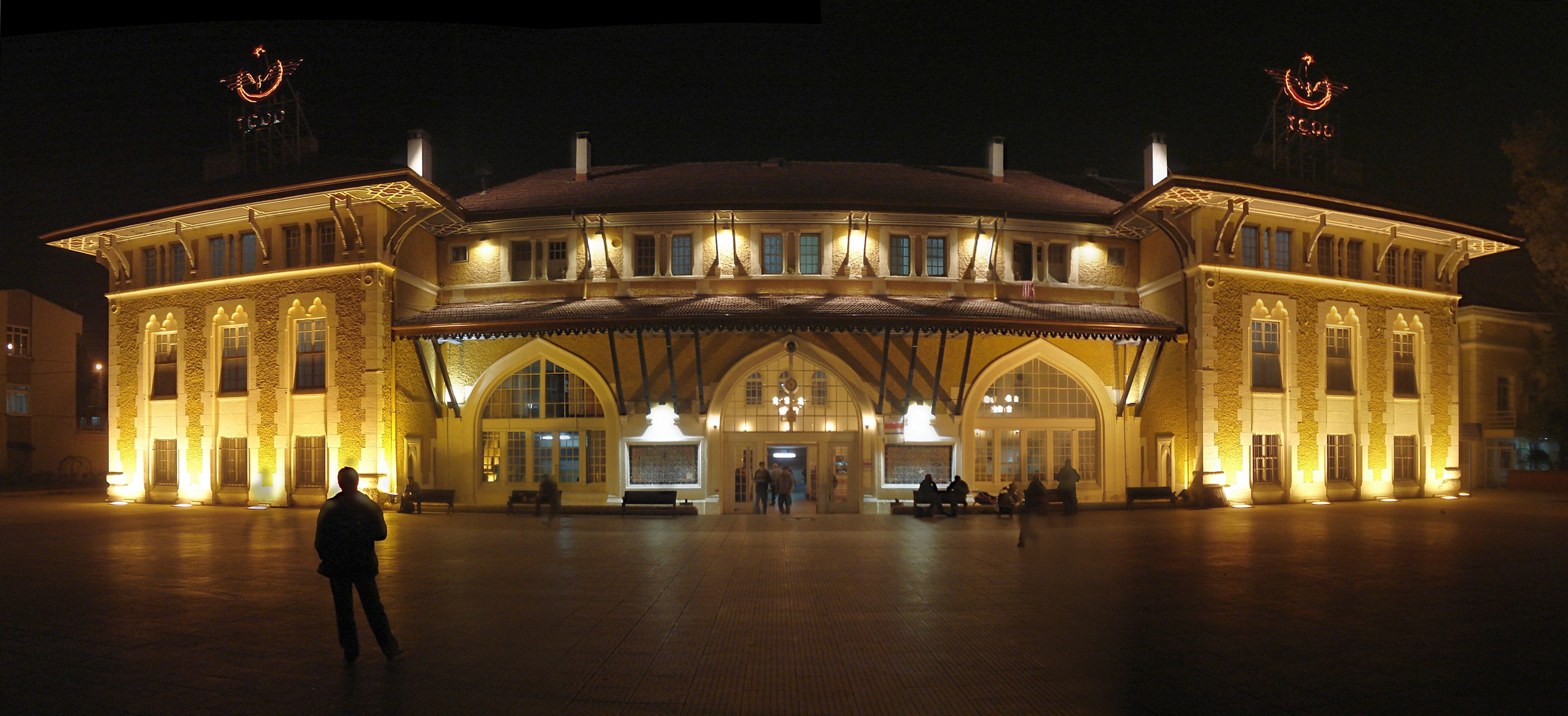
Adana
The aroma of grilling lamb fat drifts through the evening air of Adana's old town, mingling with the call to prayer echoing from minarets that have watched over this crossroads for centuries. Here on the fertile Cilician Plains, fifty kilometers from the Mediterranean coast, the Seyhan River has sustained human settlement for eight millennia, its banks witness to Hittites and Romans, Armenians and Ottomans, and now a sprawling modern metropolis of over two million. The city wears its history lightly, in a Roman bridge that carried traffic until 2007 and now serves as a popular gathering spot, in mosques built in Mamluk style, in the polyglot echoes of a cotton-trading past. But Adana is no museum. This is a working city where industry hums alongside tradition, where NATO aircraft streak overhead from nearby Incirlik, and where the kebab that bears the city's name represents just the beginning of culinary exploration.
Bridging Millennia
The Taskopru, Adana's stone bridge, has anchored this city's identity since the Roman Empire. Built around 120-135 AD, this remarkable structure once formed a crucial link in the trade routes connecting Persia and Anatolia to Mediterranean ports. Known through the ages as the Saros Bridge, the Bridge of Justinian, and the al-Walid Bridge, it carried motor vehicles until 2007 before being converted to a pedestrian crossing. Today it serves as a beloved gathering spot where residents stroll and socialize against a backdrop of rushing water. The bridge survived the rise and fall of empires, the Ottoman conquest of 1517, and the devastating earthquakes of 2023 that claimed 450 lives in the city. Its endurance mirrors that of Adana itself, which the name may derive from a proto-European word meaning 'on the river,' making it a linguistic cousin to the Danube and Dnieper.
Crossroads of Conflict and Commerce
Adana's strategic position has made it a prize and a refuge throughout history. The Luwians, Hittites, Sea People, Assyrians, Cilicians, Persians, Seleucids, Armenians, and Romans all left their mark before the Ottomans established their four-century rule. In early modern times, the city developed a thriving cotton industry that attracted a diverse population of Muslims, Armenians, Greeks, Syrians, and Arabs. This prosperity was shadowed by tragedy: inter-ethnic tensions exploded in the 1908 massacre and the 1915 Armenian genocide. Today, the city's four districts spread across the landscape, from historic Seyhan at its core to Kunqu's modern shopping districts. The presence of Incirlik Air Base, NATO's springboard for operations deeper into Asia, has brought an influx of Westerners and given Adana amenities out of proportion to its size.
The Art of the Kebab
No visit to Adana is complete without tasting its namesake dish. The Adana kebab is a skewer of minced lamb, seasoned with local red pepper and hand-kneaded until the meat develops its characteristic texture, then grilled over charcoal flames. The old town restaurants that circle Tepebag, the historic core, serve this specialty alongside fresh flatbreads and grilled vegetables. Names like Kebapci Seyhmus, Eyvan Kebap, and Abidin Usta represent generations of culinary tradition. Beyond kebabs, the city offers Mado's famous desserts, the lake shore's fresh fish restaurants, and the cafeterias near the railway station where workers and travelers gather. The railway itself connects Adana to Konya's high-speed network and slower scenic routes through the Taurus Mountains, making the city as much a transit hub today as it was when Roman caravans crossed the Taskopru.
Between Mountain and Sea
The Seyhan Dam, completed in 1955, created a lake that has transformed the northern edge of the city into a recreation area where the ancient Roman city of Augusta lies submerged beneath the waters. University-managed botanical gardens and the 1,575-meter bridge across the western arm of the barrage lake offer peaceful escapes from urban intensity. Beyond the city, the Taurus Mountains rise to the north, their passes guarded by small towns like Karaisali and Pozanti with their own historic sites. To the south, the beaches of Karatas await, along with the ruins of ancient Magarus. And Mersin, sixty-five kilometers west, provides ferry connections to Cyprus. Through it all, Adana remains the center, four thousand years of civilization still breathing along the banks of the Seyhan.
From the Air
Located at 37.00N, 35.32E on the Cilician Plains of southern Turkey, approximately 50km inland from the Mediterranean coast. Elevation approximately 30m above sea level. The Seyhan River and its reservoir lake are visible landmarks. Nearest airport: Cukurova Airport (LTAG) 32km west, opened 2024. Incirlik Air Base (LTAG) is nearby. The city lies at the junction of the E90 highway corridor connecting the Mediterranean coast to central Anatolia.