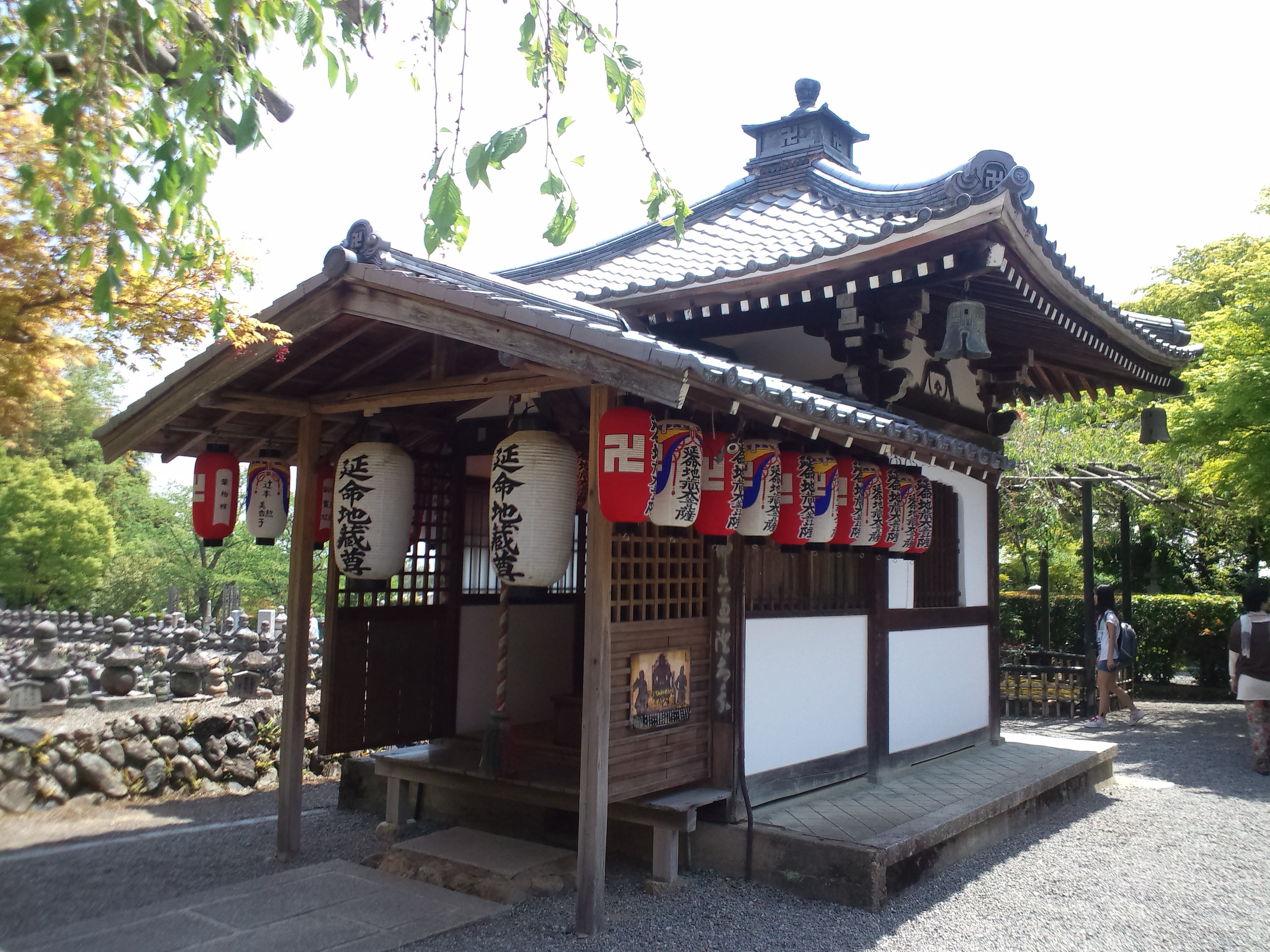
Adashino Nenbutsu-ji: The Temple of Eight Thousand Nameless Dead
Eight thousand stone figures sit shoulder to shoulder on a hillside in northwest Kyoto, and not one of them has a name. They are jizo and gorinto and simple grave markers, gathered from the slopes and ravines of Adashino -- a place where, for over a millennium, the people of Kyoto left their dead to the wind and rain. The word "adashi" itself carries the weight of impermanence, the Buddhist reminder that nothing lasts. Every August, when thousands of candles are placed before these anonymous stones during the Sento Kuyo ceremony, the nameless dead flicker briefly into the warm light of remembrance. It is one of the most quietly devastating sights in all of Japan.
Where the Dead Were Left to the Sky
Long before Adashino Nenbutsu-ji was a temple, it was a place the living avoided. During the Heian period, beginning in the late eighth century, the hills of Adashino in the Sagano district served as a funerary ground -- not a cemetery in any Western sense, but an open-air site where bodies were simply exposed to the elements. This practice, known as wind burial, was common for those who lacked the wealth or family connections for proper cremation or interment. The dead were carried to the mountainside and left among the trees. Over centuries, rough stone markers accumulated across the hillsides -- small jizo statues, five-tiered gorinto pagodas, simple carved stones -- each one placed by someone who cared enough to mark a spot but whose own name has long since vanished. The landscape became a vast, scattered memorial to Kyoto's forgotten dead.
Two Founders, Two Faiths
The temple's origins trace to 811, when the monk Kukai -- founder of Shingon Buddhism and one of the most influential figures in Japanese religious history -- is said to have established a place of prayer on this hillside to comfort the souls of the abandoned dead. Centuries later, in the Kamakura period, the monk Honen transformed the site into a Jodo-shu (Pure Land) temple, shifting its practice toward nenbutsu -- the devotional recitation of Amida Buddha's name. The temple's full name reflects this evolution: "Nenbutsu-ji" means "temple of the Buddha's name recitation." Where Kukai sought to consecrate the ground through esoteric ritual, Honen offered something simpler and more democratic: the promise that anyone, even the nameless and kin-less, could reach paradise through the power of a chanted name.
The Great Gathering
For centuries, the stone markers lay scattered across the hills and valleys of Adashino, gradually sinking into moss and undergrowth, tipping and tumbling into ravines. Around 1903, during the Meiji era, temple officials and local volunteers undertook a remarkable project: they combed the surrounding mountainsides and collected approximately eight thousand stone figures, relocating them to the temple grounds. The stones were arranged in orderly rows in a dedicated area called Sai no Kawara -- named after the mythological riverbed where the souls of dead children are said to stack stones for eternity. Lined up together, cleaned of centuries of lichen, the statues create an effect that is both solemn and overwhelming. Each one represents a person who lived and died in Kyoto, whose story is completely lost. Together, they form a collective portrait of a city's anonymous dead stretching back over a thousand years.
Candles for the Nameless
The Sento Kuyo ceremony, held on the last Saturday and Sunday of August each year, is the moment when Adashino Nenbutsu-ji transforms from a quiet hillside temple into something unforgettable. As twilight settles over the Sagano mountains, thousands of small candles are lit before the stone figures -- roughly ten thousand flames flickering among eight thousand stones. The ceremony's origins trace to the Meiji era, when the same community effort that gathered the scattered stones also began the tradition of illuminating them in remembrance. Visitors walk among the rows in near-silence, the candlelight catching the worn faces of jizo statues and casting long shadows behind the gorinto towers. There is no list of names to read, no specific histories to recite. The ceremony honors the universal fact of death and the simple human need to say: you are not forgotten.
A Temple at the End of the Road
Reaching Adashino Nenbutsu-ji requires walking beyond the famous sights of Arashiyama, past the bamboo grove, past the thatched-roof houses of the Saga-Toriimoto preserved street, to where the tourist crowds thin and the road climbs into quiet hills. The temple sits at the far end of this path, northwest of the city, as if physically positioned at the boundary between the world of the living and something else. Inside the grounds, beyond the rows of stone figures, a small bamboo grove adds its own green stillness. The temple is a Jodo-shu institution, affiliated with the Pure Land tradition that Honen brought here eight centuries ago. It remains an active place of worship, not merely a museum of old stones. The daily rituals continue, the nenbutsu is still chanted, and each August the candles still burn for people whose names no one remembers.
From the Air
Located at 35.027°N, 135.665°E in the hills of northwest Kyoto's Sagano district. From altitude, the temple sits at the far northern end of the Arashiyama tourist corridor, nestled into the forested hillside above the Saga-Toriimoto preserved street. Best viewed at 2,000-3,000 feet AGL approaching from the south, where the temple grounds and the ordered rows of stone statues contrast with the surrounding forest. Osaka Itami Airport (RJOO) lies approximately 25 nautical miles to the southwest. Kansai International Airport (RJBB) is roughly 55 nautical miles to the south. The Katsura River and Togetsukyo Bridge are visible landmarks approximately 1.5 kilometers to the south.