Addo Elephant National Park
Don't bring oranges. That is the first rule visitors learn at Addo Elephant National Park, and the reason behind it is stranger than any regulation dreamed up by bureaucrats. In the park's early years, rangers fed the elephants citrus fruit from nearby groves during droughts. The elephants developed a taste for it, and decades later, the older matriarchs still recognize the smell. They have been known to reach trunks through car windows to find their favorite snack. It is the kind of detail that captures something essential about Addo: a place where the line between human activity and wild nature has never been cleanly drawn, and where conservation has always been a negotiation rather than a decree.
Eleven Elephants and a Fence
The story of Addo begins with a massacre. In the early 1900s, Eastern Cape farmers demanded that the elephant herds raiding their citrus orchards be eliminated. In 1919, the government hired Major P. J. Pretorius, a professional hunter, to thin the herd. Over fifteen months he killed roughly 120 elephants, reducing a population of about 130 to just 16 traumatized survivors. Public outrage followed. In 1931, the park was proclaimed to protect the remaining animals, but the initial reserve covered a mere 2,000 hectares, and the elephants kept breaking out to raid the surrounding farms. The breakthrough came in 1954, when ranger Graham Armstrong designed and erected an elephant-proof fence around 2,270 hectares, finally enclosing 22 elephants in a space they could not escape. It was a crude solution, but it worked. Behind that fence, the herd began to recover.
From Refuge to Realm
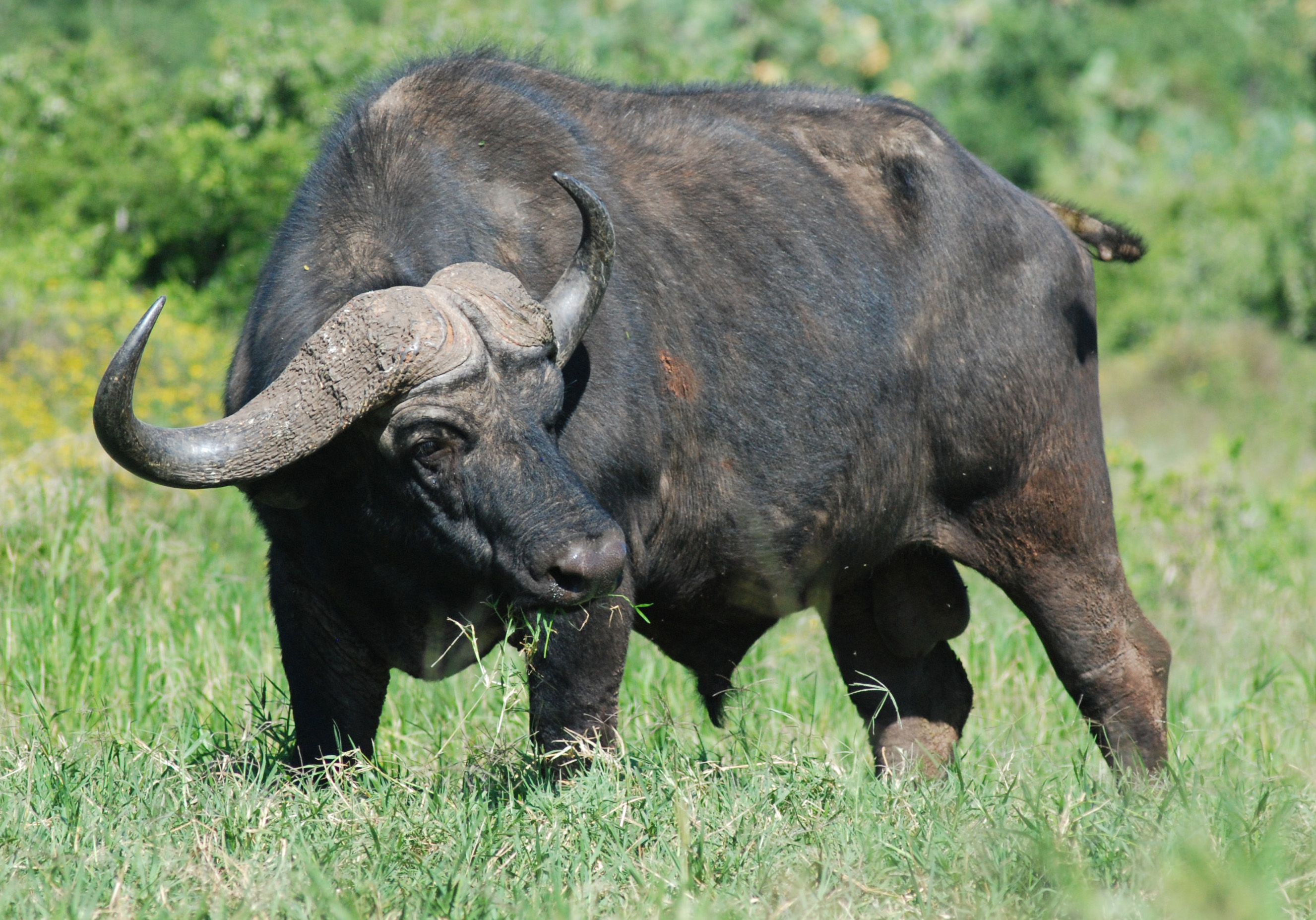
What began as a fenced paddock for a handful of survivors has expanded into something far more ambitious. Today the park covers over 180,000 hectares of terrestrial landscape and 120,000 hectares of marine-protected waters, spanning five of South Africa's seven major vegetation zones. The elephant population has grown from those original 11 to more than 600. Lions and spotted hyenas were reintroduced in 2003, completing the Big Five on land. But Addo's real distinction lies offshore: its marine section harbors southern right whales and great white sharks, making it the only national park on Earth where the so-called Big Seven roam in their natural habitat. The expansion has been deliberate and strategic, absorbing surrounding farmland and conservation areas over decades to create corridors wide enough for large predators and diverse enough to sustain whole ecosystems rather than single species.
The Beetle That Stops Traffic
Among the park's most improbable residents is the flightless dung beetle, Circellium bacchus. These large, glossy-black insects trundle across the park's roads with the unhurried confidence of creatures that know the rules are on their side, because they are. At Addo, dung beetles have right of way. Cars stop, engines idle, and visitors watch as a beetle the size of a golf ball rolls its prize across the tarmac. It is not mere whimsy. This species, the world's largest flightless dung beetle, survives in significant numbers almost nowhere else. The beetles are essential to the park's ecology, breaking down elephant dung and recycling nutrients back into the soil of the dense valley bushveld. Their presence is a reminder that conservation is not only about charismatic megafauna. Sometimes the fate of an ecosystem turns on an insect that cannot fly.
Red Dust and Deep Memory
Addo's elephants look different from their counterparts elsewhere in Africa. The red laterite soil of the Sundays River valley stains their skin a deep brownish-red, giving the herds a distinctive, almost prehistoric appearance as they move through the thick spekboomveld. Scientists have noted behavioral differences too. The Addo herds are largely nocturnal, a trait some researchers trace back to the trauma of the Pretorius culling, when the survivors learned that daylight meant danger. More than a century later, the herds still prefer to feed and travel after dark. Whether this is inherited behavior or cultural memory passed from matriarch to calf remains debated, but the pattern persists. At the underground hide near the main camp's waterhole, visitors sit below ground level, eye-to-eye with elephants that arrive in the cool of evening. The red dust settles on their backs. The waterholes fill and empty. The herd remembers what it needs to remember.
The View from Above
From the air, Addo presents a mosaic of landscapes that seems impossible for a single park. The dense, dark green of the valley bushveld gives way to the open grasslands of the Zuurberg Mountains to the north, then drops toward the coastal dunes and the Indian Ocean to the south. The Alexandria dunefield, one of the largest coastal dune systems in the Southern Hemisphere, forms the park's southeastern boundary. Beyond the surf line, the marine protected area extends into waters where whales breach and sharks patrol. The park sits roughly 70 kilometers northeast of Gqeberha, formerly Port Elizabeth, at the intersection of several biomes that together make Addo one of the most ecologically diverse protected areas on the continent.
From the Air
Coordinates: 33.45°S, 25.75°E. The park spans the Sundays River valley northeast of Gqeberha (Port Elizabeth). From altitude, the contrast between dense dark-green valley bushveld and the open Zuurberg plateau to the north is clearly visible. The Alexandria dunefield marks the southeastern coastal boundary. Nearest major airport: Chief Dawid Stuurman International (FAPE), approximately 40 nm southwest. The park's terrain is relatively low-lying (100-900 m) compared to inland mountain ranges. Clear weather typical; afternoon thermals can produce light turbulence over the valley.