Adinkerke
The villages just inside Belgium are not supposed to be famous, and Adinkerke is small enough that you could blow through it on the E40 without registering anything but a sign. Slow down at exit 1 and the story changes. The shopfronts are not bakeries or barbershops. They are tobacco stores. Then more tobacco stores. Then more. Adinkerke, a quiet Flemish village of a few thousand people in the municipality of De Panne, has the highest concentration of tobacconists per capita anywhere in Europe. The reason is taxes. The customers are French smokers and British booze cruisers who, until the euro slid, would board a ferry at Dover or Calais, drive the few minutes across the border, and stack their trunks with cigarettes priced like a different decade.
A Church and a Suffix
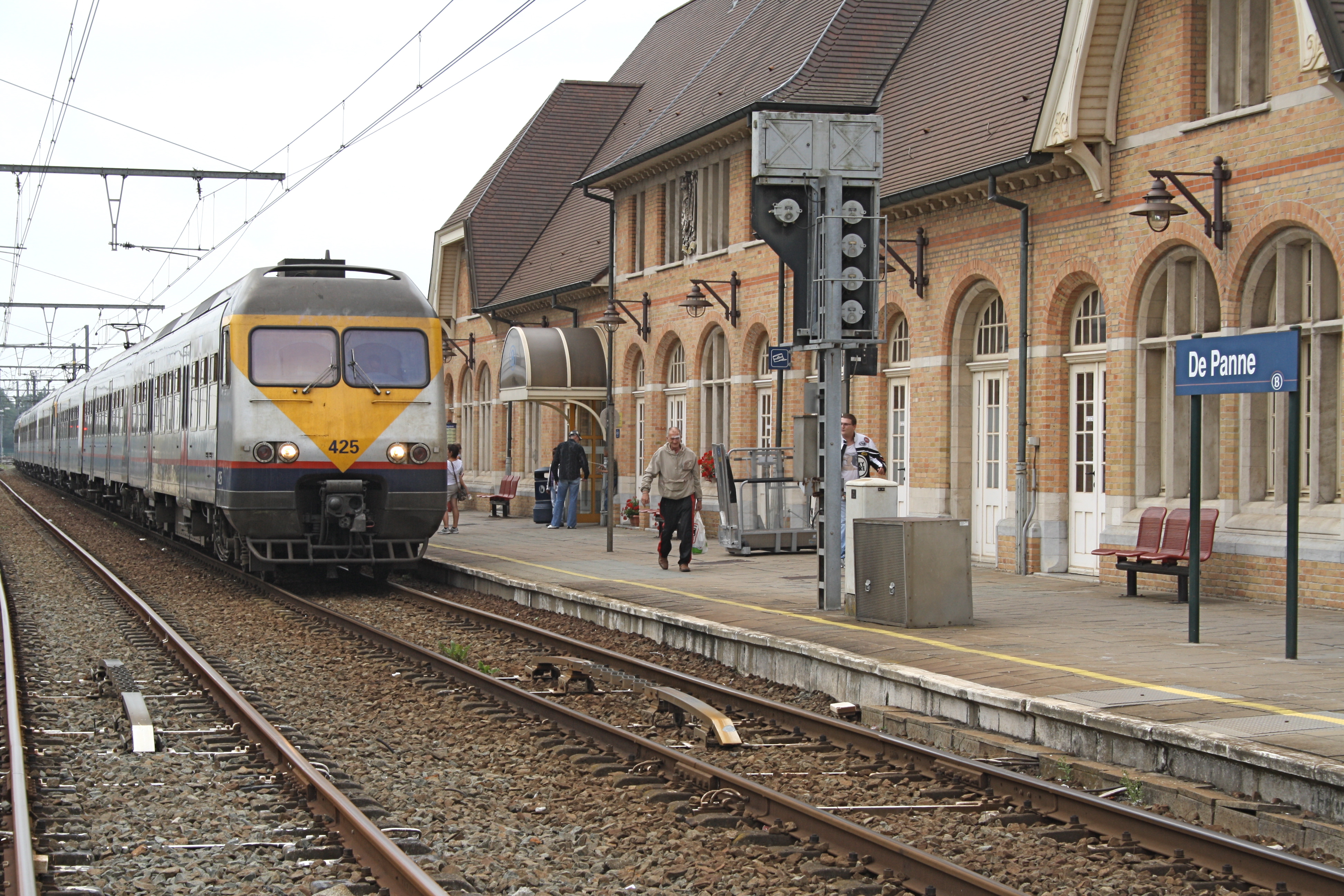
The name itself is a clue to how old this place is. The Flemish suffix kerke means a settlement that grew around a church, and you see the same root in Scottish and northern English kirk. Adinkerke has been here since long before tobacco was a European problem, anchored in the flat polderland west of the Yser. It forms a single conurbation with the coastal resort of De Panne, and at the village's edge sits the railway station that everyone calls De Panne Station even though the platform stands in Adinkerke. The line is the western terminus of the Belgian coast tram, the kusttram, the longest tram line in the world. From here you can ride east through Nieuwpoort and Ostend to the Dutch border, hugging the dunes the whole way.
The Shops That Never Closed
For a stretch of years the tobacconists ran twenty-four hours a day. A village whose population could fit in a single Brussels apartment block was suddenly hosting fuel pumps, late-night food, currency exchange, the entire infrastructure of a small motorway service area built to capture the cross-border trade. Locals stopped sleeping. Lorries idled at three in the morning. Eventually the mayor stepped in and ordered the shops to close overnight. Cigarette smuggling did not go away with the closing hours. At night the E40 is sometimes shut at junction 1 and the N34 above it staffed by French and Belgian police, who walk down the line of cars asking what is in the boot. The shops still open early. They still sell to anyone with a passport and a wallet.
Why Adinkerke
Geography does most of the work. France charges its smokers heavily for the habit, the United Kingdom charges them even more, and Belgium charges less than either. Of all the Belgian towns close enough to the French ferry ports to make a day trip worth the petrol, Adinkerke is the closest. So the village specialised. Shops cater to English shoppers with British brands on the shelves and prices marked in pounds as well as euros. A weak euro and a strong pound used to mean lorries down the high street with men in football shirts loading by the carton. The Independent once reported that one in four packets of cigarettes sold in the UK was illegal, and a meaningful share of those packets passed through here.
The War Years
Adinkerke was not always defined by what people carry across the border. In the First World War, from June to November 1917, the Commonwealth XV Corps held the front from the Belgian coast to Saint-Georges, with casualty clearing stations posted at Oosthoek between Adinkerke and Veurne. The 1st Canadian Casualty Clearing Station spent a few weeks at the village itself. In May 1940, the British Expeditionary Force fell back through here on the way to Dunkirk. The Adinkerke Military Cemetery holds dead from both wars in adjoining rows, and the Churchyard Extension at the parish church holds a Belgian military plot and sixty-seven Commonwealth First World War burials. The same path that runs you past the tobacco signs takes you, in a kilometre, to all of that.
Plopsaland Next Door
On the village's edge stands Plopsaland, a children's theme park built on the bones of the older Meli Park, an apiary-themed attraction that closed in 1999. The new park is named for Kabouter Plop, a gnome from Flemish children's television, and is enormously popular with Belgian and Dutch families. The juxtaposition is one of the things you only notice if you stay a day. Within a kilometre of each other sit a war cemetery for two world wars, a railway station that is also a tram terminus, the highest density of tobacco shops in Europe, and a theme park full of small children holding cones of fries. Adinkerke is a village shaped by what passes through it.
From the Air
Adinkerke is located at 51.0747 N, 2.6017 E, immediately south of De Panne and 3 km from the French border at Bray-Dunes. From altitude the E40 motorway and the rail line east to Veurne are the dominant linear features. The Belgian coast tram terminates at Adinkerke station. Ostend-Bruges Airport (EBOS) is about 28 km northeast; Lille-Lesquin (LFQQ) is about 65 km south. Recommended viewing altitude 2,000 to 4,000 feet. Spring and autumn coastal fog (haar) is common.