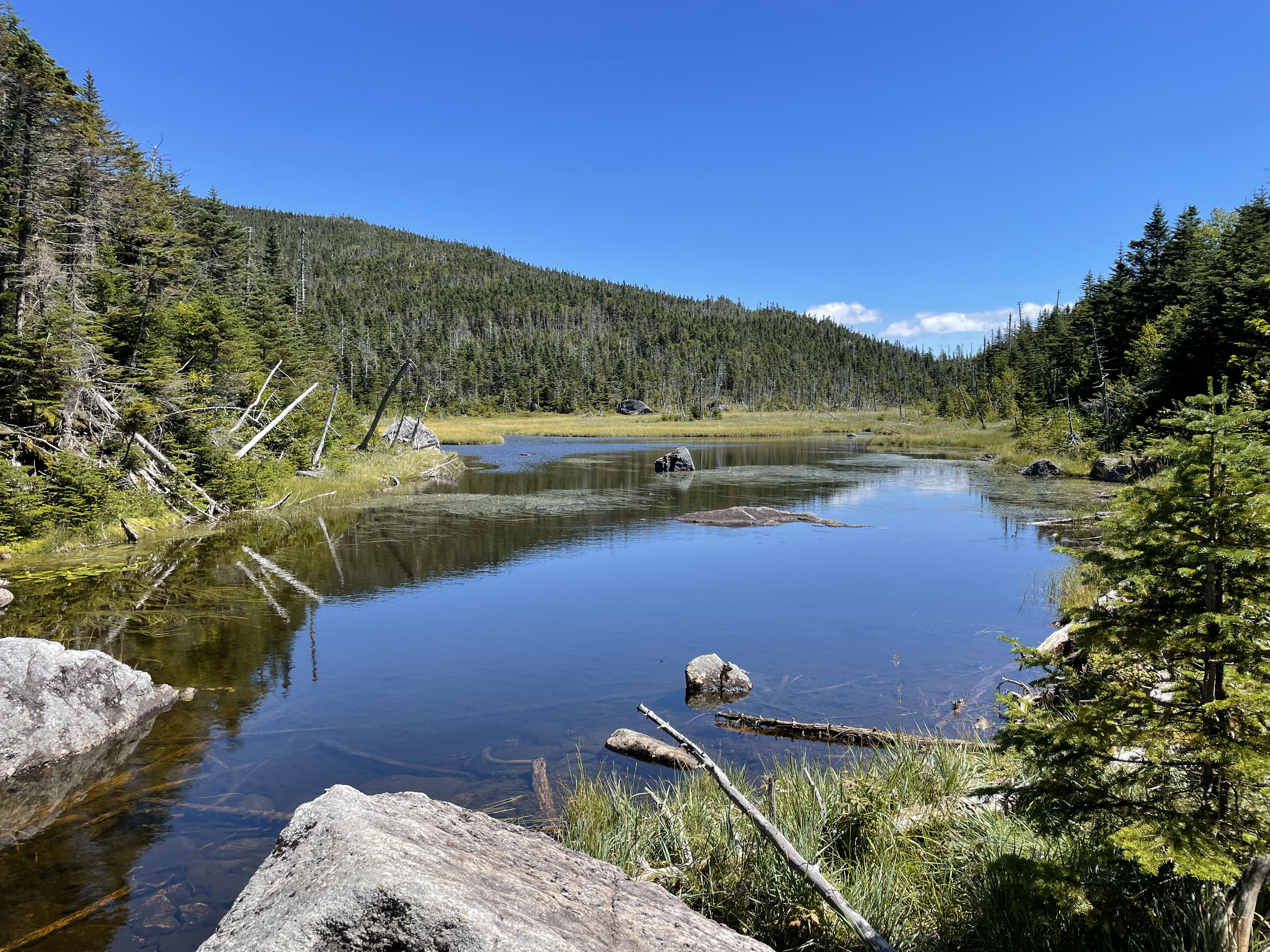
Adirondacks
The park is bigger than New Hampshire. That fact tends to surprise people who think of New York as a state of cities and suburbs, not wilderness. But the Adirondacks sprawl across the northeastern corner of the state in a vast expanse of mountains, lakes, and forest that has been protected since 1892 - making it the first government-protected park in the contiguous United States. The 46 High Peaks draw climbers. The three thousand lakes draw paddlers. The winter snows drew the Olympics twice, to tiny Lake Placid in 1932 and again in 1980. And the cold, clear mountain air once drew something stranger: tuberculosis patients, seeking cure in an era before antibiotics, building 'cure cottages' with enormous porches where they would sleep outdoors through the brutal mountain winters. Robert Louis Stevenson came here for his lungs, spending the winter of 1887-88 in Saranac Lake writing 'The Master of Ballantrae.' The Adirondacks have always been a place of escape - from illness, from cities, from the ordinary world below.
The Great Camps
In the late 1800s, the railroad brought New York City's wealthy elite into the Adirondacks, and they built accordingly. The 'Great Camps' were neither camps nor particularly rustic - they were lavish estates of interconnected log buildings, boathouses, private lakes, and enough staff to maintain a lifestyle that merely looked primitive. Camp Sagamore, Camp Pine Knot, Camp Santanoni - the names evoked wilderness, but the reality was Gilded Age luxury in a sylvan setting.
The camps established a design vocabulary that persists today: log construction with oversized fireplaces, exposed beams, rustic furniture made from twisting tree limbs. The Adirondack chair itself emerged from this era, designed in 1903 at Westport as a simple plank seat that tilts back for viewing lake and sky. The patents expired long ago, but the design endures - copied worldwide, still manufactured in the region, a simple piece of furniture that carries the essence of Adirondack style.
The Miracle of Lake Placid
The 1980 Winter Olympics at Lake Placid are remembered for one moment: a group of American college hockey players defeating the Soviet Union's professional team in what would be called the Miracle on Ice. The Soviets had won four consecutive Olympic gold medals. The Americans were amateurs, mostly unknown outside their college conferences. The game was played in a small arena in a village of fewer than 3,000 permanent residents, and somehow the impossible happened.
But Lake Placid had already hosted the 1932 Winter Olympics, making it one of only three places to host the Winter Games twice. The 1932 Games introduced several innovations still used today: the Olympic Village concept, the three-tiered medal podium, the electronic timing system. The ski jumps, bobsled run, and speed skating oval remain in use, still hosting international competitions, still drawing athletes to train in the mountain cold. The village has transformed around its Olympic identity - part tourist town, part training center, entirely shaped by those two winter moments when the world watched.
The Forty-Sixers
The Adirondack High Peaks include 46 summits originally believed to exceed 4,000 feet. Later surveys revealed that four of them actually fall short, but the tradition had been established: to become a 'Forty-Sixer,' you climb all 46. The feat takes most people years, returning season after season to add peaks to their list, scrambling up trails that range from moderate hikes to serious scrambles over exposed rock.
Mount Marcy, at 5,344 feet, is the highest point in New York State. From its summit on clear days, you can see into Vermont, across Lake Champlain. The High Peaks region around Keene Valley draws climbers and ice climbers, rock climbers and ski mountaineers - the terrain is modest by Western standards but challenging enough, and close enough to the Eastern population centers, to draw crowds in every season. Join the Forty-Sixers club and your name goes on a roster that started in 1925, connecting you to everyone who has ever stood on every summit and looked out over the endless forest below.
The Water and the Wild
Three thousand lakes fill the Adirondack valleys. The number includes ponds and reservoirs, but even so: the water is everywhere. Lake George stretches 32 miles through the southeastern Adirondacks, a vacation destination since the railroad arrived. Lake Placid, Lake Champlain, Raquette Lake, Tupper Lake, Schroon Lake - the names form a litany of paddling routes, fishing spots, and waterfront camps. The Northern Forest Canoe Trail passes through on its way from New York to Maine, one segment of a 740-mile water route that traces the old travel corridors of the Northeast.
The wildlife has recovered along with the forest. Moose have returned from the north. Beavers engineer their ponds everywhere. Loons cry across the evening water. Black bears are common enough that some areas require bear canisters for overnight campers. The logging and mining that once scarred the region have faded into industrial archaeology - ruins of iron furnaces, abandoned rail grades now serving as hiking trails, ghost towns like Tahawus where fewer than ten buildings remain from what was once a mining center.
Forever Wild
The Adirondack Forest Preserve exists because of fear. In the late 1800s, unchecked logging was denuding the southern Adirondacks, sending topsoil into the Hudson River and Erie Canal, threatening the waterways that New York's commerce depended upon. The state created the park in 1892, and in 1894 added the 'forever wild' clause to the New York State Constitution: the Forest Preserve 'shall be forever kept as wild forest lands.'
That constitutional protection makes the Adirondacks unique. Any change to the wilderness character requires a public vote to amend the constitution. Roads cannot be built. Trees cannot be cut. The land is held in a kind of permanent trust, protected not by legislators who might change their minds but by the fundamental law of the state. The result is a wilderness that has had over a century to recover, to regrow, to return to something like its original character - six million acres of forest, lake, and mountain, an hour's drive from Albany, a long day from New York City, and as wild as anything in the eastern United States.
From the Air
Located at 44.00°N, 74.30°W in northeastern New York State. The Adirondack Park covers 6 million acres (larger than Vermont) - from altitude, look for the distinctive mountainous terrain, thousands of small lakes, and dark forest cover. The 46 High Peaks cluster in the north-central area around Keene Valley; Mount Marcy (1,629m) is the highest point in New York. Lake Placid (village) is identifiable by its Olympic facilities including ski jumps on Whiteface Mountain (airport: Lake Placid/KLKP, limited service). The main gateway is Saranac Lake (airport: SLK, small regional with Essential Air Service to Boston). Interstate 87 'The Northway' runs along the park's eastern edge. Lake George (south) and Lake Champlain (east, forming Vermont border) are the largest water bodies. Plattsburgh (PBG) is the largest nearby airport. Weather varies dramatically - severe winter cold (below -30°C possible), pleasant summers. Expect visibility variations with mountain weather. Montreal is 90km north of the park's northern boundary.