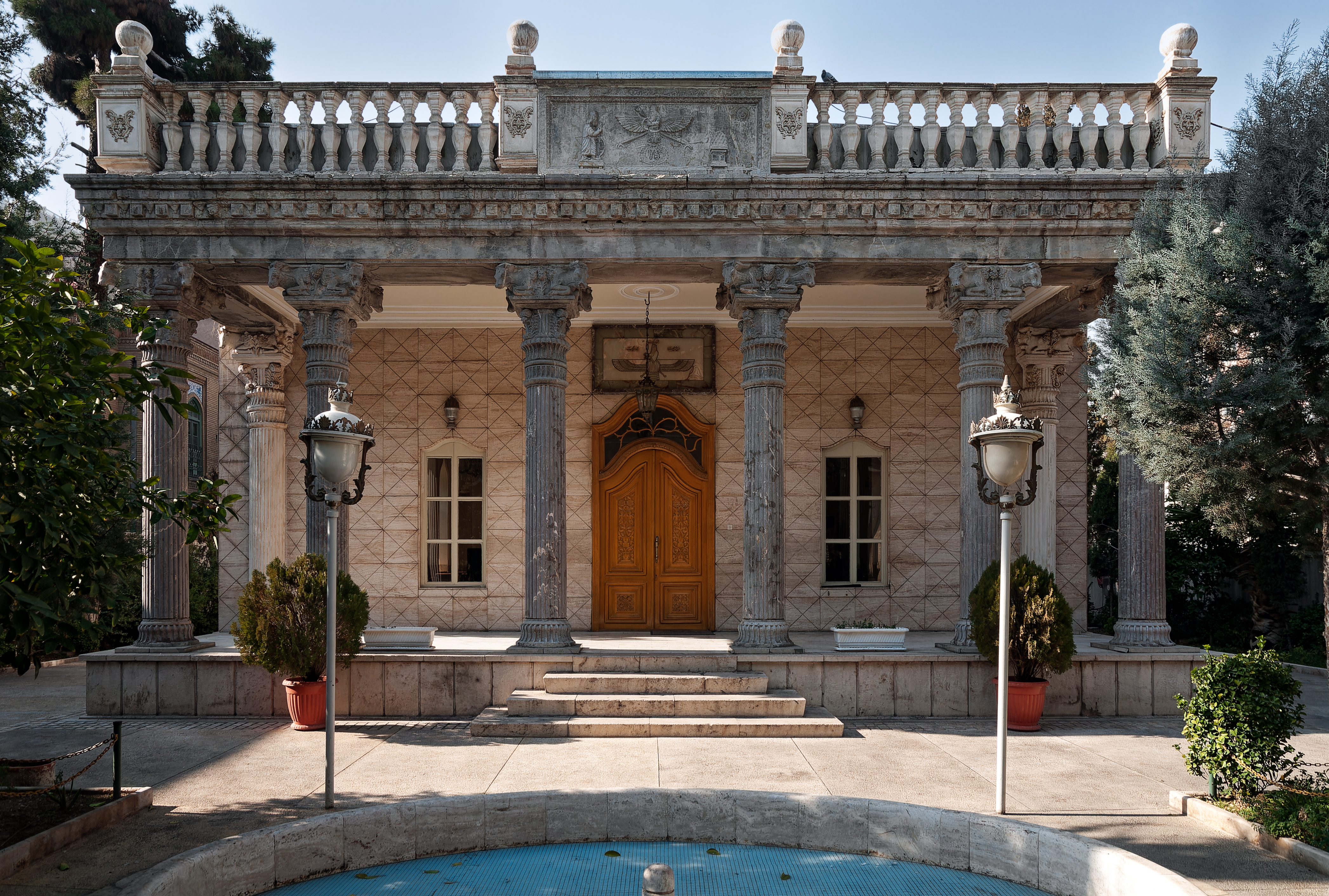
Adrian Temple of Tehran
Somewhere in Tehran, behind a marble facade on a tree-lined street, a fire has been burning without interruption since November 30, 1917. That fire was not lit from a match. It was carried over twenty-five days from the ancient Fire Temple of Yazd, inheriting a lineage of flame that traces back to at least 470 CE. The Adrian Temple, also known as the Great Adorian, is the only functioning Zoroastrian fire temple in the Iranian capital, and its sacred blaze is among the oldest continuously maintained fires in the world.
A Flame Carried Home
The story of the Adrian Temple begins not in Tehran but in Bombay. In the 19th century, India's Parsi community, descendants of Persians who fled religious persecution after the Arab conquest of their homeland, turned their attention back to Iran. In 1853, they founded the Society for the Amelioration of the Conditions of the Zoroastrians in Persia, and over the following decades, Parsi philanthropy became a lifeline for Iran's beleaguered Zoroastrian minority. The temple owes its existence to this transoceanic connection. Keikhosrow Shahrokh, a Zoroastrian leader with deep ties to Bombay's Parsi philanthropic networks and who would become the first Zoroastrian representative in Iran's parliament, spearheaded the project. The Bombay sisters Zarbai and Sunabai Dubash, along with philanthropist Bahramji Bikaji, provided the funding. A faith community split across continents was building a house of worship together.
Construction and Crisis
The foundation stone was laid in August 1913 by Mehdi Qoli Hedayat, then minister of education and a future prime minister. Construction proceeded, but bad press about Tehran's Zoroastrians in Bombay newspapers cut off the flow of Indian funding. The temple sat roofless, exposed to the elements, until Iran's own Zoroastrian community scraped together the resources to finish it. The consecration finally took place on November 30, 1917, chosen deliberately as the ninth day of the ninth month in the Zoroastrian calendar: Azergan, the festival of fire. The sacred flame was carried from Yazd across hundreds of kilometers of Iranian plateau, a journey of twenty-five days. When it was placed in the temple's fire chamber, it connected Tehran to a chain of sacred fire that had burned for nearly fifteen centuries.
Columns, Water, and Light
The Adrian Temple's architecture draws on Parsi design traditions. Six columns form a portico at the entrance, leading into an assembly and prayer hall. At the heart of the building lies the domed fire chamber, the atashgah, where the eternal flame burns behind glass windows visible from three sides. Visitors can see the fire without entering the sanctum. The complex occupies roughly 1,300 square meters. An oval water basin, four meters by eight, fronts the building, reflecting the sky and the temple's marble facade, which replaced the original brick in 1966, financed by Fereydoun Farahmand in memory of Shirmard Farahmand. A ceremonial hall named Iraj accommodates community gatherings, weddings, and festivals.
Living Tradition
The Adrian Temple remains the center of Zoroastrian life in Tehran. Managed by the Zoroastrian Association of Tehran, it hosts celebrations for Nowruz, the Persian New Year, and Sadeh, the midwinter fire festival that marks one hundred days before the spring equinox. Weddings are performed here. Community meetings convene in its halls. Iran's Zoroastrian population, estimated at around 25,000 to 30,000 people, is one of the oldest religious minorities in the country, practitioners of a faith that once dominated the Persian Empire. Since 2003, the Adrian Temple has been listed on the Iran National Heritage List, recognizing its cultural and architectural significance. The temple also opens its doors to the general public at certain times, offering visitors a glimpse of a religious tradition that predates Islam, Christianity, and Judaism as practiced in much of the world.
Fifteen Centuries of Fire
The flame in the Adrian Temple is not symbolic. In Zoroastrian theology, fire represents Asha, the principle of truth and cosmic order. A sacred fire is not simply burning; it is alive, maintained through ritual and vigilance. The fire in Tehran connects through a direct lineage to a flame that has burned since at least 470 CE, maintained through the fall of the Sasanian Empire, the Arab conquest, the Mongol invasions, and every upheaval that has swept across the Iranian plateau since. That continuity is the temple's deepest significance. In a city of fifteen million people, on a street like any other, a fire from the fifth century still burns.
From the Air
The Adrian Temple is located at approximately 35.696N, 51.414E in Tehran's urban core. The temple is not easily distinguishable from the air among Tehran's dense cityscape but sits in the older central districts. Tehran's Mehrabad International Airport (OIII) is roughly 8 km to the northwest. Imam Khomeini International Airport (OIIE) is about 55 km to the southwest. The Alborz Mountains dominate the skyline to the north, and Tehran's grid pattern of streets is visible from moderate altitude. The ancient city of Yazd, from which the temple's fire originated, lies approximately 670 km to the southeast.