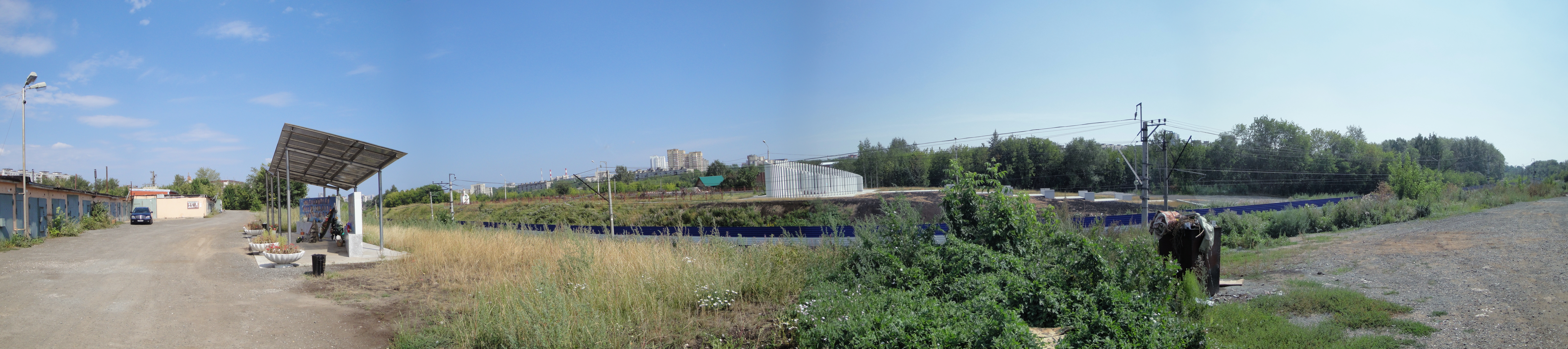
Aeroflot Flight 821
The air traffic controller watched the radar blip climb when it should have descended. It was 5:10 in the morning on September 14, 2008, rain falling through unbroken clouds at 240 meters over Perm. Aeroflot Flight 821, a Boeing 737-500 inbound from Moscow's Sheremetyevo airport, had been told to go around after overshooting the approach. Instead, the aircraft turned the wrong direction, climbed to 1,200 meters, and then plunged into a railway line on the city's outskirts. All 82 passengers -- including seven children -- and six crew members died. It remains the deadliest accident involving a Boeing 737-500.
Two Systems, One Cockpit
The investigation revealed a cause rooted not in mechanical failure but in the gap between two eras of aviation. Captain Rodion Medvedev, 34, had logged 3,689 flight hours, but his experience as captain amounted to just 452 hours. First Officer Rustem Allaberdin had 8,713 hours total, though only 219 on the Boeing 737. Both men had spent most of their careers flying the Tupolev Tu-134 and Antonov An-2 -- Soviet aircraft with attitude indicators that work in the opposite way from Western instruments. On Soviet-type indicators, the aircraft symbol moves against a fixed background. On the Boeing's Western-type indicator, the background tilts while the aircraft symbol stays level. In clouds, at night, with the autopilot switched off, the captain misread the instrument. The aircraft banked left, rolled over, and entered a rapid, unrecoverable descent.
A Chain of Failures
Spatial disorientation was the immediate cause, but the investigation uncovered a cascade of contributing factors. Forensic examination found alcohol in the captain's tissue, with blood alcohol estimates ranging from 0.05 to 0.11 percent. The crew had submitted falsified documents claiming they had completed required preflight training courses. The aircraft had a known throttle malfunction that forced the pilots to operate the left and right engine levers independently, increasing their workload during the critical approach phase. And the airline, Aeroflot-Nord, had inadequate procedures for transitioning pilots from Soviet to Western aircraft types. Each failure alone might have been survivable. Together, they were not.
Final Words on the Radio
A recording of the final communications between the crew and air traffic controller Irek Birbov tells the story of a crew that had lost all situational awareness. On final approach, the aircraft drifted right of the localizer. The controller advised a heading change. Instead of descending, the plane climbed. 'According to my data, you are climbing,' the controller radioed. 'Confirm current altitude 900 meters.' The captain replied that they were descending -- they were not. Ordered to go around, the captain acknowledged but turned left instead of right. Asked if everything was all right, the crew confirmed it was. Moments later, the controller watched the blip disappear and saw an explosion on the city's edge. The pilots' final transmission was an expletive.
Aftermath and Reckoning
The crash damaged a section of the Trans-Siberian Railway, which had to be rerouted through Chusovaya station until repairs were completed that evening. Among the dead was Colonel General Gennady Troshev, a former commander of the North Caucasus Military District during the Second Chechen War and an adviser to the President of Russia. The disaster prompted Aeroflot-Nord to rebrand as Nordavia in December 2009, and eventually as Smartavia in 2019. A memorial now stands at the crash site on the southwestern outskirts of Perm. The accident drove regulatory scrutiny of how Russian airlines managed the transition from Soviet-era aircraft to Western types, a reckoning with the reality that changing an instrument panel is meaningless if you do not retrain the hands and eyes that read it.
From the Air
Crash site located at 57.971N, 56.215E on the southwestern outskirts of Perm, along the Trans-Siberian Railway line. Perm International Airport (USPP) is nearby to the southwest. The crash site and memorial are located near the railway tracks. From altitude, the Trans-Siberian Railway corridor and the Kama River through Perm are the dominant visual references.