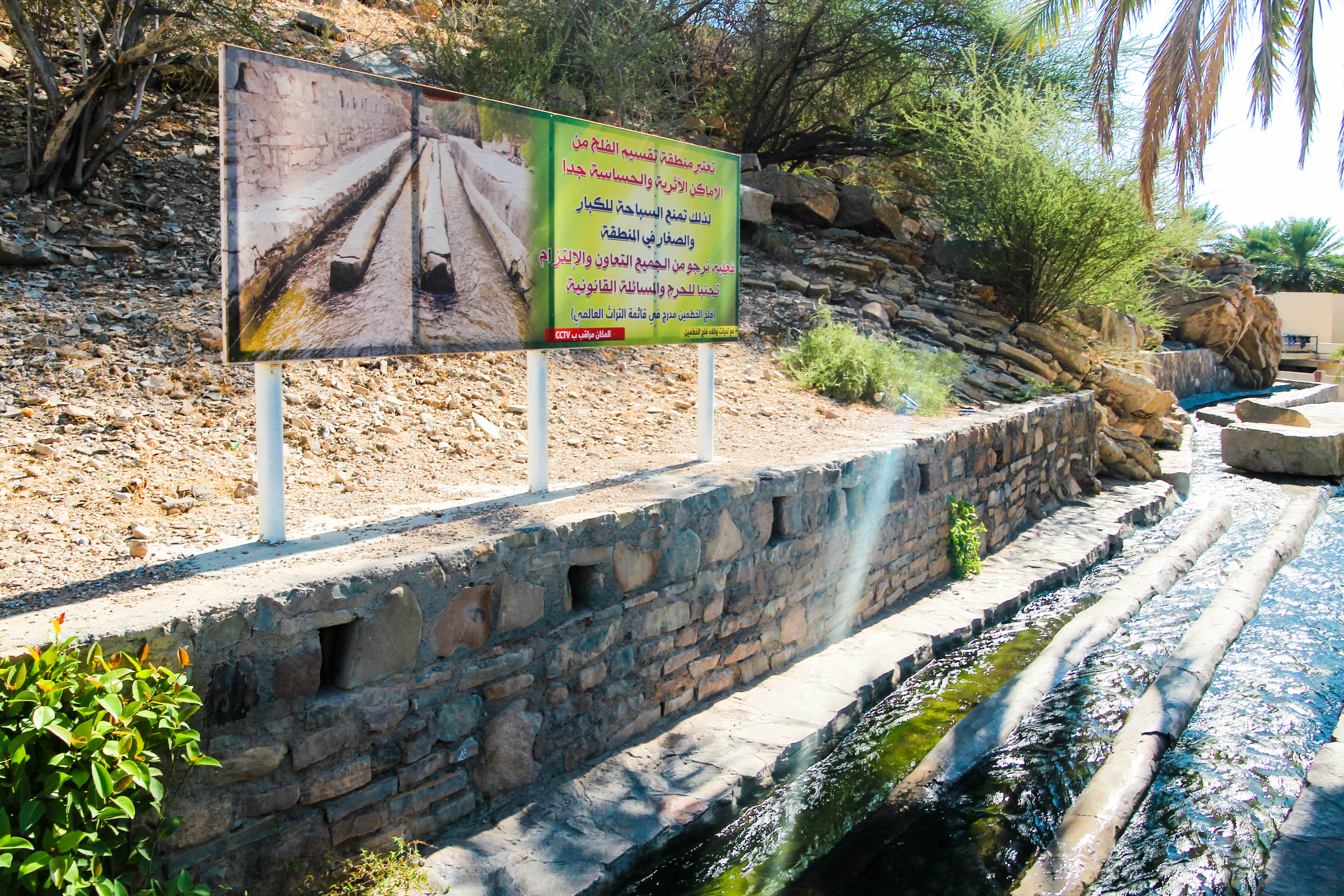
Aflaj Irrigation Systems of Oman
The word 'falaj' means 'to split into parts' in classical Arabic, and that is exactly what these channels do: they divide water. Not with pumps or electricity, but with gravity, slope, and an engineering intelligence refined over five thousand years. About 3,000 aflaj systems remain functional across Oman today, channeling water from mountain springs and underground aquifers to homes, mosques, and terraced fields. Five of the most remarkable were inscribed as UNESCO World Heritage Sites in 2006. They are not relics. They are infrastructure that still works.
Engineering in Three Dialects
Omani aflaj come in three types, each adapted to different terrain and water sources. Dawoodi channels run through long underground tunnels, tapping deep aquifers in a technique borrowed from the Persian qanat tradition. Ghaili systems use shallower channels fed by wadi pools and surface runoff. Ainy channels draw directly from natural springs. All three types share common design features: access shafts sunk every 20 meters along the underground sections for ventilation and debris removal, each shaft mouth ringed with burnt clay to prevent collapse, keep the water clean, and stop people and animals from falling in. Watchtowers once guarded the channels. Mosques were built alongside them. The aflaj were not just plumbing. They were the organizing principle of entire communities.
The Wakils Who Listen to Water
Maintaining an aflaj system is communal work, but it centers on the wakil, the water monitor. At Birkat Al Mus and other sites, wakils oversee the clarity, flow rate, and fair distribution of water among households and farms. They are part engineer, part mediator, part guardian. The role carries significant prestige in communities where water is the difference between abundance and abandonment. Pomegranates, dates, limes, and roses grow in the terraced fields the aflaj feed. Without the channels, the desert reclaims the farmland within a season. The five UNESCO-designated systems -- Falaj Al-Khatmeen, Falaj Al-Malki, Falaj Daris, Falaj Al-Mayassar, and Falaj Al-Jeela -- span three Omani regions: Dakhiliyah, Sharqiyah, and Batinah.
Bombed from the Sky
Declassified British National Archives documents revealed a darker chapter in the aflaj story. During the Jebel Akhdar War of the late 1950s, the British government deliberately destroyed aflaj systems and crops by air strike. The objective was to deny water and food to the population of Oman's interior, which supported the rebel Imamate against the British-backed Sultan. Wadi Beni Habib and the water channel at Semail were among the targets. Air strikes on Saiq and Sharaijah made farming in those areas dangerous. On 4 August 1957, the British Foreign Secretary approved these strikes without prior warning to the civilian population. The Sultan's ban on press visas and the use of the remote Masirah Airfield allowed the campaign to proceed with minimal public scrutiny.
Still Flowing
What makes the aflaj remarkable is not their age but their continuity. These are not archaeological curiosities preserved under glass. They are living systems, maintained by the communities that depend on them, carrying water today along the same channels that were dug when the Roman Empire was young. The engineering is so sound that many aflaj have required only routine cleaning and repair over centuries. Modern Oman has invested in protecting them, but the real preservation comes from the daily attention of farmers, wakils, and families who understand that their water -- and their way of life -- flows through these narrow channels. In a region defined by aridity, the aflaj are proof that human ingenuity can make the desert generous.
From the Air
Located at 23.00N, 57.54E in the Ad Dakhiliyah Governorate of Oman. The aflaj surface channels are visible from low altitude as thin green-bordered lines crossing otherwise arid terrain. Nearest major airport is Muscat International (OOMS), approximately 160 km northeast. The five UNESCO-listed systems are distributed across the Dakhiliyah, Sharqiyah, and Batinah regions.