Agate Fossil Beds National Monument
Captain James Cook came to the Nebraska high plains in the 1870s to establish a cattle ranch. What he found in the hills near the Niobrara River would prove far more remarkable than good grazing land. Scattered across Carnegie Hill and University Hill lay the bones of creatures that had vanished from Earth 16 million years before. Cook's Agate Springs Ranch would become one of the most important paleontological sites in North America, preserving a snapshot of an ecosystem so different from today's prairie that it seems to belong to another planet.
When Nebraska Was Wild
Between 20 and 16.3 million years ago, during the Miocene epoch, this valley served as a watering hole on a savanna that would have looked more like East Africa than the Great Plains. The fossils found here record an astonishing menagerie: Menoceras, a pony-sized rhinoceros so common that its bones dominate the beds. Diceratherium, its two-horned cousin. Stenomylus and Oxydactylus, camelids that resembled gazelles and giraffes. Moropus, a chalicothere that combined features of horses, rhinoceroses, and tapirs into a form unlike anything alive today.
The Bone Hunters
News of Cook's discoveries drew paleontologists from Carnegie Museum and the University of Nebraska, who named the two main dig sites after their institutions. The fossils from the Harrison Formation and Anderson Ranch Formation proved to be among the finest Miocene mammal specimens ever recovered. Scientists found Palaeocastor, land beavers that dug distinctive corkscrew-shaped burrows called Daemonelix. They unearthed Daeodon, the largest of the entelodonts, giant pig-like ungulates that terrified the landscape. The site became a training ground for generations of paleontologists.
From Ranch to Monument
Congress authorized the national monument on June 5, 1965, recognizing the site's scientific importance. Yet the monument was not formally established until June 14, 1997, more than three decades later. The Harold J. Cook Homestead, known as the Bone Cabin Complex where early fossil hunters lived and worked, earned a place on the National Register of Historic Places in 1977. The National Park Service now maintains both the paleontological treasures and more than 500 artifacts from James Cook's collection of Plains peoples' cultural items.
The Prairie Persists
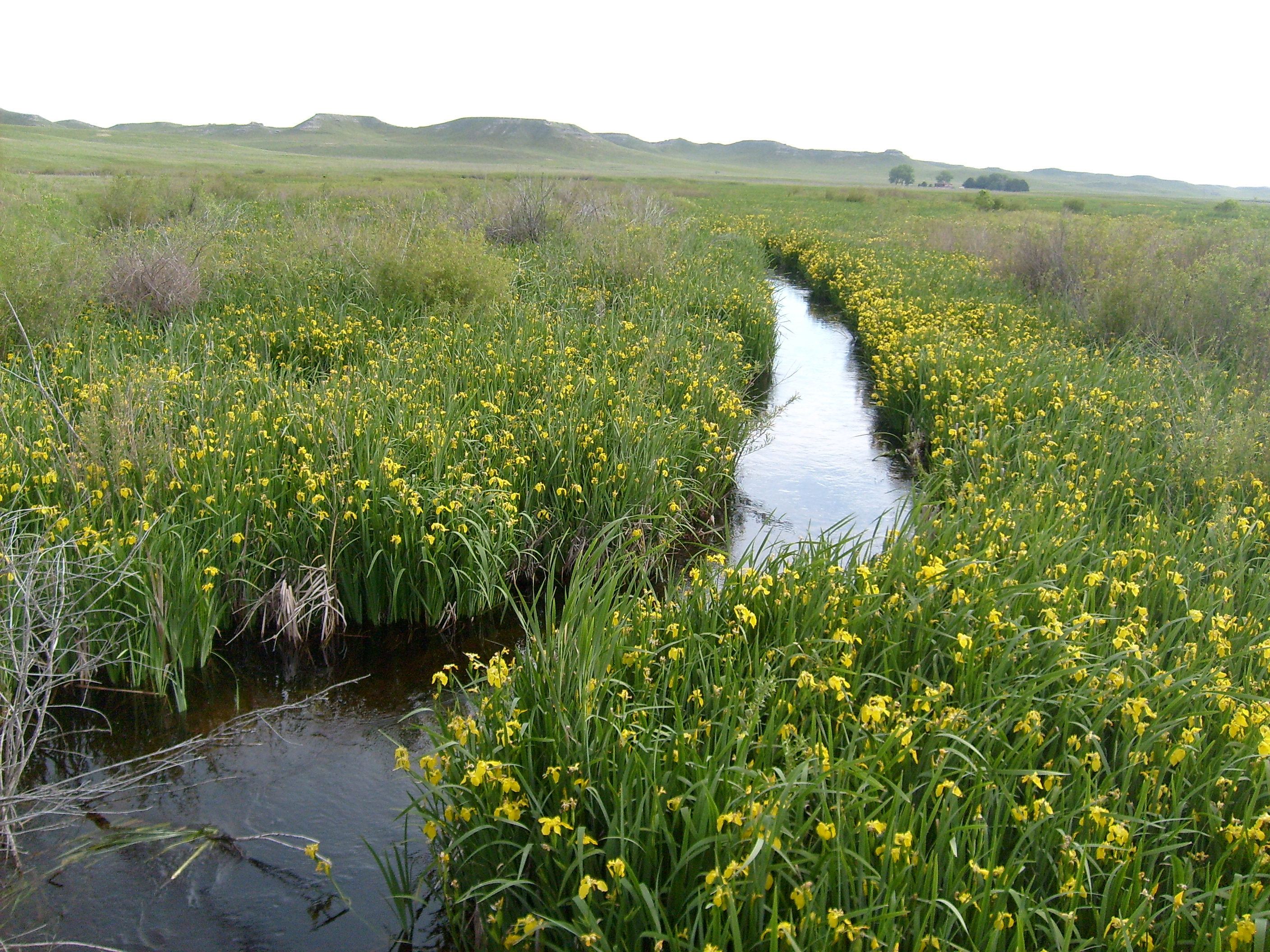
Above the ancient bones, the modern landscape stretches in grass-covered plains that whisper of the Miocene savanna. Prairie sandreed and blue grama wave in the wind alongside little bluestem and needle-and-thread grass. In spring and summer, wildflowers punctuate the green: purple lupine, blue spiderwort, yellow western wallflower, and the golden faces of sunflowers tracking the sun. The Niobrara River still carves through this valley as it has for millions of years, though now it waters cattle instead of rhinoceroses.
From the Air
Located at 42.42N, 103.75W near Harrison in Sioux County, northwestern Nebraska. The monument lies in the valley of the Niobrara River with Carnegie Hill and University Hill visible as low rises on the grass-covered plains. Nearest airports: Scottsbluff County Airport (KBFF), 55 miles south; Chadron Municipal Airport (KCDR), 45 miles east. Best viewed at lower altitudes where the subtle terrain features become visible against the surrounding prairie.