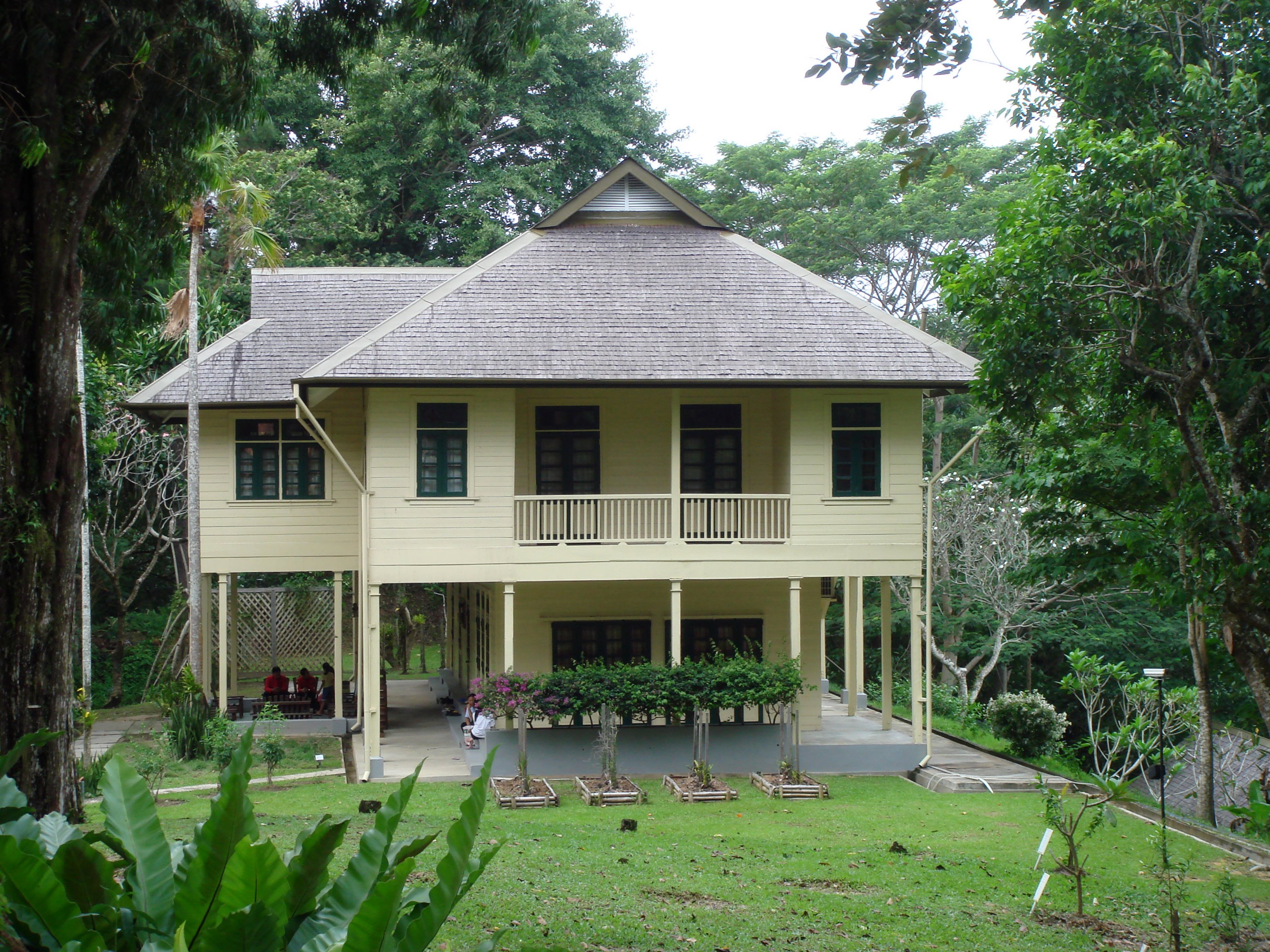
Agnes Keith House
Agnes Newton Keith saw the apparition almost every day. A tall female figure, unrecognizable, moving through the house on the hill in Sandakan. On one occasion, the figure appeared to take Agnes's baby, then walked toward the road -- her body facing forward while her head remained turned backward, staring at Agnes. Keith wrote about these encounters with the matter-of-fact tone she brought to everything in her three autobiographical books about life in British North Borneo. The ghost was simply part of the house, like the timber walls and the view of the harbor. Today, the house that bears her name is a museum in the Sandakan District of Sabah, furnished with colonial-era reproductions and filled with the story of an American woman who married a British forestry official, survived a Japanese internment camp, and came home to rebuild on the ruins of a war.
The Writer on the Hill
In 1934, Agnes Newton Keith married Harry Keith, a British official responsible for forest conservation in Sandakan, then the capital of British North Borneo. Harry had a house waiting for them, a government quarters perched on a hill above the town. Agnes, born in Illinois and educated at the University of California, was an unlikely resident of colonial Borneo, but she threw herself into the life with the curiosity of a born writer. Her first book, "Land Below the Wind," published in 1939, won the Atlantic Monthly nonfiction prize and introduced Western readers to a corner of the world most had never heard of. She wrote about the jungle, the people, the strangeness and beauty of a place that was simultaneously exotic and domestic. Then the Japanese invasion of 1942 shattered everything. Agnes, Harry, and their young son were interned in separate camps. Their house was destroyed.
Newlands Rising
After the war ended, the Keiths chose not to rebuild on the site of their original home. Instead, between 1946 and 1947, they constructed a new house on the ruins of a different hilltop residence, one that had belonged to a man named M.M. Clark before the war destroyed it. The new house became the first permanent timber government dwelling built in post-war Sandakan. They named it Newlands. Agnes lived there for several years, writing her second and third books -- "Three Came Home," about her internment, and "White Man Returns," about the return to Borneo after the war. "Three Came Home" was adapted into a 1950 Hollywood film starring Claudette Colbert. Eventually the Keiths returned to the United States, and the house passed through other hands before falling vacant.
The Ghosts of Newlands
Agnes was not the last person to see the apparition. After the Keiths departed, a woman named Rosemary, wife of G.L. Carson, lived in the house from 1955 to 1967. Sleeping alone one night, Rosemary was awakened by the sound of a door at the far end of the house closing repeatedly in the pre-dawn darkness. Footsteps grew louder, moving toward her room. When she opened her eyes, an unrecognizable female figure stood at the foot of her bed, staring at her. Rosemary fainted. A housemaid who worked in the house from 1967 to 1968 reported seeing a similar figure on the stairs. The consistency of these accounts across decades and different occupants gave the house a reputation that persists to this day. Whether the ghost is connected to the house's wartime destruction, to the earlier Clark residence on which it was built, or to something older remains a matter of local speculation.
Museum on the Hill
By the turn of the twenty-first century, Newlands stood empty. In 2001, the Sabah Museum Department and the Federal Department of Museum and Antiquities began a collaborative restoration. On 26 April 2004, the Agnes Keith House opened to the public as a heritage museum. The restoration preserved the timber frame and colonial character of the building while furnishing it with reproductions of period furniture and antiques. A gallery on the first floor tells the story of Agnes, her books, and her family, placing her personal narrative within the broader history of British North Borneo. The museum sits high enough above Sandakan to catch the breeze and the view -- the same view Agnes wrote about in books that made this distant corner of Borneo real to readers half a world away. Sandakan itself has changed enormously since the 1930s, but the hill remains, and the house on it still draws people who want to understand what life was like when Borneo was the edge of the world.
From the Air
Located at approximately 5.843°N, 118.116°E on a hilltop in Sandakan, on the northeast coast of Sabah. The house is situated on elevated ground above the town and harbor area. Sandakan Airport (WBKS) is approximately 10 km to the northwest. The Sandakan waterfront and harbor are prominent visual landmarks. The Sulu Sea lies to the northeast. Best viewed in conjunction with the broader Sandakan area, which includes the nearby Sandakan Memorial Park related to the POW camp history.