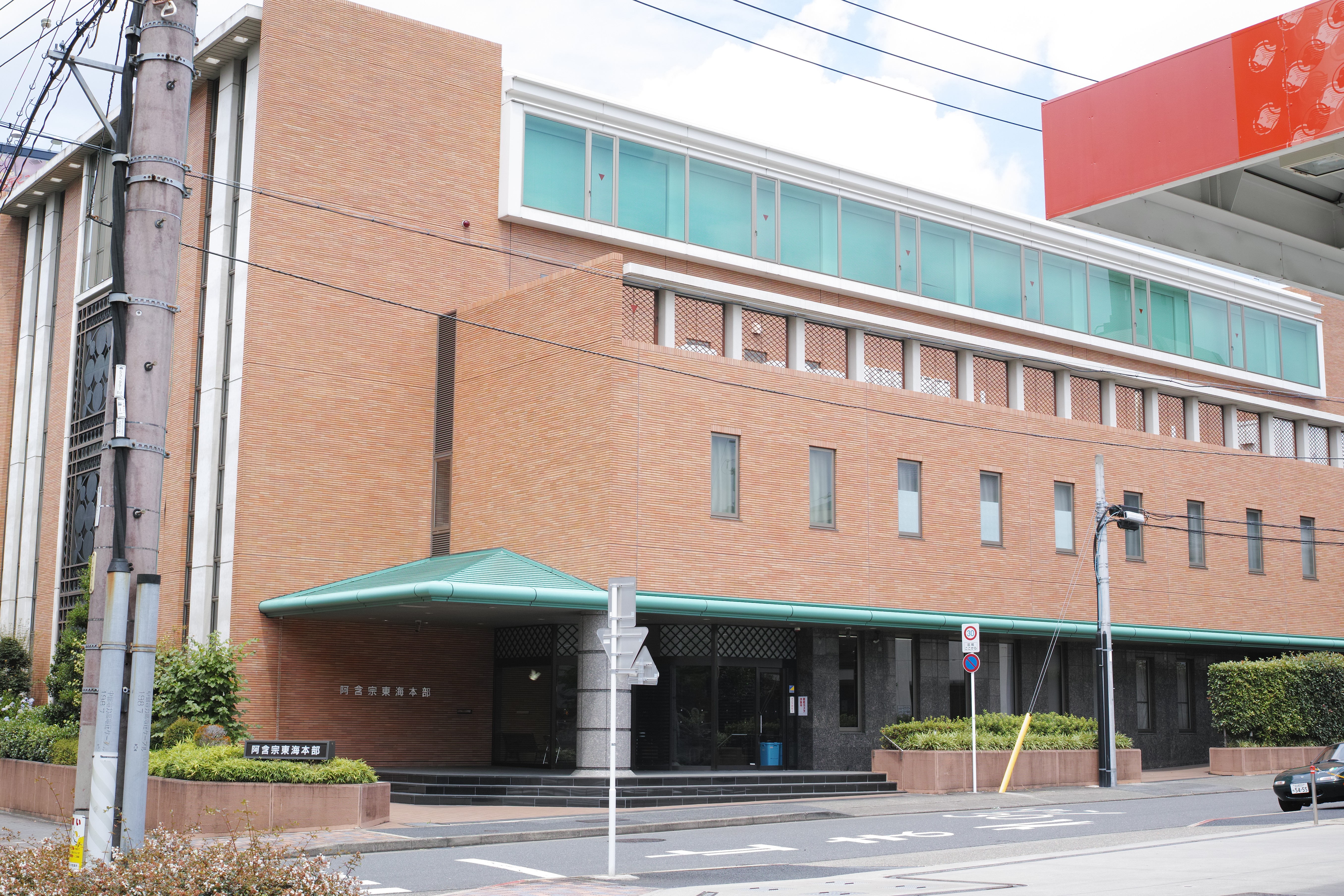
Agon Shu: The Fire Festival on the Mountain
Every February 11, twin pyres rise tens of meters into the winter sky above Yamashina, on the eastern outskirts of Kyoto. Hundreds of thousands of people gather in an amphitheater carved into the hillside to watch robed figures in yamabushi mountain-priest garb feed millions of gomagi -- wooden prayer sticks inscribed with handwritten wishes -- into walls of flame. This is the Hoshi Matsuri, the Star Festival, the defining spectacle of Agon Shu, a Japanese new religion headquartered on this hillside since the early 1980s. The fires are enormous, theatrical, and entirely sincere. The organization behind them was founded by a man who, decades earlier, sat in a jail cell preparing to die.
From a Prison Cell to a Prophecy
Seiyu Kiriyama was born Masuo Tsutsumi in 1921 in Yokohama. Poor health kept him out of the military, and he scraped through the postwar years on odd jobs. In 1953, he was arrested for illegally producing alcohol. Sitting in his cell, he prepared to commit suicide. At the last moment, he stopped. He would later attribute his change of heart to an intervention by Juntei Kannon, the bodhisattva of compassion, who he said entrusted him with a religious mission. After his release, he built relationships with the Jodo Shinshu temple Yogen-in in Kyoto and established a small religious society nearby. The turning point came in 1978, when Kiriyama announced that he had discovered the Agamas -- early Buddhist scriptures predating the Mahayana tradition -- were the authentic key to the Buddha's original teachings, and that Buddhist denominations ignoring them were leading their followers astray.
The Vision at Sahet Mahet
In 1980, Kiriyama traveled to Sahet Mahet, the ancient ruins of Shravasti in India, one of Buddhism's holiest sites. He reported that the Buddha himself had appeared to him and personally transmitted the mantle of leadership over universal Buddhism. Whether one accepts the claim or not, its effect on Kiriyama's followers was galvanic. He returned to Japan with a mandate to build what he called a new Sahet Mahet in Yamashina-ku, Kyoto -- the hillside complex that would become Agon Shu's headquarters. The organization was legally recognized in 1981. Kiriyama drew on Shingon esoteric Buddhist traditions, particularly the goma fire ritual, and scaled them to a size that no other religious group in Japan had attempted. The Hoshi Matsuri became the movement's public face: a syncretic spectacle blending esoteric Buddhism, Shinto elements, and sheer pyrotechnic drama.
The Shadow of Aum Shinrikyo
In 1995, the Tokyo subway sarin attack by Aum Shinrikyo poisoned not only subway passengers but the public reputation of every new religious movement in Japan. The damage to Agon Shu was particularly acute: it emerged that Aum's founder, Shoko Asahara, had briefly been a member of Kiriyama's movement before breaking away to found his own cult. The association was circumstantial but devastating. Scholars Ian Reader and Erica Baffelli have documented how Kiriyama responded in his later years by pivoting toward Japanese nationalism, devoting rituals to pacifying the souls of Japanese soldiers killed in World War II. The pivot was strategic -- distancing Agon Shu from the taint of Aum by wrapping it in the flag -- but it also reflected a broader trend among Japanese new religions seeking mainstream legitimacy after 1995.
After the Founder
Kiriyama died in 2016 at the age of ninety-five. What happened next is a pattern familiar to scholars of new religious movements: the organization began transforming into a cult of its founder. Researchers Reader and Baffelli have documented how Kiriyama's successors -- senior priest Fukada Seia and chief female disciple Wada Naoko -- elevated the founder's relics above those of the Buddha himself, and began treating messages from Kiriyama's spirit, as received by movement leaders, as normative sacred texts. The Hoshi Matsuri continues each February, the twin fires still climbing above Yamashina. Millions of prayer sticks still burn. But the organization that lights them is navigating the difficult passage that every founder-driven movement must eventually face: the transition from living prophet to institutional memory.
From the Air
Located at 35.00°N, 135.79°E in Yamashina-ku, on the eastern outskirts of Kyoto. The Agon Shu headquarters occupy a hillside complex in the Kitakazan-omine area, east of the Higashiyama mountain range. During the Hoshi Matsuri in February, the twin pyres produce smoke columns and flames potentially visible from altitude. The Yamashina valley is a distinct geographic basin separated from central Kyoto by forested ridgelines. Osaka Itami Airport (RJOO) lies approximately 17 nautical miles to the southwest. Kansai International Airport (RJBB) is approximately 40 nautical miles to the south.