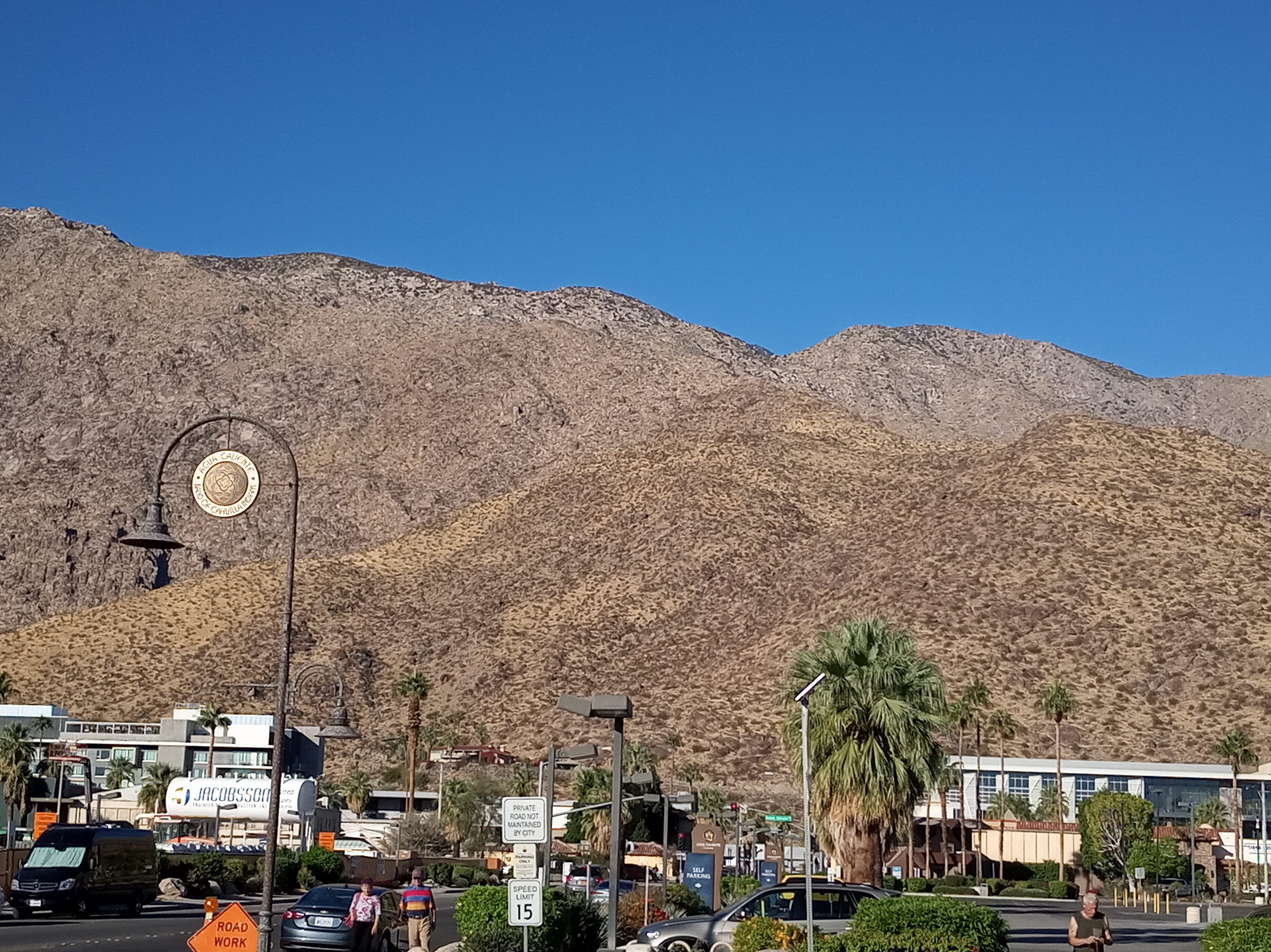
Agua Caliente Band of Cahuilla Indians
Look at a map of Palm Springs and you'll see an unusual pattern: the land is divided into a checkerboard of tribal and non-tribal parcels, alternating like squares on a game board. This peculiar arrangement tells a story of survival, sovereignty, and economic transformation that spans seven millennia. The Agua Caliente Band of Cahuilla Indians has called the Coachella Valley home since before the pyramids of Egypt were built, and today they own three major casinos, championship golf courses, and some of the most sought-after desert land in California.
Keepers of the Hot Water
The Cahuilla people settled the Coachella Valley desert and its surrounding mountains between 5000 BCE and 500 CE. The hot mineral springs that bubble up through the desert floor gave the band its name: agua caliente, Spanish for "hot water." These thermal waters, considered sacred by the Cahuilla, still flow in downtown Palm Springs, where the tribe's Spa Resort Casino occupies the original spring site. The Cahuilla developed sophisticated water management techniques to survive in this harsh desert environment, creating one of the longest continuous human settlements in North America. When Spanish missionaries arrived in the 18th century, they encountered a people deeply rooted in a landscape they had mastered for thousands of years.
The Checkerboard Bargain
On May 15, 1876, President Ulysses S. Grant signed an executive order establishing the Agua Caliente Indian Reservation. But the land was allocated in an unusual pattern: alternating sections granted to the tribe and to the Southern Pacific Railroad. This checkerboard arrangement, meant to encourage development while reserving some land for the Cahuilla, would later prove extraordinarily valuable. As Palm Springs grew from a remote desert outpost into a celebrity playground and retirement haven, the tribe's scattered parcels became prime real estate. A 1959 federal law enabled tribal members to lease their land, generating income that transformed the band's economic fortunes. Today the reservation encompasses land across Palm Springs, Cathedral City, and Rancho Mirage.
Canyons and Cultural Memory
Southwest of downtown Palm Springs, Tahquitz Canyon drops through rugged terrain to reveal waterfalls, native wildlife, and ancient rock art. Named for a legendary Cahuilla shaman, the canyon remained closed to the public for decades following vandalism and environmental damage. The tribe restored the canyon and reopened it for guided tours, sharing Cahuilla stories and ecological knowledge with visitors. Further south, the Indian Canyons preserve some of the largest natural palm oases in North America. Palm Canyon, Murray Canyon, and Andreas Canyon offer hiking, horseback riding, and a glimpse into a landscape the Cahuilla have stewarded since the last Ice Age. These canyons represent living connections to ancestral traditions still practiced today.
A Language at the Crossroads
The Pass dialect of the Cahuilla language belongs to the Cupan branch of Takic languages, itself part of the broader Uto-Aztecan family that stretches from Central America to the Great Basin. Agua Caliente is one of three reservations where Pass Cahuilla was spoken, alongside Morongo and Augustine. But when the last native speaker of Pass Cahuilla died in 2008, the dialect joined thousands of indigenous languages lost over the past century. The tribe has launched revitalization efforts, working to teach the language to a new generation even as elders who learned it from their grandparents pass away. The Agua Caliente Cultural Museum in Palm Springs preserves archives, maintains a research library, and hosts programs designed to keep Cahuilla traditions alive.
Gaming and the Modern Tribe
The Agua Caliente Band operates three major casinos, making it the only tribe in California permitted to own more than one gaming facility. The flagship Agua Caliente Casino Resort Spa in Rancho Mirage includes a hotel, spa, and seven restaurants. A third casino opened in Cathedral City in November 2020, built on 13 acres of newly annexed tribal land. Beyond gaming, the tribe maintains two public golf courses in Indian Canyon and operates cultural programs through Tribal Family Services, established in 2003. Tribal leaders including Richard Milanovich and Reid D. Milanovich have been honored with Golden Palm Stars on the Palm Springs Walk of Stars. The band that once depended on the hot springs now shapes the economic landscape of the entire Coachella Valley.
From the Air
Located at 33.82N, 116.55W in the Coachella Valley. The reservation lands are interspersed with Palm Springs, visible as the distinctive checkerboard pattern when viewed from altitude. Nearby airports include Palm Springs International Airport (KPSP) and Bermuda Dunes Airport (KUDD). The Indian Canyons and Tahquitz Canyon can be identified as green ribbons cutting through the desert terrain south and west of downtown Palm Springs. Best viewed at 3,000-5,000 feet AGL.