Agulhas National Park
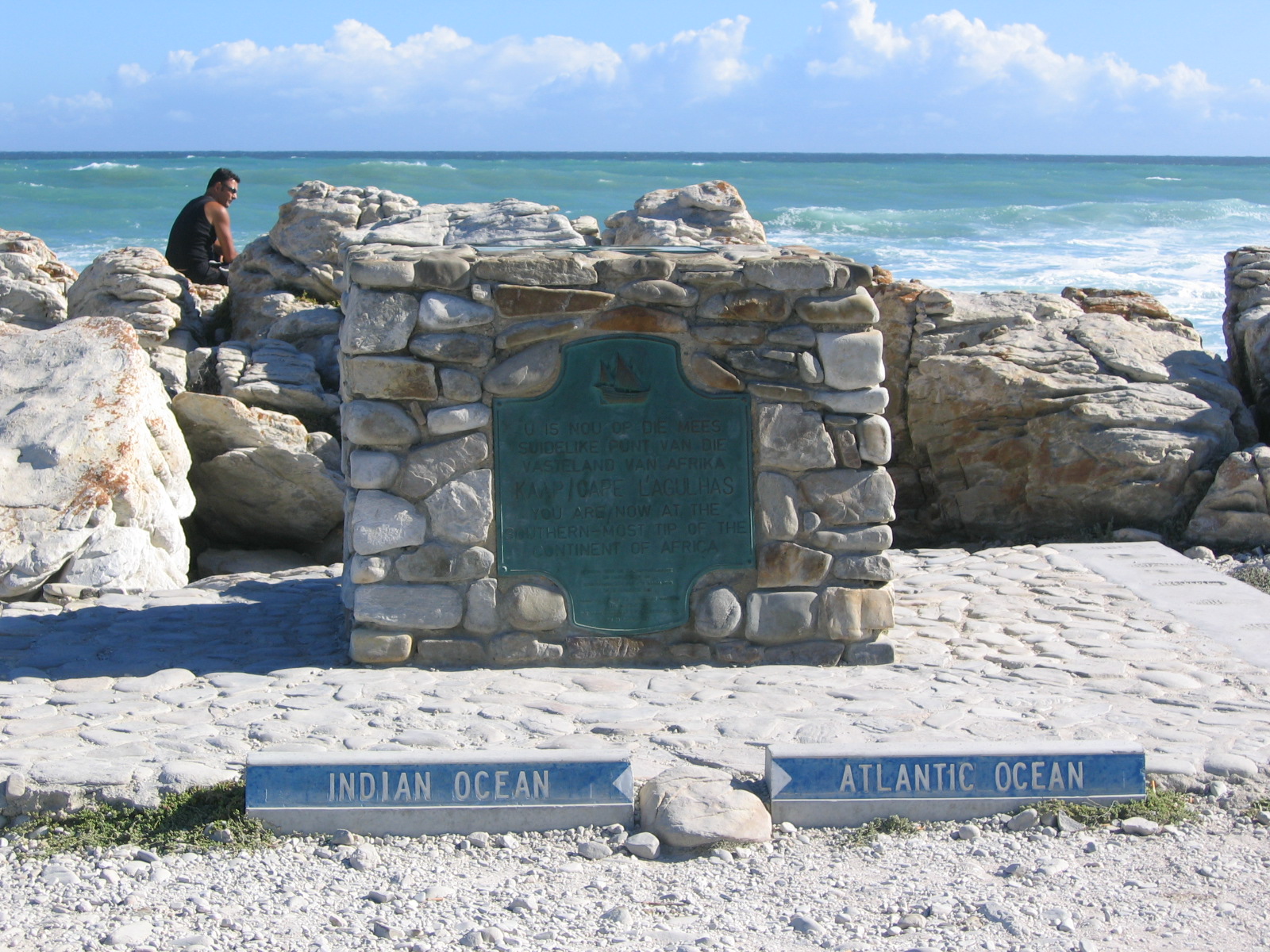
Most people who come to Africa's southern tip expect drama -- towering cliffs, crashing surf, the raw spectacle of a continent's edge. What they find instead at Agulhas National Park is a low, windswept headland where the land simply stops and the water begins, almost politely. The official coordinates read 34 degrees 49 minutes 58 seconds south, 20 degrees 00 minutes 12 seconds east. A modest stone marker announces where the Atlantic and Indian oceans meet. There is no thundering crescendo, no precipice. And yet this unassuming point, 55 kilometers farther south than the famous Cape of Good Hope, holds some of the most extraordinary biodiversity on the planet.
The Smallest Kingdom
The Agulhas Plain forms a critical component of the Cape Floral Kingdom, a UNESCO World Heritage Site and the smallest of the world's six plant kingdoms -- but the richest per square kilometer. Within the park's boundaries, roughly 2,000 indigenous plant species have been recorded, including 100 found nowhere else on Earth and over 110 classified as Red Data species, meaning they face some level of extinction risk. Among the most remarkable is Elim fynbos, a vegetation type restricted to laterite soils in just a few patches of this region. It occupies the smallest land surface of any vegetation type in South Africa. Limestone fynbos, growing on alkaline soils with pH values above 7.5 where most fynbos demands acidity, supports its own suite of endemics: Mimetes saxatalis, Protea obtusifolia, and the delicate Watsonia fergusoniae among them. Walking through this low, dense scrubland, you are surrounded by more plant diversity than most forests on the continent can claim.
Wings Over the Saltpans
At the historical Springfield Saltpans, the sky turns pink each year when hundreds of Lesser and Greater Flamingos descend to feed. Thousands of Little Stints and Curlew Sandpipers crowd the shallows alongside the rare Chestnut-banded Plover. Along the Zoetendalsvlei and Nuwerjaarsrivier, African Rails and Purple Swamphens work the reeds, while overhead, Martial Eagles and Lanner Falcons patrol the fynbos. The park shelters the endangered African Black Oystercatcher, a striking bird with a bright orange bill whose global adult population numbers fewer than 5,000. For a landscape that appears, at first glance, to be little more than scrub and rock, Agulhas teems with avian life. The coastal fynbos alone draws Cape Sugarbirds, Orange-breasted Sunbirds, and the vulnerable Hottentot Buttonquail, while Black Harriers hunt over the patches of renosterveld.
Shipwrecks and Shorelines
The coast here tells its own stories in rusted iron and weathered timber. The wreck of the Meisho Maru, a Japanese fishing vessel that ran aground, marks the start of the Rasperpunt Trail, a 5.5-kilometer circular hike that threads past ancient fish traps, freshwater springs, and rocky formations before climbing a ridge with sweeping views of the coastline. The longer Two Oceans Trail, at 10.5 kilometers, crosses the Sandberg ridge to a viewpoint where both the Atlantic and Indian oceans are visible -- a perspective that puts the park's geography into stark relief. These waters have always been treacherous. The Agulhas Bank's shallow continental shelf, combined with the collision of warm and cold currents, creates conditions that have sent roughly 150 ships to the bottom over the centuries.
Where the Whales Come Close
Between August and November, Southern Right Whales cruise into the bays near Struisbaai and L'Agulhas to breed. From the dunes and boardwalks, they are close enough to hear -- the explosive blow of an exhale, the heavy slap of a tail on calm water. Struisbaai itself claims the longest continuous stretch of white sand coastline in southern Africa, and its picturesque harbor, with fishermen's cottages at Hotagterklip that have drawn South African painters for generations, some of them now restored and protected as national monuments. Out in the water, Cape Fur Seals bob among the swells, and dolphins arc through the shallows. On land, the Cape Grysbok -- a small, shy antelope -- threads through the fynbos at dusk. The park was proclaimed in March 1999 and continues to grow as additional land is acquired and consolidated. It remains one of South Africa's quieter national parks, which is precisely its appeal.
From the Air
Located at 34.83S, 20.01E at the southernmost tip of Africa. Fly at 2,000-3,000 ft for views of the coastline where the Atlantic and Indian oceans meet. The Cape Agulhas Lighthouse is a clear visual landmark. Nearest airfields: Robertson Airfield (FARO/ROD, ~130 km NW), Cape Town International (FACT, ~220 km NW). Expect gusty coastal winds, especially in winter months.