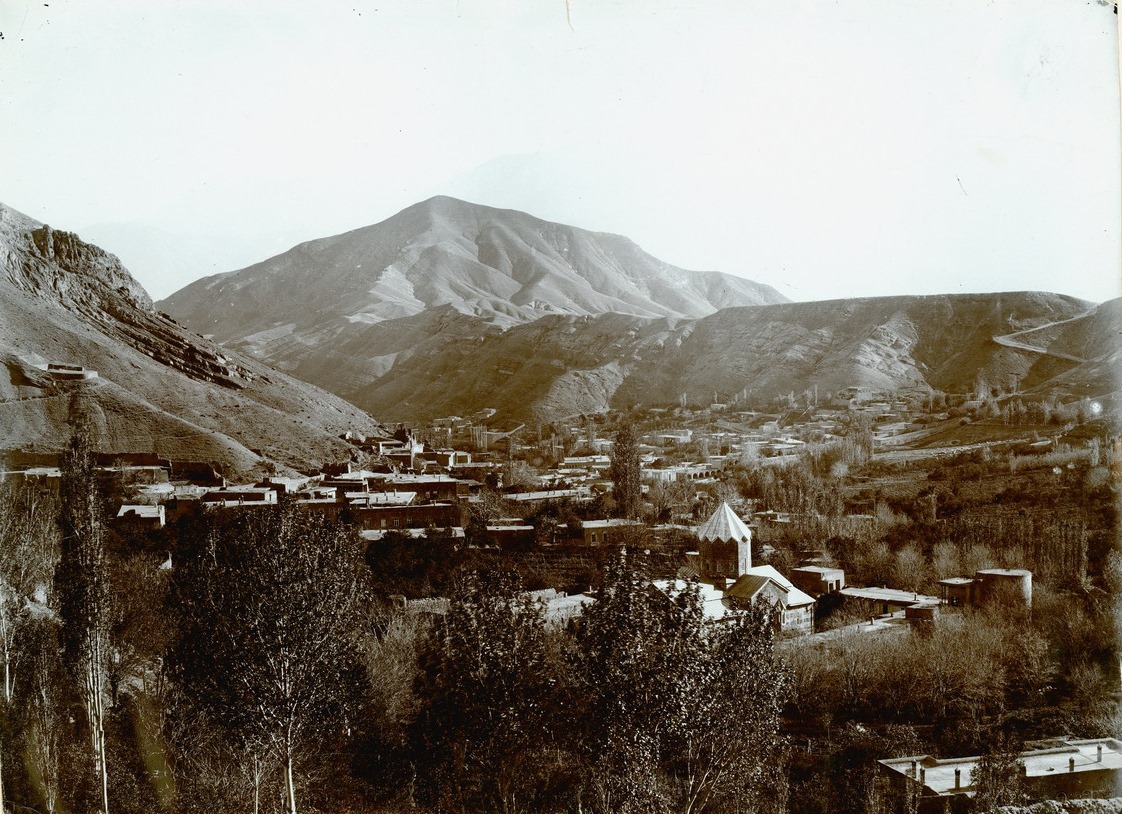
Agulis Massacre
Agulis had survived everything. Founded in antiquity as part of the Vaspurakan province of the Armenian kingdom, it endured Persian conquest, Mongol invasion, and Ottoman-Safavid wars while maintaining its identity as an Armenian cultural center of trade and craftsmanship. Its merchants had cultivated cooperative relationships with their Muslim neighbors for generations. Then, on Christmas Eve 1919, the town was destroyed. The Agulis massacre was not a sudden eruption of ancient hatred but the product of a very modern crisis: the violent birth of nation-states from the corpse of an empire, and the ethnic cleansing that accompanied the drawing of new borders.
The Last Armenian Stronghold
The Agulis district held a distinction unique in Nakhchivan: during the centuries of Iranian Armenian rule, it was the only administrative unit in the region to retain an Armenian majority before the Russian conquest. Its merchants played a key role in trans-Araxes trade, connecting the Persian khanates of the Caucasus to wider markets. When the Russian Empire collapsed in 1918 and the Transcaucasian Federation splintered into the separate republics of Armenia, Azerbaijan, and Georgia, the mixed Armenian-Azerbaijani regions of Nakhchivan, Zangezur, and Nagorno-Karabakh became contested ground. Both sides pursued ethnic cleansing to strengthen territorial claims -- Armenia in Zangezur, Azerbaijan in Nakhchivan.
A Siege by Starvation
In the spring of 1919, the First Republic of Armenia extended administrative control over the Sharur-Nakhichevan region, designating Agulis as the center for the subregion of Goghtan. But a Muslim insurgency broke out that summer, and by August the region had come under Azerbaijani control. Abbas Guli Bey Tairov was appointed commissar of Ordubad, assisted by Edif Bey, an Ottoman commander who had remained in the region after the Ottoman withdrawal at the end of World War I. Agulis pledged loyalty to Tairov. In return, its inhabitants were confined to the town and denied permission to leave, even as a food crisis worsened. When Azerbaijan's attempt to take Zangezur from Armenian control failed in November, Azerbaijani refugees from that region, having suffered severe exposure and famine, began streaming toward Agulis.
Christmas Eve, 1919
On December 17, refugees from Zangezur forced their way into Lower Agulis and attacked its Armenian inhabitants, who retreated to the upper town. A week later, on December 24, the violence became systematic. Armed groups entered Upper Agulis and began pillaging. What followed was a massacre that left Upper Agulis in smoldering ruins by December 25. According to the Armenian government, up to 400 Armenians were killed in Lower Agulis and up to 1,000 in Upper Agulis. The survivors fled. Azerbaijani refugees settled in the abandoned Armenian homes. The town that had maintained its Armenian character since antiquity ceased to exist as an Armenian community.
The Weight of Contested Memory
The Agulis massacre sits within a larger pattern of reciprocal atrocities during the Armenian-Azerbaijani war of 1918 to 1920, a conflict in which both sides committed acts of ethnic violence. The broader context -- Armenian actions in Zangezur that displaced Muslim populations, Azerbaijani actions in Nakhchivan that targeted Armenians -- does not diminish the suffering of the people of Agulis but does explain the cycle of displacement and retribution that consumed the region. Azerbaijani author Akram Aylisli later wrote a novel, Stone Dreams, that addressed the violence against Armenians in Agulis. The book was met with public outcry and government-initiated campaigns against the author in Azerbaijan. The contested memory of what happened at Agulis reflects the deeper unresolved tensions between the two nations.
From the Air
Located at 38.95N, 45.98E in the Ordubad District of the Nakhchivan Autonomous Republic, Azerbaijan. The site of historical Agulis (now Yuxari Aylis) sits in a mountain valley near the Aras River. Nearest airport is Nakhchivan International Airport (UBBN), approximately 70 km to the northwest. The terrain is mountainous with deep valleys. The Aras River is visible from altitude as the Iran-Azerbaijan border to the south.