Ahmad Shahi Pavilion
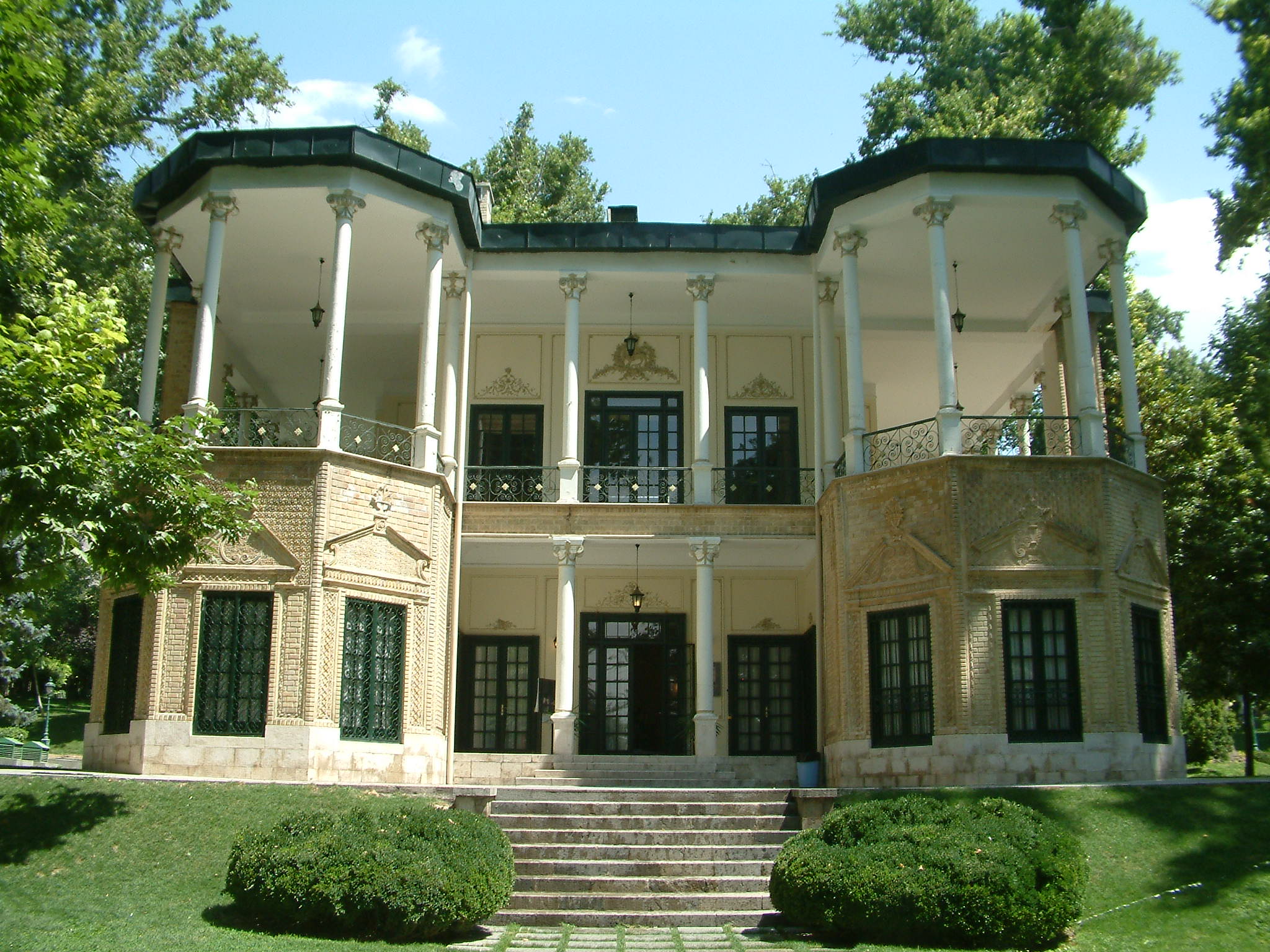
Somewhere between the marble pool in its ground-floor vestibule and the polar bear skin draped across an upstairs floor, the Ahmad Shahi Pavilion reveals what happens when royal taste accumulates across dynasties. Built in the 1910s for Ahmad Shah Qajar -- the last king of a fading dynasty who ascended the throne at age eleven -- this two-story pavilion in northern Tehran was never the grandest building in the Niavaran garden. It was the personal one. Intimate in scale at just 800 square meters, it served as a private dwelling rather than a throne room, a place where a young monarch could retreat from the crumbling politics of late Qajar Iran into rooms lined with silver, bronze, and ivory collected from across Asia.
A Boy King's Retreat
Ahmad Shah Qajar was eleven when he ascended the throne in 1909, inheriting a constitutional monarchy his father had tried to abolish. Iran was caught between Russian and British spheres of influence, its treasury depleted, its politics fractured. The pavilion built for him in the Niavaran garden offered something courts rarely provide: privacy. The ground floor centers on a hallway with a marble pool, flanked by six rooms and two corridors. The rooms filled over time with ornamental objects -- silver work, bronze pieces, ivory carvings, paintings, and diplomatic gifts from India and elsewhere. Ahmad Shah would reign until 1925, when Reza Khan deposed the Qajar dynasty entirely. The young king who had grown up in these halls died in exile in Paris in 1930, never returning to the pavilion that bore his name.
From Dynasty to Dynasty
The Pahlavi dynasty that replaced the Qajars did not demolish their predecessors' buildings. Instead, it repurposed them. The Ahmad Shahi Pavilion was refurbished and given new life as a residence and workspace within the broader Niavaran Palace Complex, which also includes the Sahebgharaniyeh Palace -- the oldest structure on the grounds -- and the main Niavaran Palace built for Mohammad Reza Pahlavi. The pavilion became a repository for an eclectic collection of objects: diplomatic gifts from world leaders, decorative mineral stones, plant and animal fossils, and -- most improbably -- a stone from the Moon. What had been a Qajar prince's personal retreat became a showcase of Iran's international connections and ambitions.
The Music Room Upstairs
Climb to the second floor and the building opens up. A central hallway leads to a four-sided veranda, sheltered by an architectural mix that captures the pavilion's hybrid character: six square brick columns stand alongside twenty-six round gypsum columns, their different geometries creating an unexpected rhythm. The major hall served as a music room, its walls lined with wooden shelves that once held instruments and recordings. On the northern wall of the veranda, gypsum reliefs depict the lion and sun -- the symbol of imperial Iran that the Qajars inherited and the Pahlavis maintained until the 1979 revolution swept both dynasty and emblem away. The craftsmanship of the plasterwork ceiling, intricate and layered, reveals the refinement that late Qajar artisans could achieve even as their empire contracted.
Walking the Halls Today
The Ahmad Shahi Pavilion is now open to visitors as part of the Niavaran Palace Complex museum. Walking through the ground floor, you pass rooms arranged as they might have been during the Pahlavi era -- dining rooms with formal table settings, sitting rooms with period furniture, display cases holding medals and souvenirs. Photographs of Ahmad Shah line some walls: as a child in the elaborate dress of a crown prince, as a teenager visiting England, his handwriting preserved under glass. The effect is less that of a grand palace than of a private home whose occupants happened to be kings. The Niavaran Complex sits in the Shemiran district of northern Tehran, backed against the foothills of the Alborz Mountains, its gardens a green refuge from the sprawling city below.
From the Air
Located at 35.81°N, 51.47°E in the Shemiran district of northern Tehran, near the foothills of the Alborz Mountains. The Niavaran Palace Complex and its surrounding gardens are visible from lower altitudes as a green enclave within the dense urban fabric of northern Tehran. Mehrabad International Airport (OIII) lies approximately 15 km to the southwest. Imam Khomeini International Airport (OIIE) is about 55 km to the south. The Alborz range rising to the north provides dramatic terrain contrast when approaching from the south.