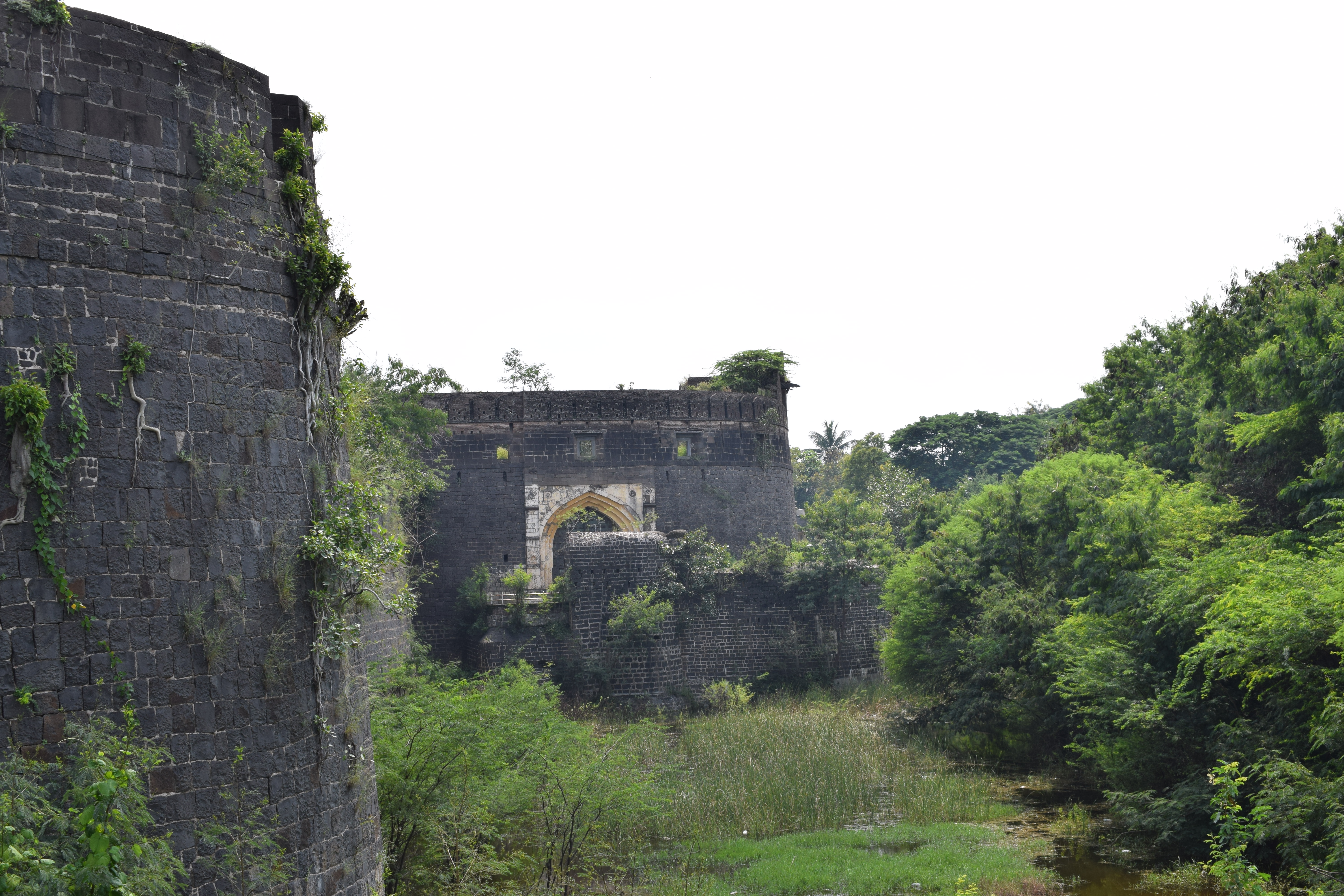
Ahmadnagar Sultanate
The title Nizam ul-Mulk Bahri meant 'falcon,' a nod to the founder's father, who had been falconer to the Bahmani Sultan before rising to become prime minister. When Malik Ahmad inherited his father's governorship of Junnar in the late 15th century, the Bahmani Sultanate was fracturing. Rather than wait for someone else to claim the pieces, Ahmad fought off three separate armies -- defeating Sheikh Muaddi Arab in a night attack, routing an 18,000-strong force under Azmut-ul-Dabir, and turning back the Bahmani general Jahangir Khan. On May 28, 1490, he declared independence. The Nizam Shahi dynasty that he founded would rule the northwestern Deccan for the next century and a half, building a capital that contemporaries compared to Cairo and Baghdad.
From Junnar to a New Capital
Ahmad's family were Kulkarnis from Pathri, a town in Marathwada. Whether they left due to religious persecution or famine remains unclear, but their trajectory carried them from obscurity to the highest corridors of Bahmani power. Ahmad's first capital was Junnar, centered on the fort later renamed Shivneri -- the same fortress where Chhatrapati Shivaji would be born more than a century later. But Ahmad wanted a city of his own. In 1494, he laid the foundation for Ahmednagar, a planned capital that would grow into one of the great urban centers of the Deccan. A land fort, Ahmednagar Qila, served as the sultanate's headquarters. After several campaigns, Ahmad secured the fortress of Daulatabad in 1499, giving his young kingdom a secondary capital and one of the most formidable strongholds in India.
The Battle That Shattered an Empire
The Ahmadnagar Sultanate's most dramatic moment came in January 1565 at Talikota. The regent of the Vijayanagara Empire, Rama Raya, had been provoking the Deccan sultanates for years -- conducting aggressive campaigns around Kalyan and delivering calculated diplomatic insults. Four of the five Deccan Muslim sultans set aside their own rivalries and united: Hussain Nizam Shah I of Ahmadnagar, Ali Adil Shah I of Bijapur, Ali Barid Shah I of Bidar, and Ibrahim Quli Qutb Shah Wali of Golconda. In the battle that followed, the allied forces shattered the Vijayanagara army. Sultan Hussain himself beheaded Rama Raya on the battlefield, an act that effectively ended the Vijayanagara Empire as a major power and redrew the balance of strength across southern India.
Warriors, Regents, and Defenders
The sultanate's later history was turbulent, marked by child rulers, assassinations, and the constant pressure of Mughal expansion from the north. Two figures stand out in its defense. Chand Bibi, great-aunt to the young sultan Bahadur Nizam Shah, served as regent from 1595 and personally organized the defense of Ahmednagar Fort against a Mughal siege -- a feat that made her one of the most celebrated women in Deccan history. After her death, the mantle of resistance passed to Malik Ambar, an Ethiopian-born military commander who waged a guerrilla campaign against the Mughals for decades. Ambar is credited with building Janjira Fort in the Murud area, an island stronghold that withstood invasion attempts by Marathas, Mughals, and Portuguese alike after its construction in 1567. The sultanate's territorial peak came under Murtaza Nizam Shah I, who annexed Berar in 1574. But the end was inevitable: in 1636, Aurangzeb, then Mughal viceroy of the Deccan, absorbed the Ahmadnagar Sultanate into the Mughal Empire.
A Legacy in Stone and Paint
What the Nizam Shahs built outlasted their political power. The earliest surviving school of Deccan painting originated in Ahmadnagar, predating the better-known painting traditions of Bijapur and Golconda. Their architectural ambitions were equally striking: the Farah Bakhsh Bagh, completed in 1583, was the centerpiece of a palatial complex where Murtaza Nizam Shah played chess with a Delhi singer he had renamed Fateh Shah. The Hasht Bihisht Bagh, the Lakkad Mahal, the tombs of Salabat Khan and Changiz Khan, and the shrines of saints like Shah Sharif and Bava Bangali all survive in and around Ahmadnagar city. The sultanate's forts -- Shivneri, Daulatabad, Paranda, Ausa, Dharur, Lohagad -- were rebuilt and heavily fortified under Nizam Shahi rule, forming a defensive network across the western Deccan. Literature flourished alongside architecture, with Sanskrit scholarship given patronage alongside Persian, a cultural openness unusual for the era. The dynasty's Shi'i leanings shaped the city of Ahmadnagar itself, which was modeled on the great Persianate cities its founders admired.
From the Air
Located at 19.08N, 74.73E in the northwestern Deccan Plateau, Maharashtra. The historic city of Ahmednagar and its fort (Ahmednagar Qila) are visible from altitude. Daulatabad Fort, the sultanate's secondary capital, lies about 100 km to the east near Aurangabad. The landscape is a dry, rolling plateau dotted with the remains of Nizam Shahi fortifications. Nearest major airport is Pune (VAPO), about 120 km to the southwest. Aurangabad Airport (VAAU) provides access to the eastern sites including Daulatabad.