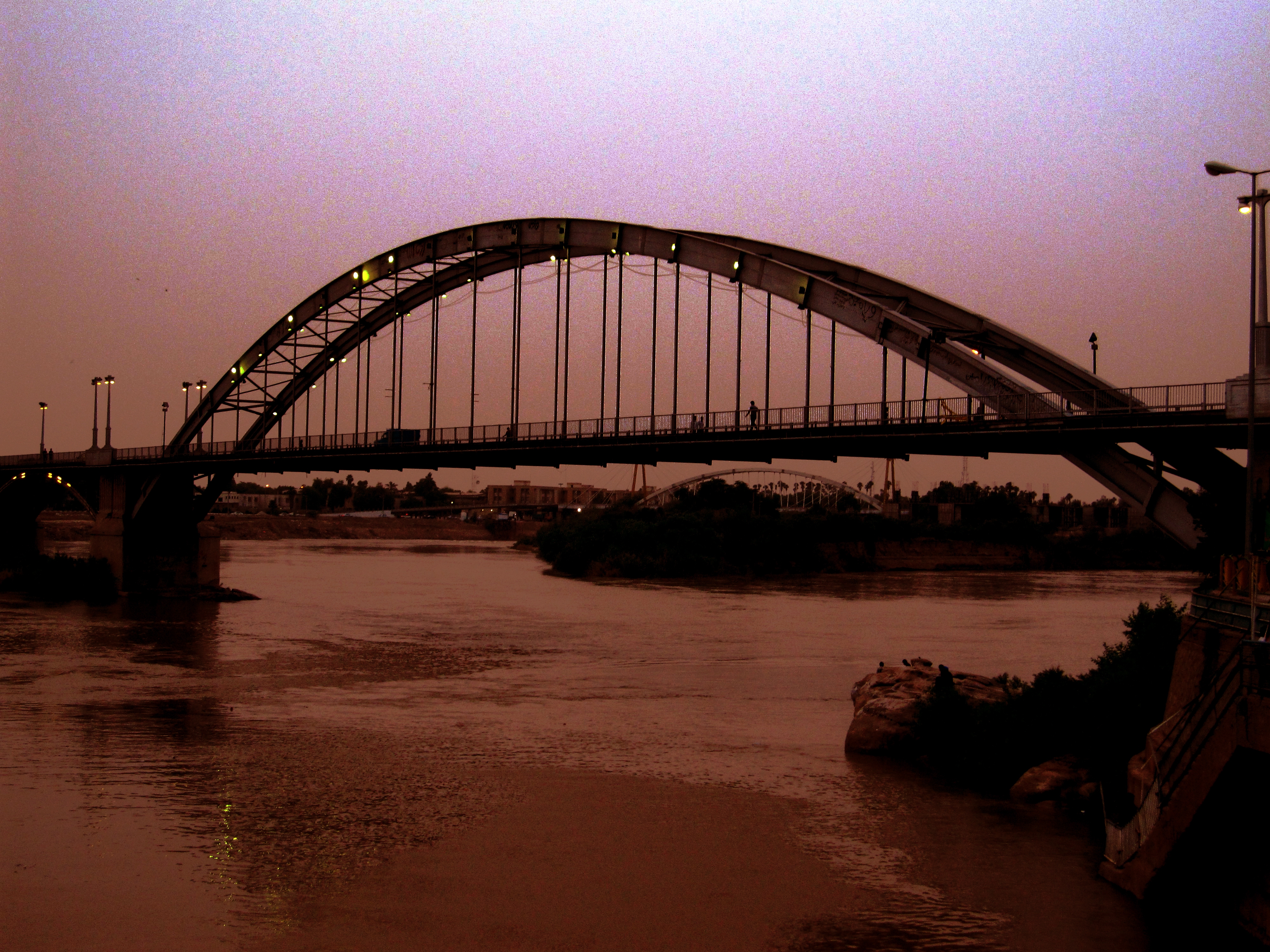
Ahvaz
In 2011, the World Health Organization declared Ahvaz the most air-polluted city on Earth. That grim distinction barely scratches the surface of this complicated place. The capital of Iran's Khuzestan Province sits on the banks of the Karun, the largest river by discharge in the country, its 950-kilometer course splitting the city into two halves that mirror its divided identity: part Arab, part Persian, part ancient seat of learning, part modern oil town. Ahvaz is not a city that invites casual tourism. It rewards something deeper.
Where Scholars Once Gathered
Long before oil defined this region, knowledge did. The nearby Academy of Gondishapur, founded by the Sassanid king Shapur I around 271 AD, was one of the most important intellectual centers of the ancient world. Zoroastrians, Christians, Jews, and pagans studied medicine, philosophy, and science side by side, guided by the principle that truth belonged to no single people. The academy's hospital was considered the finest in the ancient world during the 6th and 7th centuries. When the Abbasid caliphs established the House of Wisdom in Baghdad, they drew heavily on Gondishapur's scholars. Today, Ahvaz Jundishapur University of Medical Sciences carries the name forward, a modern echo of an institution that pioneered physician licensing exams and hospital teaching rounds more than fifteen centuries ago.
The River That Divides and Defines
The Karun cuts through Ahvaz with the authority of a boundary line. The western bank holds most of the housing and government offices; the eastern side mixes residential neighborhoods with the industrial infrastructure that oil built. Numerous bridges span the divide, earning Ahvaz the nickname City of Bridges. The river has shaped settlement here since antiquity, when a Sassanid king built a dam across it and elevated the city to provincial capital. Even now, in the nearby village of Kut Kut, Arab residents maintain a way of life tied to the water. They bring water buffalo to the Karun during the day, serve strong breakfasts to any traveler who knocks, and answer every greeting with a sincere welcome. It is a glimpse of a world that the oil derricks have not quite erased.
Crude Awakening
The discovery of massive oil deposits in Khuzestan in the early 20th century transformed Ahvaz from a provincial crossroads into the nerve center of Iran's petroleum industry. Oil well flares still burn along the city's edges, visible at night like a constellation fallen to earth. That same oil made the region a target. When Iraq invaded Iran on September 22, 1980, Khuzestan was the primary objective. Iraqi forces advanced toward Ahvaz, and the city endured missile strikes and bombing campaigns throughout the eight-year Iran-Iraq War. The nearby city of Khorramshahr was devastated so thoroughly that Iranians called it the City of Blood. Ahvaz survived, but the war years left marks that run deeper than any reconstruction project can reach.
Living in the Furnace
Summer in Ahvaz is an exercise in endurance. July and August temperatures reach 45 degrees Celsius and beyond, heat that confines daily life to air-conditioned interiors. The pollution that earned the WHO's 2011 ranking stems partly from oil industry emissions and partly from desert dust storms that sweep across the flat Khuzestan plain. Yet the city carries on. Chamran Boulevard in the Kianpars district draws evening shoppers after the worst heat breaks. The main bazaar on Taleqani Street still operates as it has for generations. Fruit juice shops offer relief on every other corner, though locals warn against cantaloupe juice and banana milkshakes in the worst heat. Arabs and Persians form the two dominant ethnic groups of Ahvaz — exact proportions are disputed, as Iran conducts no official ethnic census, but Arab presence is substantial enough to make the city a natural bridge between Iran and the Arabic-speaking world, a place where Farsi and Arabic flow freely in the same conversations.
Between Two Worlds
From the air, Ahvaz appears as a sprawl of low buildings pressed against the brown ribbon of the Karun, oil infrastructure glinting to the east, date palm groves surviving in green patches where irrigation reaches. Ghazaviyeh Village, just six kilometers from the city center, remains lush with date palms and vineyards even in the dead of summer, its residents hosting Arabic coffee ceremonies each afternoon. Ahvaz is not beautiful in any conventional sense. Its beauty is the beauty of persistence: a city that has endured invasion, pollution, and punishing heat, that traces its intellectual heritage to a university older than most nations, and that still greets strangers with hospitality rooted in traditions far older than the oil that made the modern city possible.
From the Air
Ahvaz is located at 31.32N, 48.68E in the flat Khuzestan plain of southwestern Iran. The Karun River is the primary visual landmark, bisecting the city east-west. Ahvaz Airport (OIAW/AWZ) sits on the eastern side of the city. Oil well flares are visible at night on the city outskirts. Approach from the south or west for the best view of the river and bridges. Expect reduced visibility from dust and pollution, particularly in summer months. Elevation is approximately 18 meters above sea level.