Air Rhodesia Flight 825
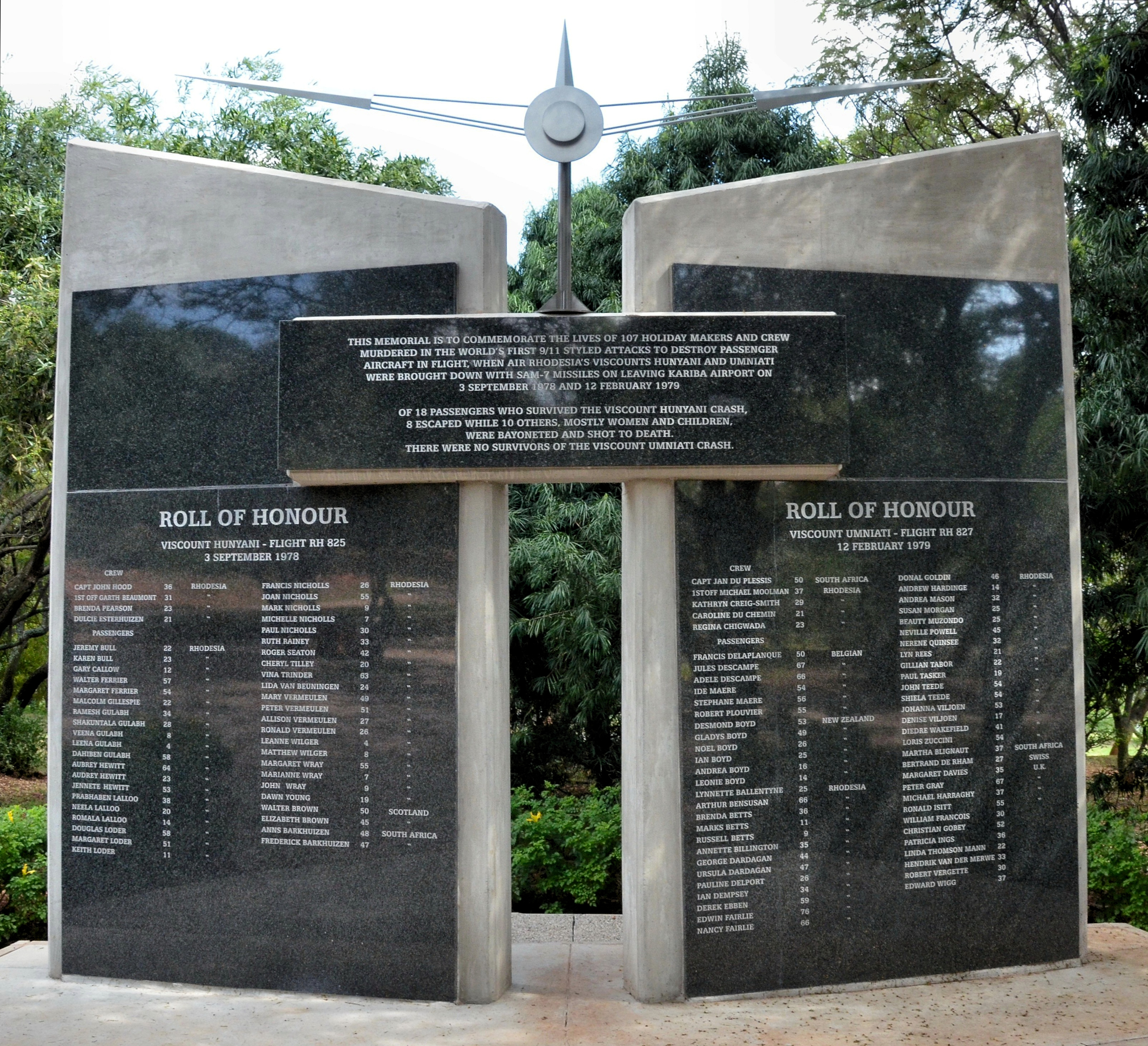
The Vickers Viscount named Hunyani was on the last leg of a routine flight -- Victoria Falls to Salisbury, with a stop at the resort town of Kariba. Fifty-two passengers and four crew were aboard Air Rhodesia Flight 825 on the afternoon of 3 September 1978. Minutes after takeoff from Kariba, a Soviet-made Strela-2 heat-seeking missile, fired by guerrillas of the Zimbabwe People's Revolutionary Army, struck the starboard wing. What followed was not only one of the most devastating attacks on a civilian aircraft during the Rhodesian Bush War but an atrocity whose full dimensions would horrify a nation already torn apart by conflict.
A War in the Air
Until about 1977, Rhodesian air traffic had been largely safe from attack. Neither the Zimbabwe African National Liberation Army nor ZIPRA possessed weapons capable of threatening aircraft at altitude. That changed when the Soviet Union supplied ZIPRA with Strela-2 shoulder-launched surface-to-air missiles as part of the Warsaw Pact's material support for the insurgency. The missile that struck the Hunyani was part of this new arsenal. It hit the aircraft's starboard wing, critically damaging the Viscount and forcing an emergency descent. The pilot attempted a belly landing in a cotton field west of Karoi, but a ditch bisected the field. The aircraft struck it, cartwheeled, and broke apart on impact. Thirty-eight of the fifty-six people aboard died in the crash itself -- a catastrophic toll from which there was no chance of recovery.
What Happened on the Ground
Eighteen people survived the crash. Some were badly injured; others walked away with cuts and bruises. Five of them left the wreckage to search for water. Three others hid in the surrounding bush. The remaining ten survivors -- men, women, and at least one child among the passengers -- stayed near the wreckage or were too injured to move. ZIPRA guerrillas approached the crash site, gathered these ten people together, and shot them with automatic weapons. All ten died. The five who had gone looking for water returned to find the bodies. The three who had hidden in the bush emerged later. These eight people were the only survivors of Flight 825. They owed their lives to circumstances that separated them from the group at the wreckage before the guerrillas arrived.
Claims and Denials
ZIPRA leader Joshua Nkomo claimed responsibility for shooting down the Hunyani in a BBC interview the following day, telling the Today programme that the aircraft had been used for military purposes. He denied that his forces had killed survivors on the ground. The claim that the Viscount served military functions was rejected by Rhodesian authorities and by most independent observers -- Flight 825 was a scheduled civilian service. The massacre of survivors drew widespread condemnation across Rhodesian society, among both Black and white communities. The attack came at a particularly volatile moment: secret negotiations between Prime Minister Ian Smith and Nkomo had been progressing well, and Smith and Nkomo had revealed their talks publicly just one day before the shootdown, on 2 September. The destruction of Flight 825 and the killing of its survivors shattered whatever fragile trust those negotiations had built.
The War's Civilian Cost
Flight 825 was not an isolated act of violence against civilians during the Rhodesian Bush War. In June 1978, nine British missionaries and four children had been killed in the Vumba massacre near the Mozambican border. Officials from Bishop Abel Muzorewa's United African National Council, sent to explain the Internal Settlement to rural communities, were killed by guerrillas in the provinces. The war, which had begun on 4 July 1964, pitted the Rhodesian government against two rival nationalist movements -- the Chinese-aligned ZANU and the Soviet-aligned ZAPU -- in a conflict that would ultimately claim tens of thousands of lives on all sides. Five months after Flight 825, ZIPRA shot down another Air Rhodesia Viscount, Flight 827, killing all fifty-nine people aboard. For the families who lost someone on either flight, the war's political complexities mattered less than the fact that their loved ones had boarded a routine domestic flight and never came home.
From the Air
The crash site of Flight 825 is located approximately at 16.78°S, 29.08°E, in a cotton-farming area west of Karoi, Zimbabwe. The Viscount was shot down shortly after departing Kariba for Salisbury (now Harare). From altitude, the region is relatively flat agricultural land between the Zambezi escarpment to the north and Karoi to the east. Charles Prince Airport (FVCP) near Harare and Kariba Airport (FVKB) are the nearest significant airfields. The area is remote and unmarked on the ground.