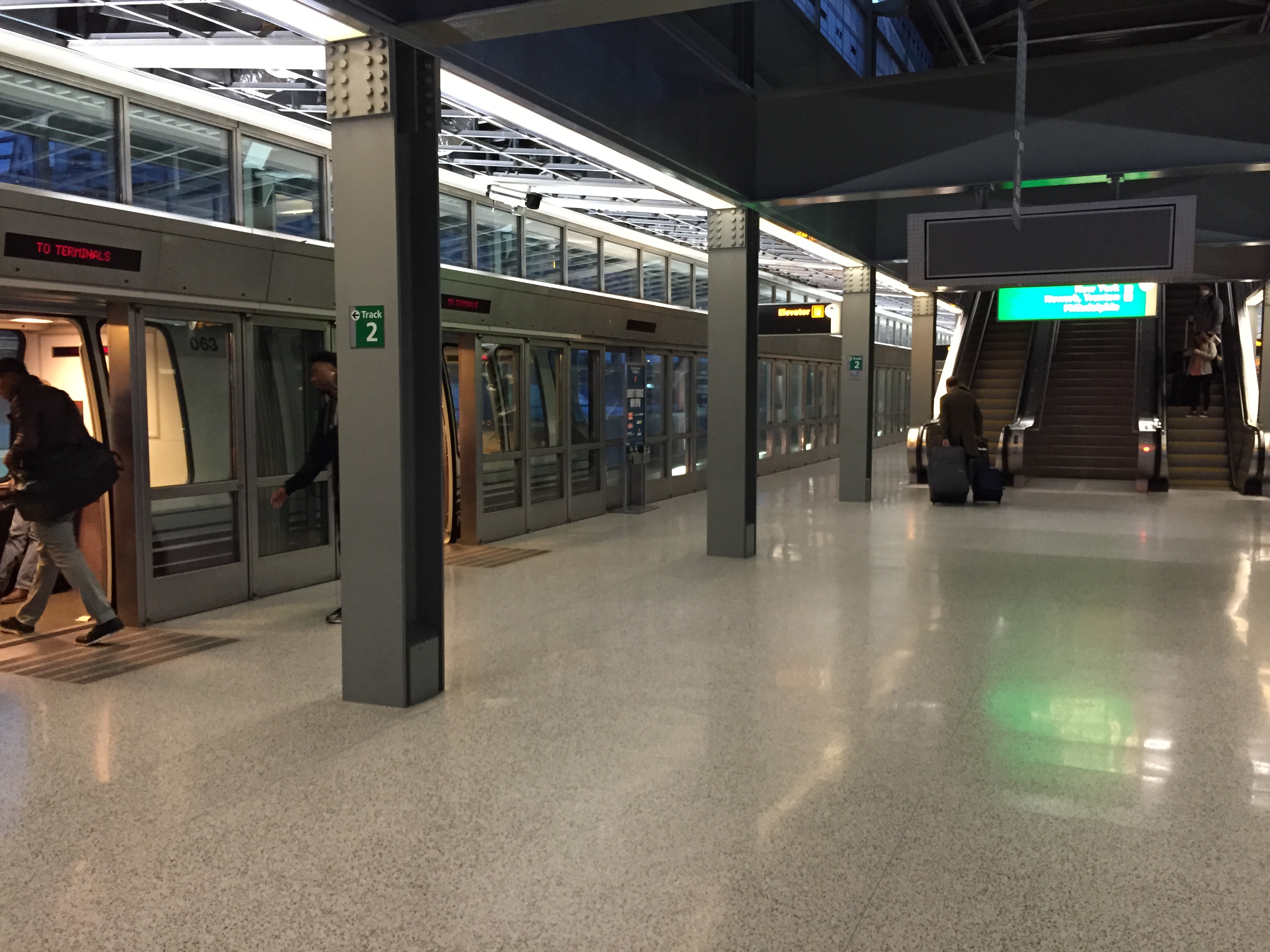
AirTrain Newark
The monorail was supposed to open in 1994. It finally began running in 1996. By 2000, it had shut down for six months due to defective de-icing equipment. By 2019, New Jersey's governor was calling for an end to "bubblegum fixes." AirTrain Newark -- the three-mile elevated people mover that connects the terminals of Newark Liberty International Airport to each other and to the Northeast Corridor rail network -- has spent most of its existence either broken, being repaired, or in the process of being replaced. Its story is a case study in how infrastructure built to a 25-year lifespan actually ages, and what happens when replacement costs balloon from $2 billion to $3.5 billion before a single track is laid.
Late From the Start
Ground was broken for the AirTrain in 1991, with the monorail intended to relieve vehicle congestion at the airport's terminals. The project immediately fell behind schedule. A change in project management and persistent problems with the system's track switches pushed the opening from 1994 to 1996. When it finally began carrying passengers, the system operated as a simple circulator -- shuttling travelers between terminals but not yet connecting to regional rail. A fleet of twelve six-car trains, later expanded to eighteen, ran on an elevated guideway with stations at each terminal, two parking lots, and eventually a RailLink station linking to Amtrak and NJ Transit on the Northeast Corridor. The monorail was fare-free within the airport, though passengers connecting to rail services paid an access fee -- currently $8.75 -- that has been raised multiple times since the system opened.
A System That Cannot Stop Breaking
In September 2000, barely four years after opening, the monorail shut down after inspectors found defects in its de-icing mechanisms. What was projected as a three-month repair stretched to six months; service did not resume until March 2001. This pattern -- unexpected shutdown, optimistic timeline, extended closure -- became the AirTrain's defining rhythm. The system was built with a projected 25-year lifespan, and by the time that lifespan began drawing to a close, the monorail was experiencing the kind of persistent delays and breakdowns that made it a frequent subject of commuter frustration and media coverage. In 2007, average daily paid ridership stood at 4,930 -- a modest figure that reflected both the system's utility and its unreliability.
Three and a Half Billion Dollars to Replace a Monorail
In January 2019, Governor Phil Murphy announced a plan to replace the AirTrain entirely, framing the aging monorail as beyond repair. The Port Authority initially estimated the replacement at $2.05 billion. Construction was expected to start in 2021 and finish by 2024. Neither timeline held. A draft environmental impact statement pushed the opening to 2026. In December 2023, the Port Authority selected Austrian manufacturer Doppelmayr to build a cable-driven system -- a technology more commonly associated with ski lifts than major airports. Tutor Perini won a $1.2 billion construction contract in November 2024. By that point, the total project cost had swelled to $3.5 billion and the opening date had shifted to 2030. To fund the project, the Port Authority deferred a planned extension of the PATH rail line to Newark Airport by ten years.
Construction Amid Chaos
Work on the replacement system began on October 7, 2025, and passengers felt the impact almost immediately. Starting January 15, 2026, the AirTrain was suspended on weekdays from 5:00 AM to 3:00 PM, with shuttle buses filling the gap. The old monorail's service was truncated back to the P4 parking station, cutting off direct access to the RailLink connection to NJ Transit and Amtrak. Additional closures are planned throughout 2026 and into early 2027. The new system will be shorter -- 2.5 miles versus the original 3 -- but will feature four stations and automated cable-driven trains running on largely new alignments. The current Von Roll Mk III monorail trainsets, which have carried passengers since 1996, will be retired when the Doppelmayr system opens.
The Airport's Circulatory System
For all its problems, the AirTrain serves a function that Newark Airport cannot do without. The sprawling layout of Terminals A, B, and C, spread across the airport's footprint with parking garages and rental car facilities between them, makes some form of automated transit essential. Walking between terminals is impractical; driving creates the congestion the monorail was built to relieve. The new cable-driven system promises greater reliability and lower maintenance costs than the aging monorail, though whether it will deliver on those promises over its own projected lifespan remains to be seen. For now, travelers navigating the shuttle buses and partial closures of the construction period are living through the uncomfortable gap between one generation of infrastructure and the next.
From the Air
Located at 40.70°N, 74.18°W at Newark Liberty International Airport (KEWR). The elevated monorail guideway is visible from the air as a looping track connecting Terminals A, B, and C with parking structures and the NJ Transit/Amtrak rail station to the northeast. Best viewed on approach to or departure from runways 4/22 or 11/29. The Northeast Corridor rail line runs along the airport's northern edge. Construction activity for the replacement system is visible along the guideway alignment.