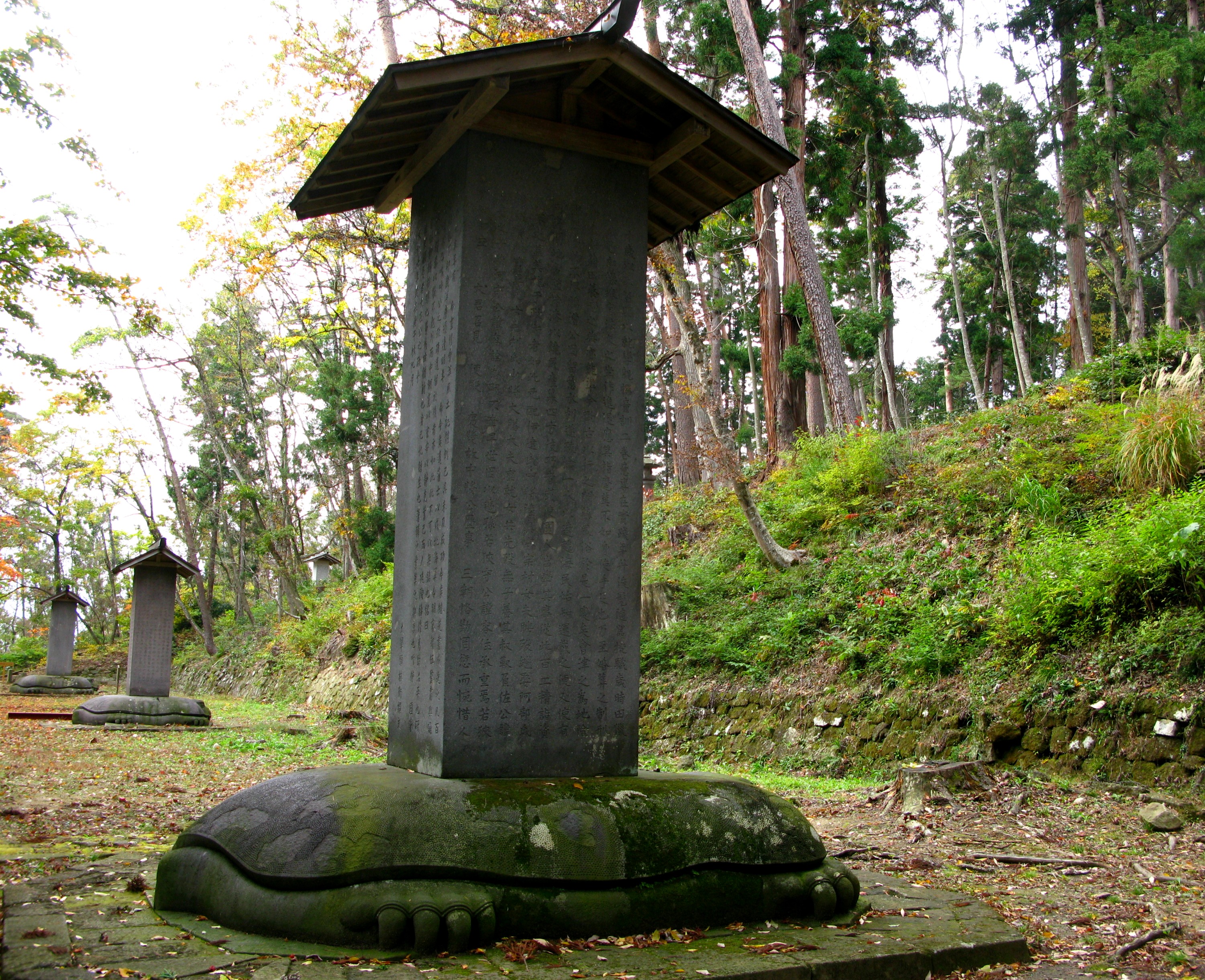
Aizu Matsudaira Clan Cemetery
Every other feudal lord in Tokugawa Japan was buried according to Buddhist ritual. The shogunate had decreed it, and no domain dared object. Every domain except one. In the mountains of Fukushima Prefecture, the lords of Aizu Domain went to their graves under Shinto rites, each interred beneath an octagonal stone crypt fronted by a turtle-shaped pedestal monument and flanked by stone lanterns. Their defiance was not rebellion but inheritance -- a tradition set by the founder whose blood ran with the Tokugawa themselves. Designated a National Historic Site in 1987, the Aizu Matsudaira clan cemetery spans two locations: a solitary shrine in the town of Inawashiro and a forested necropolis near the hot springs of Aizuwakamatsu.
A Shogun's Secret Son
The story begins with an illegitimate child. Hoshina Masayuki was the natural son of Tokugawa Hidetada, the second Tokugawa shogun, but was raised by the Hoshina clan, minor retainers of the once-powerful Takeda. Despite his unofficial status, Masayuki's talent could not be hidden. He was granted control of Aizu Domain, one of the most strategically important fiefs in northern Japan, with a nominal income of 230,000 koku. When his half-brother, the third shogun Tokugawa Iemitsu, died in 1651, Masayuki served as regent to the underage fourth shogun, Tokugawa Ietsuna. He wielded enormous influence, and his descendants were eventually permitted to use the prestigious Matsudaira surname and the Tokugawa family crest -- honors that recognized the bloodline everyone had always known about.
The Shrine at Inawashiro
Masayuki was a devoted follower of Shinto, and in 1675, two years before his death, he established a shrine in Inawashiro to serve as both his final resting place and a subsidiary shrine to the kami of nearby Mount Bandai. His stone monument rises 7.3 meters tall, inscribed with his biography in the calligraphy of the scholar Yamazaki Ansai. The shrine's main hall, the honden, was originally built in the ornate Momoyama style reminiscent of the famed Nikko Tosho-gu. That building did not survive the Boshin War, the civil conflict that would eventually consume the entire Aizu domain, but the grave itself endures -- the lone patriarch standing apart from the successors who followed his spiritual example.
A Forest of Stone and Memory
The remaining eight lords of Aizu rest together in a forest near the Higashiyama Onsen district of Aizuwakamatsu. From the second lord, Hoshina Masatsune, through the ninth and final lord, Matsudaira Katamori, their graves follow a distinctive pattern: octagonal crypts set on small earthen mounds, each preceded by a turtle-shaped pedestal and surrounded by votive stone lanterns called toro. Only Masatsune broke the Shinto tradition, receiving Buddhist rites. The rest followed Masayuki's precedent. The cemetery was renowned among feudal-era burial grounds for the sheer scale of its tombs and the beauty of its landscaped setting. Beyond the lords themselves, the grounds hold tombs of family members, descendants, and a hall of worship, creating a densely layered memorial spanning more than two centuries of the domain's existence.
From Family Estate to Public Trust
The Aizu-Matsudaira family held private ownership of the cemetery grounds long after the feudal era ended. For over a century after the Meiji Restoration dissolved the domains, the family maintained the tombs as a personal responsibility. That changed in 2001, when ownership was transferred to the city of Aizuwakamatsu, which assumed responsibility for the site's environmental maintenance and historic preservation. The transfer ensured that the graves of nine lords -- men who governed a domain powerful enough to challenge an empire, yet devoted enough to honor a tradition that set them apart from every other clan in Japan -- would be cared for as public heritage rather than private burden.
From the Air
The cemetery is located at approximately 37.49N, 139.96E in the city of Aizuwakamatsu, Fukushima Prefecture. The main cemetery (lords 2-9) is situated in a forested area near the Higashiyama Onsen hot springs district on the eastern outskirts of the city. The separate Inawashiro site (lord 1) is approximately 15km to the east near Lake Inawashiro. Both sites are nestled in terrain that is difficult to spot from altitude but the city of Aizuwakamatsu is clearly identifiable in the Aizu basin with Tsuruga Castle (Aizuwakamatsu Castle) as a prominent landmark. Nearest airport: Fukushima Airport (RJSF) approximately 40nm southeast. Mount Bandai to the north and Lake Inawashiro to the east provide strong visual references.