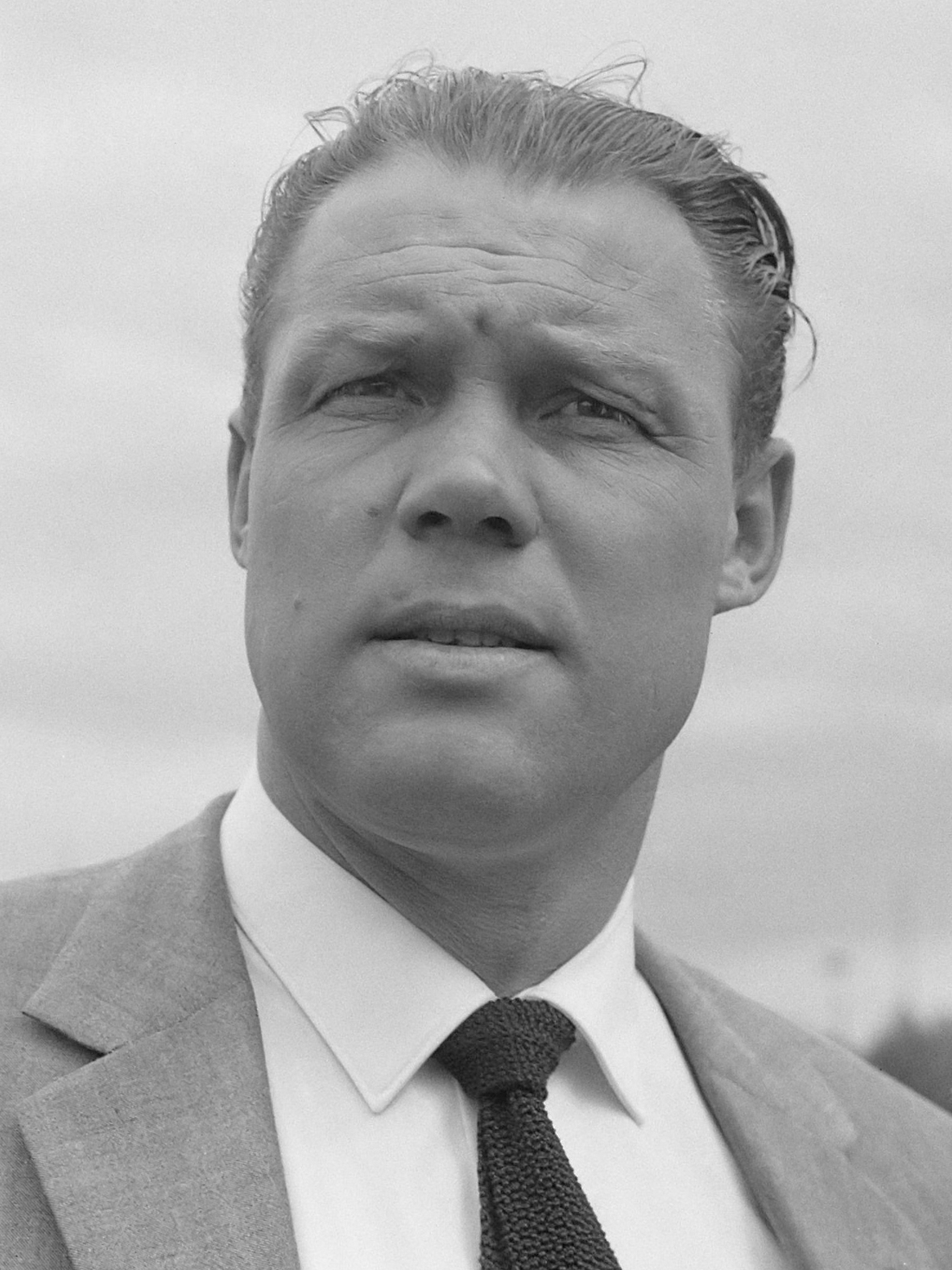
Ajax 5-1 Liverpool (1966)
Spectators at the far end of the Olympic Stadium learned the score by listening. Visibility had dropped to roughly fifty yards, the goal at the other end was a rumor inside a wall of grey, and the only reliable signal was the wave of cheering that traveled across the terraces a second or two late. On the night of 7 December 1966, the Dutch press would name it De Mistwedstrijd, the Fog Match, but a name that polite undersells what happened. Liverpool, English champions and continental favorites, walked into the haze expecting a routine European tie. They walked out 5-1 losers, with no clear idea of how.
The Manager With a New Idea
A year earlier, Ajax had finished thirteenth in the Eredivisie. The board, exasperated, hired a former club striker named Rinus Michels and asked him to fix the team. Michels arrived with a single conviction: the Dutch obsession with disciplined defending had things backwards. He pushed his players into a 4-2-4 built around passing, possession, constant movement, and the idea that any outfield player should be able to occupy any position. He won the league in his first full season. By December 1966 his side was still virtually unknown abroad, while Liverpool manager Bill Shankly had flown over to scout them and gone home convinced his English champions would stroll through. Shankly had watched Ajax lose to weaker domestic opposition. He had not watched them play in fog.
The Boy on the Edge of the Box
Cruyff was nineteen. Slim, quick, and so wired to the game that he seemed to be solving it in real time, he had only been a senior for a couple of seasons. In the seventeenth minute he scored the second of the five, drifting onto a loose ball after a Liverpool save and finishing the way he would finish for the next decade: calm, angled, unhurried. Cees de Wolf, making his Ajax debut, had opened the scoring in the third minute. Klaas Nuninga added two more before half-time. Henk Groot got the fifth in the second half. Chris Lawler pulled one back for Liverpool in the 89th, almost as an apology. The crowd of 55,722 spent the entire match watching ghosts move and waiting for the cheers to arrive.
Two Managers in the Mist
Conditions were so disorienting that touchline discipline collapsed. When Liverpool assistant Bob Paisley walked onto the pitch to attend to an injured player, Shankly slipped on behind him, used the moment to bark instructions at his defenders, and was eventually spotted and chased off by officials. The Italian referee, Antonio Sbardella, had decided to play on against Shankly's wishes; Shankly knew his side were due to face Manchester United days later and feared the scheduling implications of a postponement. The referee held firm. Cruyff's throw-ins disappeared into white space. Tommy Lawrence in the Liverpool goal kept coming out for crosses he could no longer see. Michels stood in the technical area watching his idea work in front of an audience that could barely watch it back.
Liverpool's Worst European Night
The aggregate ended 7-3 to Ajax across two legs. Liverpool managed a 2-2 draw at Anfield in the return, but the damage was already a fact: the heaviest defeat the club had ever taken in European competition, a record that still stands. Ajax went out to Dukla Prague in the quarter-finals, and Michels used the disappointment to rebuild. He moved defender Ton Pronk to midfield, sold the captain Frits Soetekouw to PSV Eindhoven, and bought the Yugoslav Velibor Vasovic from Partizan. What followed was the most concentrated burst of brilliance in Dutch club history: four Eredivisie titles between 1966 and 1970, a European Cup final in 1969, and three consecutive European Cups from 1971 to 1973.
The Birth of Totaalvoetbal
Michels gave the Liverpool match its proper weight years later. The first leg, he admitted, could have been written off as an accident, a freak of weather. What convinced him was the 2-2 in Liverpool, achieved in conditions he described as the most hectic he had ever seen. After that, he knew Ajax could compete anywhere. The fluid, position-swapping style he had been refining became known abroad as Total Football. Cruyff carried it into the Netherlands national team and to the 1974 World Cup final, which the Dutch contrived to lose. The Netherlands reached the final again in 1978, without Cruyff, who had declined to travel to Argentina. Decades on, when Ajax and Liverpool were drawn together again in the 2022-23 Champions League group stage, Liverpool won both legs. The arithmetic balances out eventually. The fog does not.
From the Air
The match was played at Amsterdam's Olympic Stadium (Olympisch Stadion) at 52.343 N, 4.854 E, in the Stadionbuurt neighborhood of Amsterdam-Zuid. Nearest airport is Amsterdam Schiphol (EHAM), about 10 km southwest. From cruising altitude on approach to Schiphol, the stadium oval is visible just south of the city center, between the Olympic Quarter and the Beatrixpark. Recommended viewing altitude is 1,500-3,000 feet; the surrounding Amsterdam-Zuid grid and the Amstelkanaal make for easy orientation.